Peanut Butter and Honey Chia Pudding: The Creamy, Nutritious Breakfast You Will Make Every Single Week
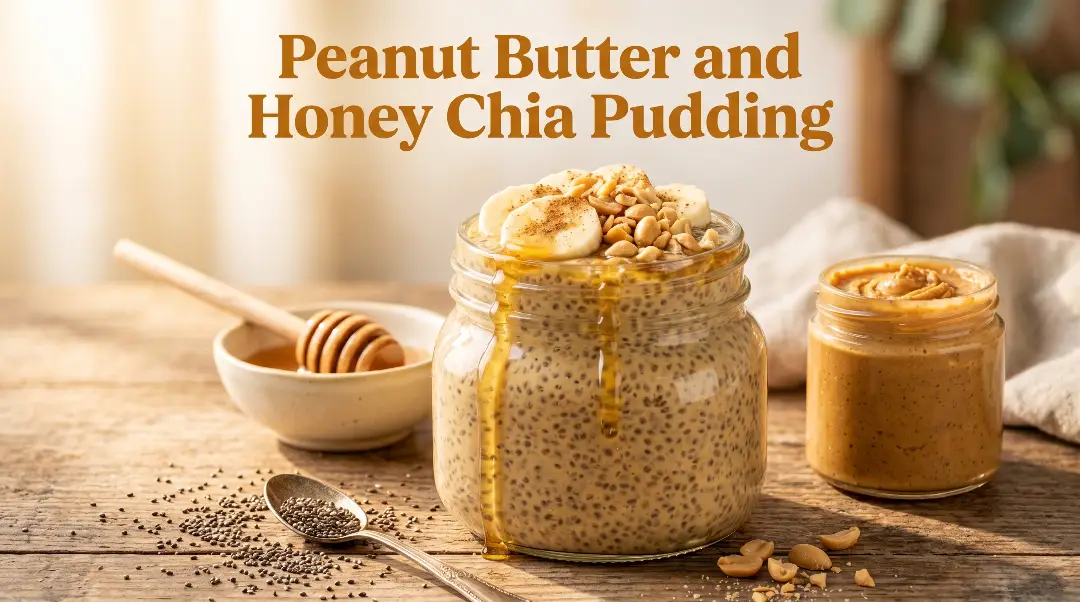
If you have been looking for a breakfast or snack that is quick, filling, packed with nutrients, and actually tastes like a treat, Peanut Butter and Honey Chia Pudding is exactly what you need. This combination brings together the rich, nutty depth of peanut butter, the natural sweetness of honey, and the incredible thickening power of chia seeds into one bowl that feels indulgent but fuels your body the right way.
Peanut Butter and Honey Chia Pudding has gained massive popularity in the health and wellness world, and for good reason. It requires no cooking, no special equipment, and barely any time. You stir a handful of ingredients together the night before, and by morning you have a thick, creamy, ready-to-eat pudding waiting in your refrigerator. Whether you are someone who skips breakfast because mornings feel too rushed, or someone who wants a post-workout snack that actually satisfies, this pudding fits into your life beautifully.
In this guide, we are going to walk through everything you need to know about making the perfect version of this pudding. From understanding why chia seeds behave the way they do, to getting the ratio of peanut butter to honey just right, to storing it properly and switching things up with creative variations, you will walk away with all the knowledge you need to make this a regular part of your routine.
What Is Chia Pudding and Why Does It Work So Well?
Before getting into the peanut butter and honey angle, it helps to understand the star ingredient: chia seeds. These tiny black and white seeds come from the Salvia hispanica plant, which is native to Central America. Ancient civilizations like the Aztecs and Mayans used chia seeds as a primary energy source, and modern nutrition science has confirmed why they were so valued.
When chia seeds come into contact with liquid, they absorb it at a remarkable rate, up to ten to twelve times their own weight. As they absorb liquid, they develop a gel-like coating that gives chia pudding its signature thick, tapioca-like texture. This gelling happens because chia seeds are rich in soluble fiber, specifically a substance that forms a viscous gel when hydrated.
This process takes time, which is why chia pudding is almost always made ahead. Given about four hours in the refrigerator, the seeds fully hydrate and create that smooth, creamy texture we are after. Leave it overnight and the results are even better.
The reason chia pudding works so well as a base for ingredients like peanut butter and honey is that chia seeds themselves have a very mild, almost neutral flavor. They do not fight with other flavors. Instead, they absorb and carry the taste of whatever you mix them with, meaning the peanut butter and honey flavors come through clearly in every bite.
The Nutritional Power Behind This Pudding
One of the best things about Peanut Butter and Honey Chia Pudding is that it does not just taste great. It genuinely delivers on nutrition. Let us break down what each main ingredient brings to the table.
Chia Seeds
Chia seeds are one of the most nutrient-dense foods available, gram for gram. A single two-tablespoon serving contains roughly:
5 grams of protein, which supports muscle repair and keeps you feeling full. 10 grams of fiber, which supports healthy digestion, stabilizes blood sugar levels, and contributes to that satisfying feeling that keeps you from reaching for snacks an hour later. Omega-3 fatty acids, specifically alpha-linolenic acid (ALA), which supports heart and brain health. Calcium, magnesium, phosphorus, and manganese, all important minerals that many people do not get enough of daily.
The fiber content in chia seeds is particularly impressive. Because such a large portion of chia’s carbohydrate content comes from fiber rather than digestible starch, the seeds have a minimal impact on blood sugar compared to many other carbohydrate-heavy breakfast foods.
Peanut Butter
Natural peanut butter is the ideal choice for this pudding. It brings a generous amount of plant-based protein (about 8 grams per two tablespoons), along with healthy monounsaturated fats that support heart health. Peanut butter also provides vitamin E, niacin, folate, and magnesium.
The fat content in peanut butter is not something to shy away from. Healthy fats are essential for absorbing fat-soluble vitamins, supporting hormone production, and keeping the brain functioning well. They also slow digestion, which means the energy from this pudding is released gradually rather than causing a spike and crash.
When choosing peanut butter for this recipe, look for one that contains only peanuts and maybe salt. Avoid brands that add hydrogenated oils or large amounts of sugar, since those additions reduce the overall nutritional quality and can make the pudding too sweet.
Honey
Raw honey adds natural sweetness without the empty calories of refined sugar. It contains trace amounts of antioxidants, enzymes, and minerals that refined sugar does not. Honey also has a lower glycemic index than many other sweeteners when used in moderate amounts, meaning it causes a more gradual rise in blood sugar.
From a flavor perspective, honey brings something that sugar cannot replicate. It has a complex, slightly floral or earthy sweetness depending on the variety, and it pairs exceptionally well with the savory richness of peanut butter. Together, they create that classic sweet and salty, creamy and rich combination that makes this pudding genuinely irresistible.
Ingredients You Will Need
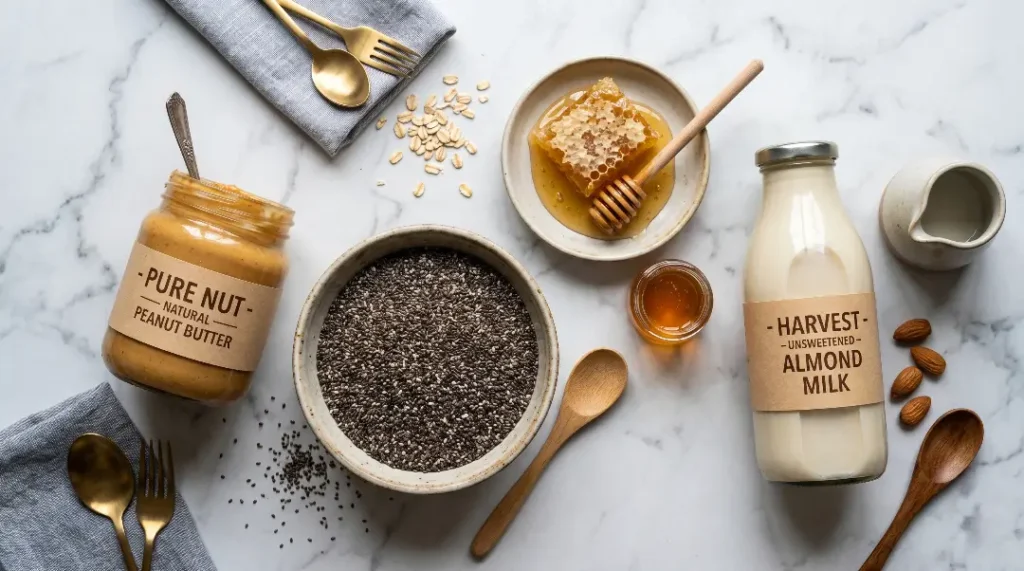
Making Peanut Butter and Honey Chia Pudding requires very few ingredients, most of which you likely already have at home. Here is what goes into a standard two-serving batch:
For the base pudding:
Two cups of milk of your choice (dairy milk, almond milk, oat milk, and coconut milk all work well), four tablespoons of chia seeds, two tablespoons of natural peanut butter, one to two tablespoons of honey (adjusted to your preferred sweetness level), half a teaspoon of pure vanilla extract, and a small pinch of salt to enhance the peanut butter flavor.
Optional toppings:
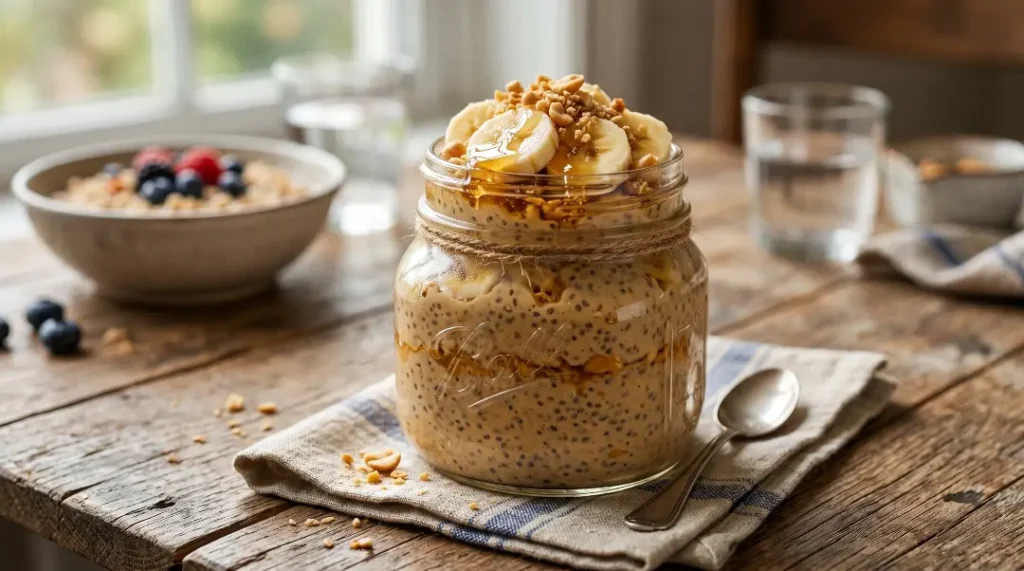
Sliced banana, chopped roasted peanuts, a drizzle of extra honey, granola, fresh berries, a light sprinkle of cinnamon, or a few dark chocolate chips.
The salt deserves a special mention. Even though the amount is tiny, it makes a noticeable difference in how the peanut butter flavor comes through. Salt enhances savory notes and balances sweetness, so do not skip it.
Step-by-Step Instructions for Perfect Chia Pudding
Making this pudding is genuinely simple, but a few small techniques make the difference between a pudding that sets beautifully and one that ends up with clumpy seeds floating in liquid.
Step 1: Warm the Peanut Butter Slightly
If your peanut butter has been in the refrigerator or is particularly thick, warm it for about ten seconds in the microwave or stir it vigorously. Slightly softened peanut butter blends much more easily into the milk and prevents it from clumping at the bottom of the jar.
Step 2: Combine the Wet Ingredients
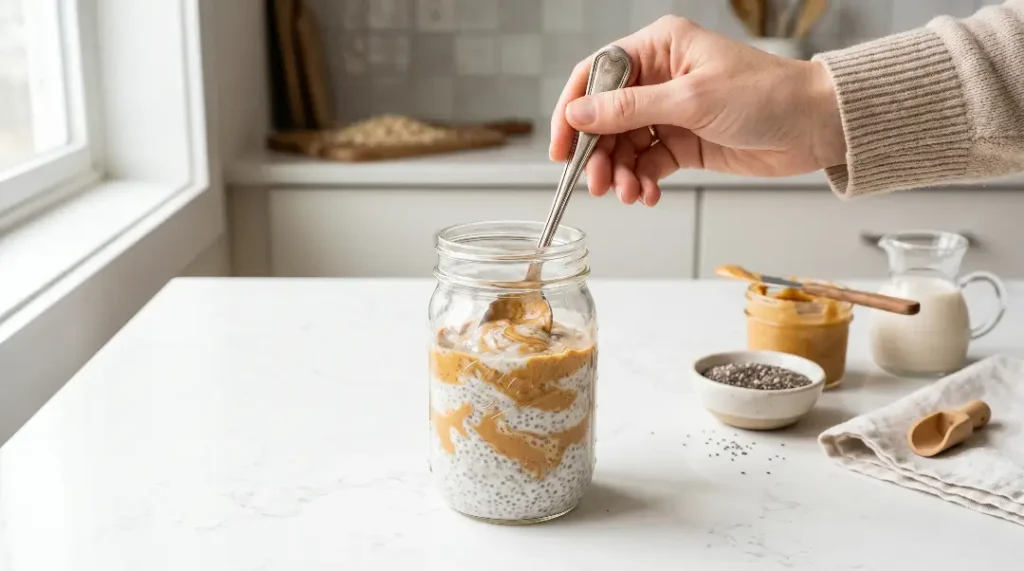
In a jar or bowl, whisk together the milk, peanut butter, honey, vanilla extract, and salt. Whisk until the peanut butter is fully dissolved and the mixture looks uniform. If you are using a natural peanut butter that has separated, make sure you stir it thoroughly before measuring.
Step 3: Add the Chia Seeds
Add the chia seeds to the mixture and stir well. This is where many people go wrong. After the initial stir, wait about five minutes and then stir again. This second stir breaks up any clumps that may have formed as the seeds start to absorb liquid. Chia seeds have a tendency to clump together if they are not disturbed early in the hydration process.
Step 4: Refrigerate
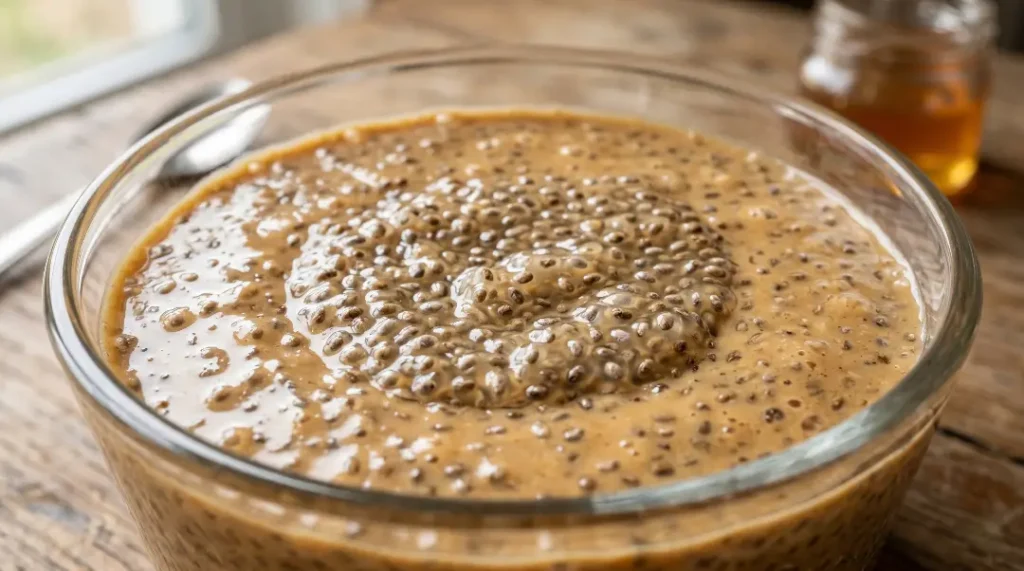
Cover your jar or bowl and place it in the refrigerator. For a minimum result, four hours is enough. For the best texture, leave it overnight, which is typically eight to twelve hours. The pudding will thicken significantly during this time.
Step 5: Check and Stir Before Serving
When you pull the pudding out, give it a good stir. If it seems too thick, add a splash of milk and stir until you reach your preferred consistency. If it seems too thin, let it sit in the refrigerator for another hour.
Step 6: Add Toppings and Serve
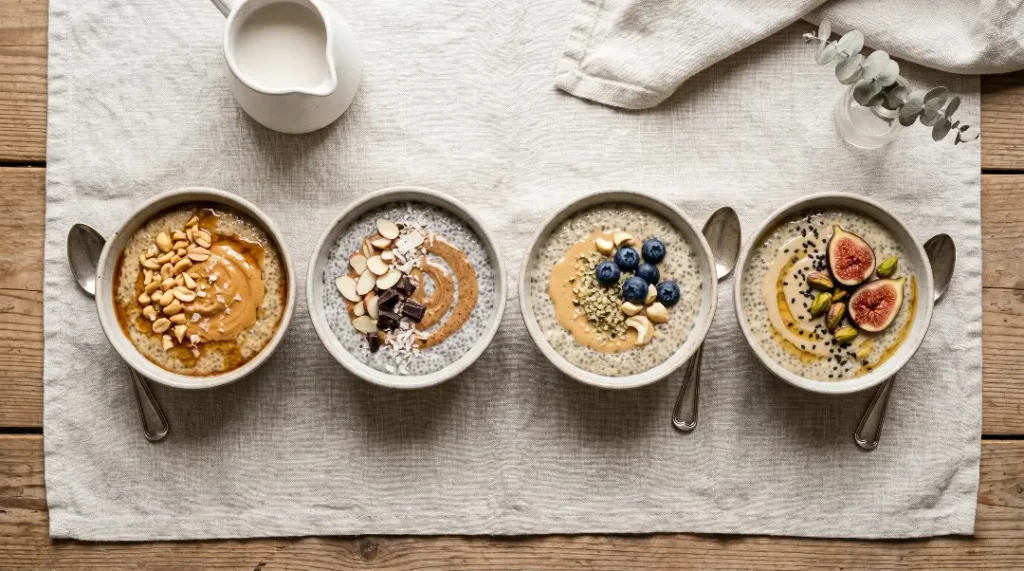
Top the pudding with your chosen toppings and serve immediately. The contrast between the creamy pudding base and crunchy toppings like granola or chopped peanuts adds a pleasant textural dimension to each bite.
Getting the Ratios Right Every Time
The most important ratio in Peanut Butter and Honey Chia Pudding is the proportion of chia seeds to liquid. The standard ratio is one tablespoon of chia seeds per half cup of liquid, or equivalently, four tablespoons of chia seeds per two cups of liquid.
If you use too few chia seeds relative to the liquid, the pudding will not set properly and will remain thin and watery. If you use too many, the pudding becomes almost solid and loses that smooth, spoonable texture that makes it enjoyable.
Here is a quick reference guide:
For a single serving (about one cup): use two tablespoons of chia seeds, one cup of milk, one tablespoon of peanut butter, and half to one teaspoon of honey.
For a double serving (about two cups): use four tablespoons of chia seeds, two cups of milk, two tablespoons of peanut butter, and one to two teaspoons of honey.
For a large batch (about four cups): use eight tablespoons (half a cup) of chia seeds, four cups of milk, four tablespoons of peanut butter, and two to four teaspoons of honey.
The peanut butter and honey amounts are more flexible and can be adjusted entirely to taste. Some people love a very pronounced peanut butter flavor and will use three tablespoons per cup of liquid. Others prefer a more subtle background note. Start with the amounts given and adjust from there based on your preference.
Choosing the Right Milk for Your Pudding
The type of milk you use will noticeably affect both the flavor and texture of your Peanut Butter and Honey Chia Pudding. Here is how each option performs:
Whole dairy milk produces a rich, creamy pudding with a neutral flavor that lets the peanut butter and honey shine. It sets reliably and has a pleasant weight to it.
Almond milk is the most popular non-dairy choice. It has a mild, slightly nutty flavor that complements peanut butter beautifully. The pudding will be slightly lighter in texture than dairy milk versions. Use unsweetened almond milk so you can control the sweetness level with honey.
Oat milk produces a noticeably creamier texture than almond milk and has a subtle sweetness of its own. This can reduce how much honey you need. Oat milk also tends to make the pudding a bit thicker, which many people enjoy.
Full-fat coconut milk from a can creates an exceptionally rich, almost dessert-like pudding. The coconut flavor is present but does not overpower the peanut butter. This version is higher in calories but incredibly satisfying.
Coconut milk beverage (the carton version, not the can) is lighter than canned coconut milk and produces a pudding with a subtle coconut note and a medium-weight texture.
If you are making this for the first time, unsweetened almond milk or whole dairy milk are great starting points because they are most likely to produce the result you are expecting.
Peanut Butter Alternatives Worth Trying
While traditional peanut butter gives this pudding its classic flavor, there are several alternatives that produce equally delicious results and cater to different dietary needs.
Almond butter produces a slightly lighter, more refined flavor. It is less salty and savory than peanut butter but pairs beautifully with honey. The texture is similar and the pudding sets the same way.
Cashew butter is remarkably creamy and has a naturally sweeter, milder flavor. It blends into liquid extremely smoothly and produces a very luxurious texture. This is an excellent choice for people who find peanut butter too strong.
Sunflower seed butter is a great option for people with tree nut or peanut allergies. It has a distinct, slightly roasted flavor and a rich texture. Keep in mind that sunflower seed butter can sometimes cause a slight green discoloration in the pudding over time due to a reaction between chlorogenic acid in the seeds and baking soda (though this pudding has no baking soda, refrigeration for very long periods can sometimes cause a slight color shift). It is entirely safe to eat.
Tahini (sesame seed paste) is a slightly more adventurous swap that creates a Middle Eastern-inspired flavor profile. Combined with honey, it creates something reminiscent of halva. The flavor is earthy, nutty, and complex.
Creative Variations to Keep Things Interesting
One of the best qualities of Peanut Butter and Honey Chia Pudding is how easily it adapts. Here are some variations that stay true to the spirit of the original while offering new flavor experiences.
Chocolate Peanut Butter Honey Chia Pudding
Add one tablespoon of unsweetened cocoa powder or raw cacao powder to the base mixture. The chocolate and peanut butter combination is timeless, and the honey rounds out any bitterness from the cocoa. Top with a few dark chocolate chips for extra richness.
Banana Peanut Butter Honey Chia Pudding
Blend one ripe banana into the milk before adding the other ingredients. The banana adds natural sweetness (which means you can reduce the honey), a smooth texture, and a subtle tropical note that works wonderfully with peanut butter.
Cinnamon Spiced Version
Add half a teaspoon of cinnamon and a tiny pinch of cardamom to the base mixture. This spiced version feels particularly warming and comforting, and it pairs well with sliced apple or pear as a topping.
PB and J Inspired Version
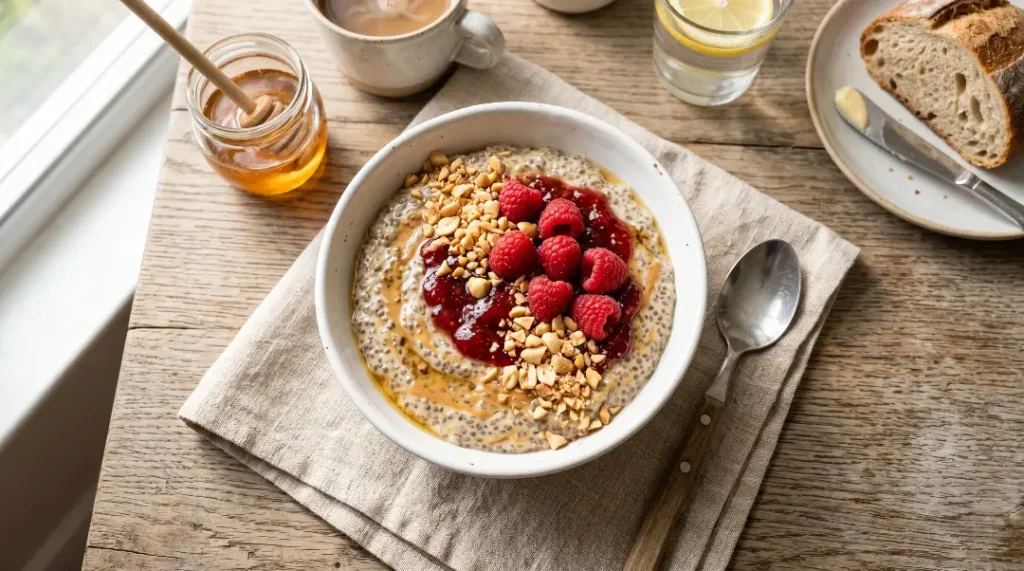
Keep the base recipe as written and top the finished pudding with a spoonful of strawberry or raspberry jam and some fresh berries. The combination of peanut butter, honey, and berry jam recreates all the flavors of a classic sandwich in pudding form.
High Protein Version
Stir one scoop of vanilla or chocolate protein powder into the base mixture. This version is ideal as a post-workout snack or for anyone aiming to increase their daily protein intake. Be aware that protein powder can affect the thickness of the pudding, so you may need to adjust the liquid amount slightly.
How to Meal Prep Chia Pudding for the Week
Chia pudding is one of the best foods for meal prepping because it keeps well in the refrigerator for up to five days without losing quality. In fact, many people find that pudding made two or three days in advance tastes even better than freshly made, because the flavors have more time to meld together.
Here is a practical approach to meal prepping a full week of Peanut Butter and Honey Chia Pudding:
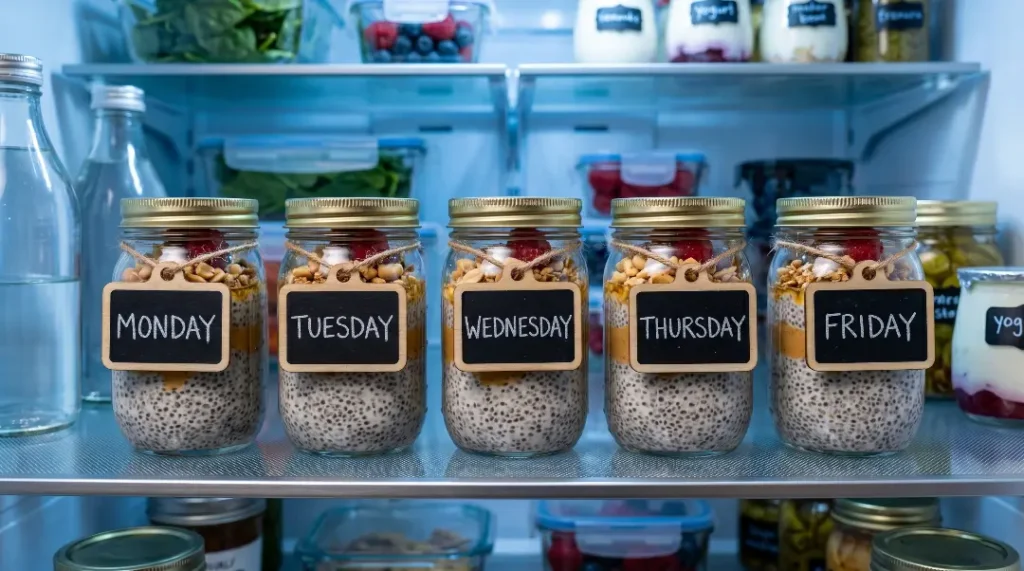
On Sunday evening, make a large batch using four cups of milk, eight tablespoons of chia seeds, four tablespoons of peanut butter, and three to four teaspoons of honey. Divide the mixture evenly among five small mason jars or airtight containers. Seal them and store them in the refrigerator.
Keep toppings separate until you are ready to eat. Fresh fruit, granola, and nuts will stay crisp and fresh when stored separately, while the pudding base remains ready in its jar. Each morning, pull out a jar, add your toppings, and you are done.
Storage tips to keep in mind:
Always use airtight containers to prevent the pudding from absorbing any refrigerator odors. Do not freeze chia pudding, as the texture changes significantly after thawing and becomes unpleasantly watery. If the pudding thickens too much during storage, stir in a splash of milk before eating.
Common Mistakes and How to Fix Them
Even though this recipe is straightforward, a few common issues can come up. Here is how to handle them.
The pudding is too thin after overnight refrigeration. This usually means the chia seed to liquid ratio was off. For the next batch, add an extra half tablespoon of chia seeds per cup of liquid. For the current batch, stir in one additional tablespoon of chia seeds and return to the refrigerator for two to three more hours.
The pudding has clumps of dry chia seeds. This is the result of not stirring the pudding during the first five to ten minutes after mixing. The seeds clump together before they have fully dispersed in the liquid. To fix it, use an immersion blender or regular blender to smooth out the pudding. Next time, remember to give it a second stir about five minutes after the first.
The peanut butter is floating or separating. This happens when the peanut butter is not fully incorporated before adding the chia seeds. Warm the peanut butter slightly and whisk it more vigorously into the milk before adding the seeds.
The pudding is too sweet or not sweet enough. Honey varies quite a bit in sweetness depending on the variety, so amounts are always approximate. Simply taste as you go and adjust. Remember you can always add more honey to the finished pudding.
The pudding tastes bland. Check whether you added the pinch of salt. Salt is a flavor enhancer that makes the peanut butter flavor pop. Also, vanilla extract plays an important supporting role. Even just half a teaspoon makes a noticeable difference.
Is Peanut Butter and Honey Chia Pudding Good for Weight Management?
This is a question that comes up often, and the honest answer is: it depends on how you use it and what your overall diet looks like.
The case for including it in a weight management plan is strong. The combination of fiber from chia seeds, protein from peanut butter, and healthy fats from both creates a meal that is highly satiating. Research consistently shows that meals high in fiber, protein, and healthy fats reduce appetite and help people eat fewer overall calories throughout the day. The pudding takes a long time to digest, which means hunger stays at bay for several hours.
The calorie content is worth being aware of. A standard single serving (made with one cup of almond milk, two tablespoons of chia seeds, one tablespoon of peanut butter, and one teaspoon of honey) typically contains around 280 to 320 calories. This is a perfectly reasonable calorie level for a breakfast or snack, but if toppings like granola, banana, and extra honey are added generously, the total can climb quickly.
For people focused on weight management, the most practical approach is to be intentional about toppings, use unsweetened plant milk as the base, and keep the honey to about one teaspoon rather than two. The pudding is naturally nutritious and filling, so you do not need to load it with toppings to enjoy it.
Who Should Be Mindful About This Recipe?
Peanut butter allergies are among the most common and serious food allergies. Anyone with a peanut allergy should obviously avoid peanut butter entirely and use a safe alternative like sunflower seed butter or pumpkin seed butter instead.
People managing blood sugar should note that while this pudding is lower on the glycemic index than many breakfast options, honey is still a form of sugar. Using a smaller amount of honey and pairing the pudding with a source of protein and fiber (which it already provides) helps moderate any blood sugar impact. Consulting with a healthcare provider or registered dietitian is always a good idea for people with diabetes or prediabetes.
Young children under one year of age should not be given honey, as it carries a risk of infant botulism. Maple syrup or mashed banana can be used as a sweetener substitute for older toddlers and children.
People watching their calorie intake should be aware of portion sizes, particularly with peanut butter, which is calorie-dense. Even natural peanut butter contains about 190 calories per two-tablespoon serving, so a little goes a long way in terms of both flavor and nutrition.
The Science of Why This Flavor Combination Works
There is a reason peanut butter and honey have been paired together for generations. It comes down to both flavor chemistry and sensory perception.
Peanut butter is rich in glutamates, which are compounds that trigger umami, the savory fifth taste. It also contains Maillard reaction products from the roasting of peanuts, which contribute roasted, slightly bitter, and deeply complex flavor notes. These savory, roasted, and slightly bitter notes create an inherent tension that the palate wants to resolve.
Honey steps in as the resolution. Its sugars (primarily fructose and glucose) activate the sweet taste receptors on the tongue, creating a contrast with the savory, slightly bitter notes in the peanut butter. The brain perceives this contrast as deeply satisfying because it represents a combination of multiple taste categories being fulfilled simultaneously.
Salt amplifies both sides of this equation. It suppresses bitterness (making the peanut butter taste less harsh) and enhances the sweetness of the honey. This is why the pinch of salt in the recipe is not just an afterthought.
Chia seeds, with their nearly neutral flavor and smooth, creamy texture once hydrated, serve as the perfect canvas for this combination. They do not introduce competing flavors. They simply deliver the peanut butter and honey to your palate in a thick, luxurious medium that makes each bite feel like a genuine treat.
Serving Suggestions and Topping Ideas
The beauty of Peanut Butter and Honey Chia Pudding is how well it accepts toppings and accompaniments. Here are some ideas organized by category:
Fruits that pair well: Banana slices (a classic), thinly sliced apple, halved grapes, fresh blueberries, sliced strawberries, and dried mango or apricot for a chewy contrast.
Crunch elements: Roughly chopped roasted peanuts, granola, toasted oats, pumpkin seeds, sunflower seeds, crushed graham crackers, or cacao nibs.
Extra drizzles: A light drizzle of extra honey, a ribbon of melted dark chocolate, a spoonful of jam, or a light pour of coconut cream.
Warm spice additions: A dusting of cinnamon, a small pinch of cardamom, or a tiny amount of ground ginger added before serving.
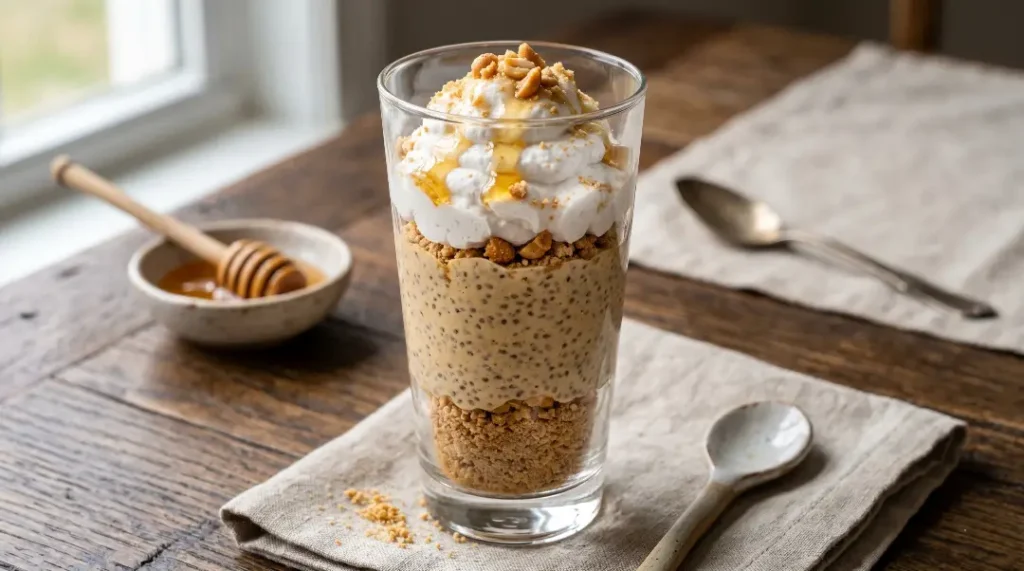
For a dessert version: Serve in a small glass, layer with crushed graham crackers at the bottom, add the pudding, and top with whipped coconut cream and a drizzle of honey for something that genuinely resembles a parfait or a no-bake cheesecake.
How Chia Pudding Compares to Other Common Breakfasts
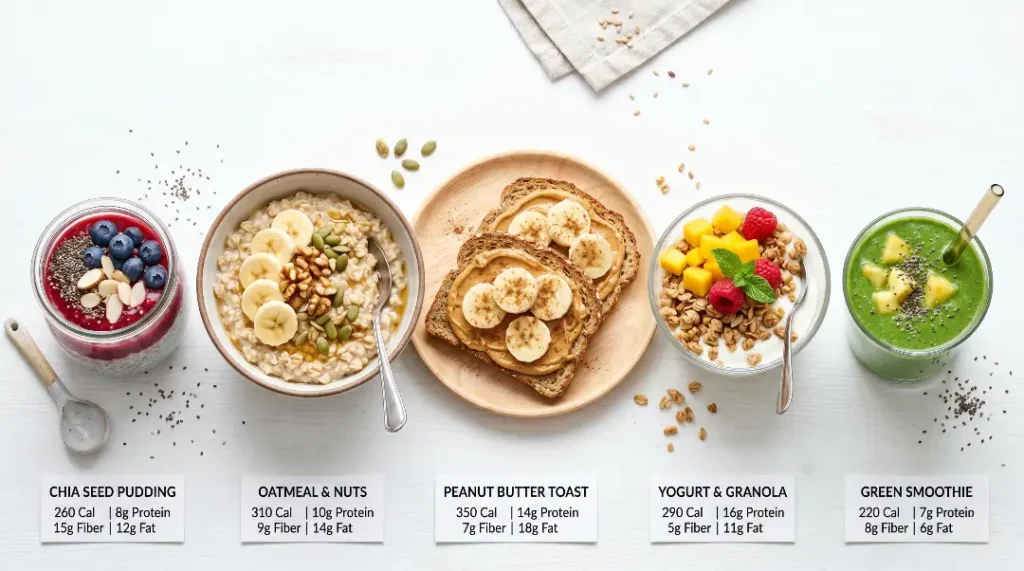
To put the nutritional value of Peanut Butter and Honey Chia Pudding into context, it helps to compare it to some other popular breakfast choices.
Compared to a bowl of instant oatmeal with added sugar, chia pudding generally provides more protein, more healthy fat, significantly more fiber, and a lower glycemic impact. Instant oatmeal often has added sugar and fewer nutrients per serving.
Compared to a yogurt parfait, chia pudding offers more fiber and omega-3 fatty acids, though yogurt provides more calcium and probiotics. Combining chia pudding with a small amount of yogurt as a topping can give you both.
Compared to toast with peanut butter, chia pudding provides more fiber, more omega-3s, and a texture that many people find more satisfying and filling.
Compared to a smoothie, chia pudding requires less prep, has a longer shelf life, and tends to keep hunger away for longer because it takes more time to eat and digest.
None of these comparisons are meant to suggest that other breakfasts are bad choices. Rather, they illustrate that Peanut Butter and Honey Chia Pudding holds its own very well nutritionally while also being extremely convenient and genuinely enjoyable to eat.
Sustainability and Ingredient Sourcing Notes
For anyone interested in the environmental and ethical dimensions of what they eat, it is worth noting a few things about the main ingredients.
Chia seeds are generally considered an environmentally friendly crop. They are drought-resistant, require minimal pesticides, and are often grown in arid regions of Latin America where they can be produced with relatively low water usage compared to other protein and omega-3 sources.
Peanuts are actually one of the more environmentally efficient crops available. They are nitrogen-fixing legumes, meaning they replenish soil nitrogen rather than depleting it. They also require significantly less water than tree nuts like almonds or cashews. Choosing peanut butter from brands that source peanuts sustainably and use minimal processing ensures you are getting the most nutritional and environmental value.
Honey comes with more complexity. Conventional honey production varies widely in quality and ethics. Choosing raw, local honey when possible supports local beekeepers and tends to produce a more nutritionally complete product. If you follow a vegan diet, maple syrup, date syrup, or agave nectar are effective substitutes that produce excellent results in this pudding.
Frequently Asked Questions
Q) Can I make this pudding without refrigerating it overnight?
Yes, but the texture will be better with longer refrigeration. The minimum time is about four hours. If you are in a hurry, you can speed up the process slightly by placing the jar in the freezer for thirty to forty-five minutes before moving it to the refrigerator, but this is not recommended as a regular practice.
Q) Can chia pudding be heated and eaten warm?
Absolutely. Some people enjoy warm chia pudding in cooler months. Gently heat it in a saucepan over low heat, stirring constantly, or microwave in thirty-second intervals. The texture will soften slightly when heated. Add a splash of milk if it becomes too thick.
Q) How long does chia pudding last in the refrigerator?
Properly stored in an airtight container, chia pudding keeps well for up to five days. The flavor and texture remain good throughout, and it actually often improves after the first day.
Q) Can I use flavored peanut butter?
You can, but be aware that many flavored peanut butters contain added sugar, artificial flavors, or hydrogenated oils. If you are choosing a flavored variety, check the ingredient list carefully. Honey roasted peanut butter, for instance, can be delicious in this recipe but will make the pudding sweeter, so reduce or eliminate the added honey.
Q) What if I want a completely smooth pudding without whole chia seeds?
After the pudding has fully set overnight, blend it in a high-powered blender until completely smooth. The result is a uniformly creamy pudding without any visible seeds. This is a great option for people who are put off by the tapioca-like texture of whole chia seeds.
Q) Is this recipe vegan?
It can be made fully vegan by using plant-based milk (such as almond, oat, or coconut milk) and replacing honey with maple syrup, agave, or date syrup. All other ingredients in the standard recipe are already plant-based.

Final Thoughts
Peanut Butter and Honey Chia Pudding is one of those rare recipes that genuinely has everything going for it. It is quick to prepare, requires no cooking, stays fresh for days, adapts to dozens of variations, and delivers real nutritional value without sacrificing taste. It works as a breakfast, a snack, or even a light dessert depending on how you style and portion it.
The combination of chia seeds, peanut butter, and honey is not just trendy. It is backed by the nutritional properties of each ingredient and the simple pleasure of a flavor combination that has stood the test of time. Once you get comfortable with the basic ratio and technique, you will find yourself experimenting with different milks, nut butters, spices, and toppings until you have a version that feels completely and personally yours.
Start with the base recipe this evening. Stir it together, pop it in the refrigerator, and wake up tomorrow to a breakfast that is already waiting for you. That kind of effortless, nourishing start to the day is genuinely hard to beat.
If you found this guide helpful, feel free to share it with someone who could use an easy, nutritious meal prep idea. And if you try a creative variation that turns out especially well, take note of what you changed because recipes this flexible always have room to become something even better.