The Ultimate Guide to Making Grilled Salmon with Quinoa Salad at Home
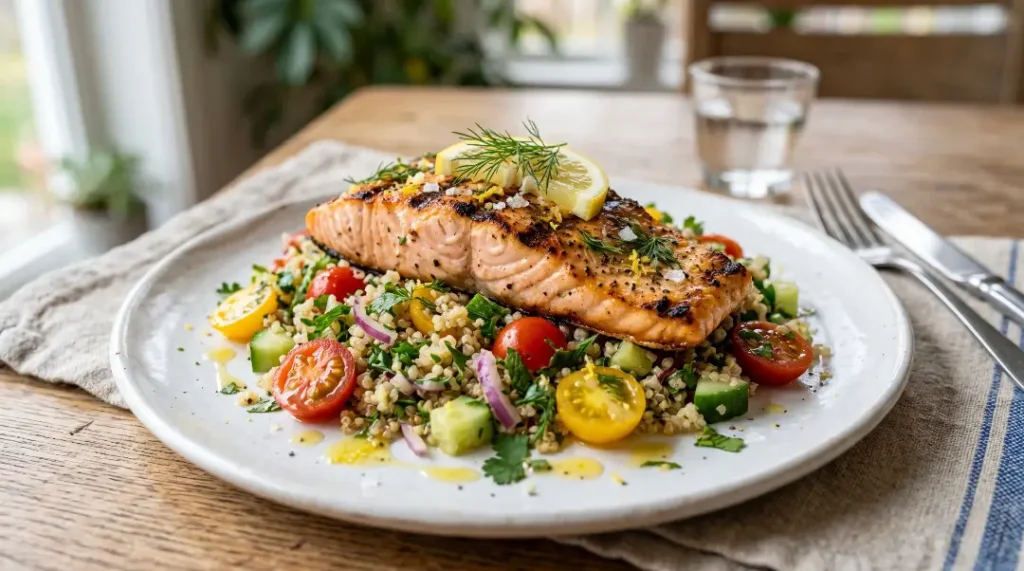
If you have been looking for a meal that checks every box — nutritious, satisfying, visually stunning, and genuinely delicious — grilled salmon with quinoa salad is exactly what your kitchen needs. This combination is not just a passing food trend. It is a well-balanced, protein-rich dish that has earned a permanent spot on dinner tables across the world, and once you understand how to put it together properly, you will see why so many home cooks and professional chefs keep coming back to it.
Grilled salmon with quinoa salad brings together two nutritional powerhouses in one plate. The salmon brings healthy omega-3 fatty acids, high-quality protein, and a rich, satisfying flavor that is hard to match. The quinoa salad adds fiber, plant-based protein, and a colorful variety of vegetables and herbs that make the dish feel fresh and complete. Together, they create something that fuels your body well while genuinely tasting great.
This guide walks you through everything you need to know, from selecting the right salmon fillet to cooking quinoa perfectly, building a flavorful dressing, and putting together a salad that looks as good as it tastes. Whether you are cooking for yourself on a weeknight or preparing a dish for guests, this complete breakdown has you covered.
Why Grilled Salmon with Quinoa Salad Deserves a Spot in Your Weekly Rotation
Before getting into the how-to, it helps to understand why this particular meal stands out among the hundreds of healthy dishes you could make.
It is genuinely easy to prepare. Many people assume that a dish this impressive must be complicated. The truth is, grilled salmon and quinoa salad can both be ready in under 40 minutes, and most of the steps happen simultaneously. While the quinoa is cooking, you are seasoning the salmon. While the salmon grills, you are chopping the vegetables. The process flows naturally and does not require advanced cooking skills.
It fits into almost any dietary framework. Whether you are following a high-protein diet, a gluten-free lifestyle, a Mediterranean-style eating plan, or simply trying to eat more whole foods, this dish works for you. It is naturally gluten-free, rich in protein, and packed with micronutrients.
It holds up well for meal prep. If you like to cook in batches and prepare food ahead for the week, this meal is ideal. The quinoa salad keeps beautifully in the refrigerator for several days, and grilled salmon reheats well or can even be enjoyed cold over the salad.
The flavor is complex without being complicated. Grilled salmon has a natural richness and a slightly smoky, charred quality from the grill that pairs wonderfully with the light, herby freshness of a quinoa salad. The contrast of textures and flavors is what makes this dish so satisfying every single time.
Choosing the Right Salmon for Grilling
The quality of your salmon matters more than almost anything else in this recipe. A great piece of fish does not need much to taste exceptional, while a poor-quality one will disappoint no matter how carefully you season it.
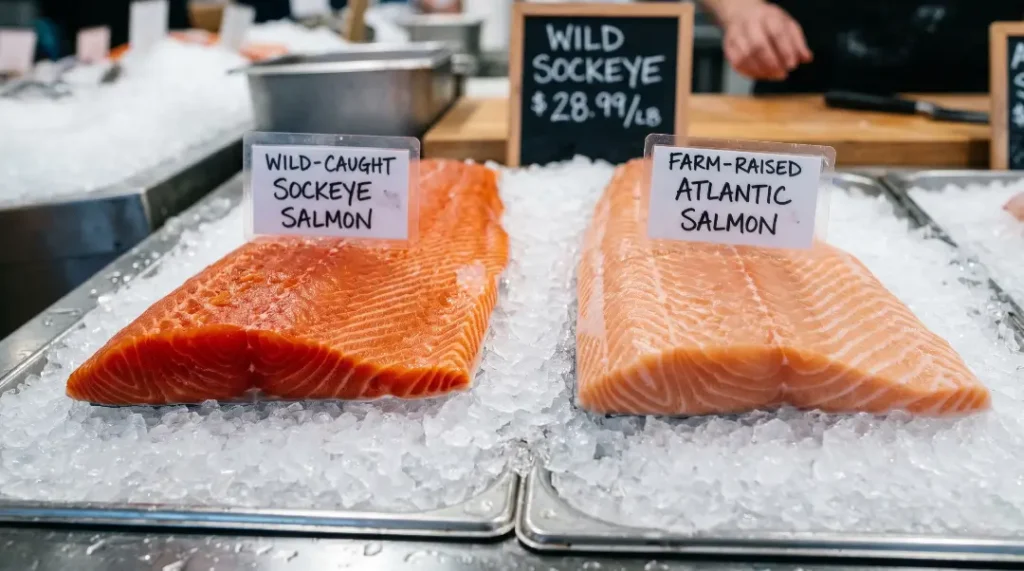
Wild-Caught vs. Farm-Raised Salmon
This is probably the most common question people have when buying salmon. Both are widely available, but they are different in meaningful ways.
Wild-caught salmon — particularly Pacific varieties like sockeye, coho, and Chinook — tends to have a deeper, more robust flavor and a firmer texture. It is also generally higher in omega-3 fatty acids and lower in overall fat. Sockeye salmon has a beautiful deep red color and a bold, rich taste that holds up especially well to grilling.
Farm-raised Atlantic salmon is milder in flavor, fattier, and often more affordable. The higher fat content actually works in your favor when grilling, because it keeps the fish moist and prevents it from drying out. If you are newer to cooking salmon, farm-raised can be a more forgiving option.
For grilled salmon with quinoa salad, both work well. The key is freshness. Look for fillets that smell like clean ocean water rather than anything sharp or fishy. The flesh should be firm, moist, and vibrant in color with no dull or grayish patches.
Skin-On vs. Skinless Fillets
For grilling, skin-on fillets are strongly recommended. The skin acts as a natural barrier between the delicate flesh and the hot grill grates, protecting the fish from sticking and helping it cook more evenly. The skin also crisps up beautifully when grilled on a hot surface, adding a pleasant texture contrast.
If you prefer not to eat the skin, it is very easy to remove after cooking. A spatula slides right under the crispy skin and lifts the flesh away cleanly.
How Much Salmon to Buy
A standard serving of salmon is around 170 to 200 grams per person. For a grilled salmon with quinoa salad that serves four people, you would want approximately 700 to 800 grams of salmon fillets total. If you are feeding people with larger appetites or using the leftovers for meal prep, buying a full side of salmon can be a cost-effective option.
The Perfect Salmon Marinade and Seasoning
One of the great things about salmon is that it is delicious with very simple seasoning, but it also absorbs marinades beautifully when you want to add more depth.
Simple Dry Seasoning Option
If you are short on time or prefer to let the natural flavor of the fish shine, a basic dry seasoning works wonderfully.
Ingredients for simple seasoning (per fillet):
1 teaspoon olive oil, 1/2 teaspoon sea salt, 1/4 teaspoon black pepper, 1/4 teaspoon garlic powder, 1/4 teaspoon smoked paprika, a small pinch of cayenne (optional, for subtle heat).
Rub the olive oil over both sides of the fillet, then press the seasoning blend onto the flesh side. Let it sit at room temperature for 10 to 15 minutes before grilling. This rest period allows the seasoning to adhere properly and helps the fish cook more evenly by reducing the temperature difference between the center and the surface.
Lemon Herb Marinade Option
For a slightly more aromatic result, this marinade adds a citrusy brightness that complements the quinoa salad beautifully.
Lemon herb marinade (serves 4):
3 tablespoons olive oil, juice and zest of 1 large lemon, 2 garlic cloves finely minced, 1 tablespoon fresh dill chopped, 1 tablespoon fresh parsley chopped, 1/2 teaspoon salt, 1/4 teaspoon black pepper.
Whisk all ingredients together and pour over the salmon fillets in a shallow dish. Cover and refrigerate for 20 to 30 minutes. Do not marinate for longer than an hour because the acidity of the lemon juice will begin to cook the surface of the fish, changing its texture before it even hits the grill.
Honey Garlic Glaze Option
For those who enjoy a touch of sweetness with their savory, this glaze creates a beautifully caramelized crust on the salmon.
Honey garlic glaze:
2 tablespoons honey, 2 tablespoons soy sauce or tamari, 1 tablespoon olive oil, 2 garlic cloves minced, 1 teaspoon fresh ginger grated.
Brush this glaze over the flesh side of the salmon just before placing it on the grill, and again halfway through cooking. The natural sugars in the honey will caramelize and create a gorgeous, slightly sticky, golden surface.
How to Grill Salmon Perfectly Every Time
Grilling salmon intimidates a lot of people because fish can stick to grates and fall apart easily. With the right technique, none of that happens.
Preparing the Grill
Whether you are using a gas or charcoal grill, proper preparation makes a big difference.
For a gas grill: Preheat it to medium-high heat, around 200 to 220 degrees Celsius. Once it reaches temperature, use a grill brush to scrub the grates thoroughly. Then fold a paper towel, soak it in a neutral oil like canola or vegetable oil, grip it with tongs, and wipe the grates generously. Repeat this two or three times. A well-oiled, clean grate is your best defense against sticking.
For a charcoal grill: Let the coals reach a gray-ash state before cooking. Arrange them for a two-zone setup, one hot zone for grilling and one cooler zone in case you need to move the fish if it is cooking too fast. Clean and oil the grates the same way as with a gas grill.
The Grilling Process
Place the salmon fillets skin-side down on the hot, oiled grates. Here is the key instruction: do not touch them. Do not prod, move, or attempt to flip the salmon for at least 4 to 5 minutes. The fish will naturally release from the grates when it is ready to be flipped. If you try to force it too early, it will stick and tear.
Once the flesh has turned opaque about two-thirds of the way up the side and the skin is crispy, carefully slide a flat spatula under the fillet and flip it gently. Cook on the flesh side for an additional 2 to 3 minutes depending on thickness.
The internal temperature you are looking for is 52 to 57 degrees Celsius for a slightly translucent, very moist center, or 63 degrees Celsius for fully opaque and flaky. Most people prefer salmon slightly under the well-done mark because it stays juicier and more flavorful.
A general timing guide: for fillets that are about 2.5 cm thick, plan on approximately 8 to 10 minutes total grill time.
IMAGE PROMPT 3: Salmon fillets sizzling skin-side down on a clean outdoor grill with visible grill marks forming, wisps of smoke rising, a pair of stainless tongs resting nearby, warm evening light, lifestyle food photography, vivid colors and natural outdoor setting.
Cooking Quinoa the Right Way
Quinoa has a reputation for being tricky, mostly because people do not rinse it properly. When you handle it correctly, it is actually one of the easiest grains to cook and consistently delivers a light, fluffy result.
Rinsing Quinoa Is Not Optional
Quinoa is naturally coated with a compound called saponin, which has a bitter, soapy taste. Most packaged quinoa is pre-rinsed, but rinsing it again yourself under cold running water for about 30 seconds takes away any residual bitterness and makes a noticeable difference in the final flavor.
Place the quinoa in a fine mesh sieve and run cold water over it while stirring with your fingers. You will notice the water turns slightly foamy at first, then runs clear. Once it runs clear, you are good to go.
The Correct Water Ratio
Use a 1:2 ratio of quinoa to liquid. For every 1 cup of dry quinoa, use 2 cups of water or broth. Using low-sodium vegetable broth instead of plain water adds a subtle depth of flavor that elevates the salad noticeably.
Stovetop Cooking Method
Combine the rinsed quinoa and cold liquid in a medium saucepan. Bring to a boil over medium-high heat, then reduce the heat to low, cover with a tight-fitting lid, and simmer for exactly 15 minutes. Do not lift the lid during cooking. After 15 minutes, remove from heat and let it sit covered for 5 minutes. Then fluff with a fork.
Properly cooked quinoa is light and fluffy. Each grain will have a small white ring visible around it — that is the germ of the quinoa separating, which tells you it is fully cooked. Spread the cooked quinoa on a baking sheet to cool faster if you are in a hurry.
IMAGE PROMPT 4: A clear glass bowl filled with freshly cooked fluffy white quinoa, steam gently rising, small white rings visible around each grain, a wooden spoon resting alongside, clean kitchen counter background, natural top-down lighting, fresh and minimal aesthetic.
Building the Quinoa Salad
This is where you get to have some fun. The quinoa salad component of this dish is highly customizable, but there is a framework that consistently produces great results.
The Core Vegetables
Cherry tomatoes — halved, they add juicy sweetness and vibrant color. Use a mix of red and yellow for visual appeal.
English cucumber — diced or sliced into half-moons, cucumber brings a clean, refreshing crunch that balances the richness of the salmon.
Red onion — finely diced, it provides a sharp, pungent bite. If raw red onion is too intense for your preference, soak the diced pieces in cold water for 10 minutes, then drain. This removes much of the sharpness while keeping the color and crunch.
Bell pepper — any color works, though yellow and orange are sweeter and less bitter than green. Dice it into small, uniform pieces.
Kalamata olives — halved, they bring a briny, savory depth that plays beautifully with the lemon dressing.
Avocado — diced and added just before serving, avocado brings creaminess and healthy fats. Add it last to prevent browning.
The Herbs
Fresh herbs transform quinoa from plain to spectacular.
Fresh parsley is the most classic choice and adds a clean, green freshness. Fresh mint adds an unexpected brightness that works particularly well in summer versions of this salad. Fresh dill echoes the flavors in the salmon marinade and ties the whole dish together.
Use a generous hand with the herbs. A salad that looks heavily herbed is almost always more flavorful than one that is sparsely dressed.
Optional Add-Ins
Feta cheese, crumbled over the top, adds a creamy, salty element that works extremely well with the lemon dressing. Roasted chickpeas provide additional protein and a satisfying crunch. Sun-dried tomatoes packed in oil add an intensely concentrated, sweet tomato flavor. Toasted pine nuts or slivered almonds bring texture and a subtle nutty richness. Baby spinach or arugula can be mixed into the quinoa for added greens and nutritional value.
IMAGE PROMPT 5: An overhead flat-lay of fresh quinoa salad ingredients — halved cherry tomatoes, diced cucumber, sliced red onion, yellow bell pepper, kalamata olives, avocado cubes, and fresh parsley arranged in separate small prep bowls on a marble surface, clean natural lighting.
The Dressing That Ties It All Together
A great dressing is what makes a quinoa salad memorable rather than forgettable. The dressing for this dish should be bright, acidic, and herbaceous to complement both the salad and the grilled salmon.
Classic Lemon Vinaigrette
Ingredients:
4 tablespoons extra virgin olive oil, 2 tablespoons fresh lemon juice, 1 teaspoon lemon zest, 1 teaspoon Dijon mustard, 1 small garlic clove finely minced or grated, 1 teaspoon honey or maple syrup, salt and black pepper to taste, 1 tablespoon fresh herbs such as dill, parsley, or a combination.
Whisk all ingredients together in a small bowl until emulsified, or shake them together in a small jar with a lid. Taste and adjust the balance of acid and fat according to your preference. The mustard acts as an emulsifier and helps the dressing stay blended rather than separating.
Dress the quinoa salad about 10 minutes before serving so the grain has time to absorb some of the flavors.
Tahini Lemon Dressing
Ingredients:
3 tablespoons tahini, 3 tablespoons fresh lemon juice, 2 tablespoons warm water, 1 small garlic clove grated, 1/2 teaspoon cumin, salt to taste.
Whisk together until smooth. Add more water if needed to reach a pourable consistency. This dressing adds a nutty, creamy dimension to the salad and is particularly good when feta cheese and roasted chickpeas are included.
IMAGE PROMPT 6: A small glass jar of golden lemon vinaigrette dressing with visible herb flecks and lemon zest, a halved lemon and a garlic clove nearby, droplets of dressing on the wooden table surface around it, natural warm side lighting.
Assembling the Complete Dish
Now that every component is ready, assembling the dish thoughtfully makes a real difference in the final presentation and eating experience.
Plating for Everyday Meals
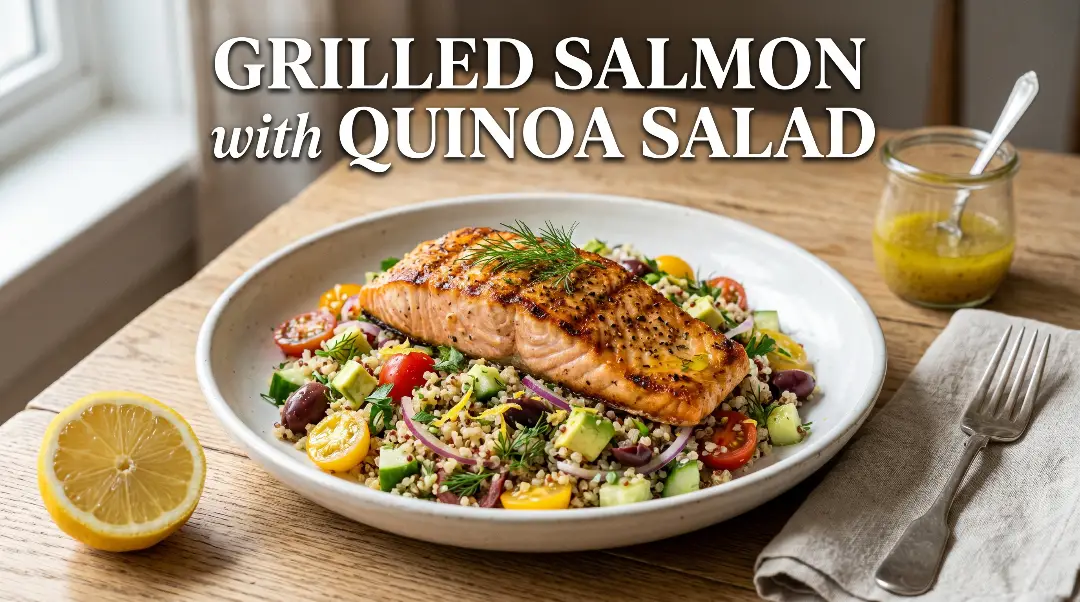
For a casual weeknight dinner, keep things simple and efficient. Spoon a generous mound of the dressed quinoa salad into the center of each plate or a wide, shallow bowl. Place the grilled salmon fillet skin-side down on top of or alongside the salad. Finish with a squeeze of fresh lemon juice over the salmon, a small drizzle of extra olive oil, and a scatter of fresh herbs.
Plating for Guests or Special Occasions
When presentation matters more, take a few extra steps. Use a ring mold or a deep round cutter to press the quinoa salad into a neat cylinder in the center of the plate. Remove the mold carefully and place the salmon fillet leaning gently against the quinoa tower. Dot the plate with a few small spoonfuls of tahini dressing or a drizzle of lemon oil. Add microgreens or edible flowers for a professional finishing touch.
Temperature Considerations
Grilled salmon with quinoa salad can be served at different temperatures depending on your preference and the occasion. The salmon is best served hot off the grill. The quinoa salad is best at room temperature or slightly cool. Combining a warm piece of salmon with a room-temperature salad creates a pleasant contrast. Avoid serving the quinoa straight from the refrigerator because cold quinoa loses some of its texture and the dressing can taste muted when chilled.
IMAGE PROMPT 7: A restaurant-quality plated dish with a thick grilled salmon fillet placed atop a colorful quinoa salad on a matte black ceramic plate, garnished with microgreens, lemon slices, and a tahini drizzle, fine-dining presentation style, moody ambient lighting.
Nutritional Value of Grilled Salmon with Quinoa Salad
One of the most compelling reasons to make this dish a regular part of your meals is its outstanding nutritional profile. This is not a dish that sacrifices health for taste or the other way around — it genuinely delivers on both fronts.
Salmon Nutrition
A 170-gram serving of grilled salmon provides approximately 34 to 38 grams of protein, which is high-quality complete protein containing all essential amino acids. This level of protein supports muscle repair, immune function, and satiety.
Omega-3 fatty acids in salmon range from 2 to 4 grams per serving depending on the variety. Omega-3s are essential fats the body cannot produce on its own. They are strongly associated with cardiovascular health, reduced inflammation, improved brain function, and better mood regulation.
Vitamin D is another major benefit. Salmon is one of the best dietary sources of vitamin D, a nutrient that a significant portion of the global population is deficient in. A single serving can provide 80 to 100 percent of the recommended daily intake.
B vitamins including B12, niacin, and B6 are all found in meaningful quantities in salmon. These play critical roles in energy metabolism and nervous system function. Salmon is also a solid source of selenium and potassium, important minerals for thyroid function, antioxidant defense, and blood pressure regulation.
Quinoa Nutrition
Quinoa stands apart from most grains because it is a complete protein, meaning it contains all nine essential amino acids. A one-cup serving of cooked quinoa provides approximately 8 grams of protein, which is significantly higher than rice, pasta, or most other grains. It also provides 5 grams of fiber, supporting digestive health and helping you feel full longer.
Quinoa is a solid source of iron, magnesium, and zinc — minerals that are often lacking in modern diets. Unlike refined grains, quinoa has a moderate glycemic index, meaning it releases energy more gradually and does not cause sharp spikes in blood sugar.
The Salad Vegetables
The vegetables in the quinoa salad add vitamins C, A, and K, additional fiber, antioxidants, and phytonutrients. The olive oil in the dressing provides monounsaturated fats that support heart health and help the body absorb fat-soluble vitamins from the vegetables.
Altogether, a complete serving of grilled salmon with quinoa salad provides a meal that is nutritionally exceptional — high in protein, rich in healthy fats, loaded with fiber, and abundant in micronutrients. It is genuinely one of the most complete single-meal options available.
IMAGE PROMPT 8: A clean infographic-style image showing salmon and quinoa side by side with illustrated nutrition icons for omega-3 fatty acids, protein, fiber, and vitamins, bold typography, minimal pastel background, healthy eating visual concept, modern flat design aesthetic.
Common Mistakes to Avoid
Even simple recipes have pitfalls. Knowing what to watch out for helps you get great results on the first attempt.
Overcooking the salmon is the single most common mistake. Overcooked salmon becomes dry, chalky, and much less flavorful. Keep a close eye on the internal temperature and pull the fish off the grill when the center still looks slightly glossy. It will continue to cook slightly from residual heat after being removed from the grill.
Skipping the resting time is another common error. Just like with meat, salmon benefits from a brief rest of 2 to 3 minutes after grilling. This allows the juices to redistribute throughout the fillet rather than running out the moment you cut into it.
Not drying the salmon before grilling is a mistake that prevents proper browning. Excess moisture on the surface of the fillet creates steam, which prevents the beautiful caramelized crust from forming. Pat the salmon fillets thoroughly dry with paper towels before applying seasoning or marinade.
Underdressing the quinoa salad is something many people do on their first attempt. Quinoa absorbs dressing very quickly, and what seems like an adequate amount right after mixing can taste quite dry after 10 minutes. Dress the salad generously, toss it well, taste it, and then add more if needed.
Serving cold quinoa straight from the fridge is an easy trap to fall into when prepping ahead. If making the quinoa ahead of time and storing it in the refrigerator, take it out at least 20 minutes before assembling the dish and add a splash of warm water and a little extra olive oil before tossing. This revives the texture and allows the dressing flavors to come back to life.
IMAGE PROMPT 9: A side-by-side comparison of perfectly cooked juicy salmon fillet on the left and an overcooked dry pale salmon fillet on the right, simple labels, clean white background, educational food photography, top-down view, clear visual contrast between the two results.
Variations to Keep Things Interesting
Once you have the base recipe down, there are many ways to change it up and keep the dish feeling fresh week after week.
Mediterranean Version
Add sun-dried tomatoes, Kalamata olives, crumbled feta, roasted red peppers, and a generous amount of fresh oregano to the quinoa salad. Use a simple olive oil and red wine vinegar dressing. Season the salmon with dried oregano, garlic, and lemon before grilling.
Asian-Inspired Version
Replace the lemon dressing with a sesame-ginger vinaigrette made from sesame oil, rice vinegar, soy sauce, fresh ginger, and a touch of honey. Add edamame, shredded purple cabbage, sliced sugar snap peas, and sesame seeds to the quinoa. Glaze the salmon with the honey garlic sauce.
Mexican-Inspired Version
Season the salmon with cumin, chili powder, and a pinch of smoked paprika. Add black beans, roasted corn, diced avocado, cherry tomatoes, and fresh cilantro to the quinoa. Dress with a lime and chipotle vinaigrette. Serve with a small dollop of Greek yogurt in place of sour cream.
Warm Winter Version
For colder months, roast the vegetables instead of using them raw. Roasted beets, butternut squash, and red onion tossed with olive oil and thyme make a hearty, warming quinoa base. Add toasted walnuts and crumbled goat cheese. Serve with a maple Dijon dressing.
IMAGE PROMPT 10: A colorful flat-lay showing four small plates side by side representing Mediterranean, Asian, Mexican, and Winter versions of quinoa salad, each with distinct toppings and garnishes, bright natural daylight, styled on a rustic wooden table, vibrant colors throughout.
Making It Ahead and Storing Leftovers
Grilled salmon with quinoa salad is a great candidate for meal prep, and knowing how to store and revive leftovers makes it even more practical.
Storing the Quinoa Salad
The dressed quinoa salad keeps well in an airtight container in the refrigerator for up to 4 days. The vegetables will soften slightly over time, but the flavors actually deepen and improve after the first day. If you are planning ahead, keep the avocado separate and add it fresh each time you serve it to prevent browning.
Storing Grilled Salmon
Grilled salmon can be stored in an airtight container in the refrigerator for up to 2 days. When reheating, use a low-temperature oven at around 130 degrees Celsius rather than a microwave. Place the salmon in an oven-safe dish, cover it loosely with foil, and warm for about 10 to 15 minutes. This method preserves the moisture and texture far better than microwaving.
Alternatively, enjoy leftover salmon cold. Cold grilled salmon flaked over a quinoa salad with a little extra lemon dressing is a genuinely delicious lunch option.
Freezing
While cooked quinoa freezes reasonably well and can be stored in portions and thawed overnight in the fridge, grilled salmon does not freeze as successfully. The texture becomes noticeably mushy after freezing and thawing. It is best made fresh or used within 2 days of cooking.
IMAGE PROMPT 11: A neat row of glass meal prep containers filled with quinoa salad and grilled salmon portions, lids ajar, stacked in a clean refrigerator, organized and colorful, bright interior lighting, practical healthy meal prep lifestyle photography, fresh and inviting.
Serving Suggestions and Pairings
Grilled salmon with quinoa salad is a complete, balanced meal on its own, but there are a few things that complement it nicely if you want to round out the table.
Bread
A slice of crusty sourdough or a warm pita alongside the dish is simple and satisfying. It is great for scooping up any extra quinoa and dressing from the plate.
Soup
A light, clear broth-based soup like a simple vegetable broth or a chilled gazpacho pairs beautifully without competing with the main flavors.
Beverages
For wine drinkers, a dry white wine with good acidity works well. Sauvignon Blanc, Pinot Grigio, or a light unoaked Chardonnay all complement salmon without overwhelming it. A dry sparkling water with a slice of lemon is an equally good non-alcoholic option.
Dessert
Since the meal itself is quite rich in protein and healthy fats, a light dessert feels like the right follow-up. Fresh fruit, a small portion of yogurt with berries, or a simple sorbet keeps the meal feeling balanced and complete.
IMAGE PROMPT 12: An elegantly set dinner table with two plates of grilled salmon and quinoa salad, two glasses of white wine, crusty bread in a basket, fresh flowers in a small vase, warm candlelight ambiance, evening dinner setting, soft romantic lighting.
Final Thoughts
Grilled salmon with quinoa salad is one of those rare dishes that manages to be everything at once. It is simple enough for a busy Tuesday evening, impressive enough to serve at a dinner party, nutritious enough to be a regular part of a health-conscious routine, and flavorful enough that you genuinely look forward to eating it.
The beauty of this dish is in its flexibility. The core technique — perfectly grilled salmon resting on a vibrant, herb-forward quinoa salad dressed with a bright lemon vinaigrette — remains consistent, but you can adapt the specific ingredients endlessly to match the season, your mood, or what happens to be in your refrigerator.
Now that you have everything you need, from selecting the fish to nailing the grill technique, building the salad, and perfecting the dressing, the only thing left is to make it. Start with the classic version described here, get comfortable with the process, and then start making it your own.
There is a reason grilled salmon with quinoa salad shows up on menus at both health-focused cafes and upscale restaurants. It deserves its excellent reputation — and it is just as good, if not better, when made fresh in your own kitchen.
Quick Reference Recipe Summary
Serves: 4 Total Time: Approximately 40 minutes Prep Time: 15 minutes Cook Time: 25 minutes
For the salmon: 4 salmon fillets (170g each) skin-on, 2 tablespoons olive oil, salt, pepper, smoked paprika, garlic powder.
For the quinoa: 1.5 cups dry quinoa rinsed, 3 cups low-sodium vegetable broth.
For the salad: 1 cup cherry tomatoes halved, 1 medium cucumber diced, 1/2 red onion finely diced, 1 yellow bell pepper diced, 1/3 cup Kalamata olives halved, 1 avocado diced, large handful fresh parsley and dill.
For the dressing: 4 tablespoons extra virgin olive oil, 2 tablespoons fresh lemon juice, 1 teaspoon Dijon mustard, 1 teaspoon honey, 1 garlic clove grated, salt and pepper.
Steps at a Glance:
Rinse and cook quinoa in broth for 15 minutes, then rest covered for 5 minutes and fluff. Season salmon fillets and let them rest at room temperature. Prepare all salad vegetables and make the dressing. Preheat and oil the grill. Grill salmon skin-side down for 4 to 5 minutes without moving, then flip and cook 2 to 3 more minutes. Toss quinoa with vegetables, herbs, and dressing. Plate the quinoa salad and top with the grilled salmon. Finish with a squeeze of fresh lemon juice and fresh herbs.