
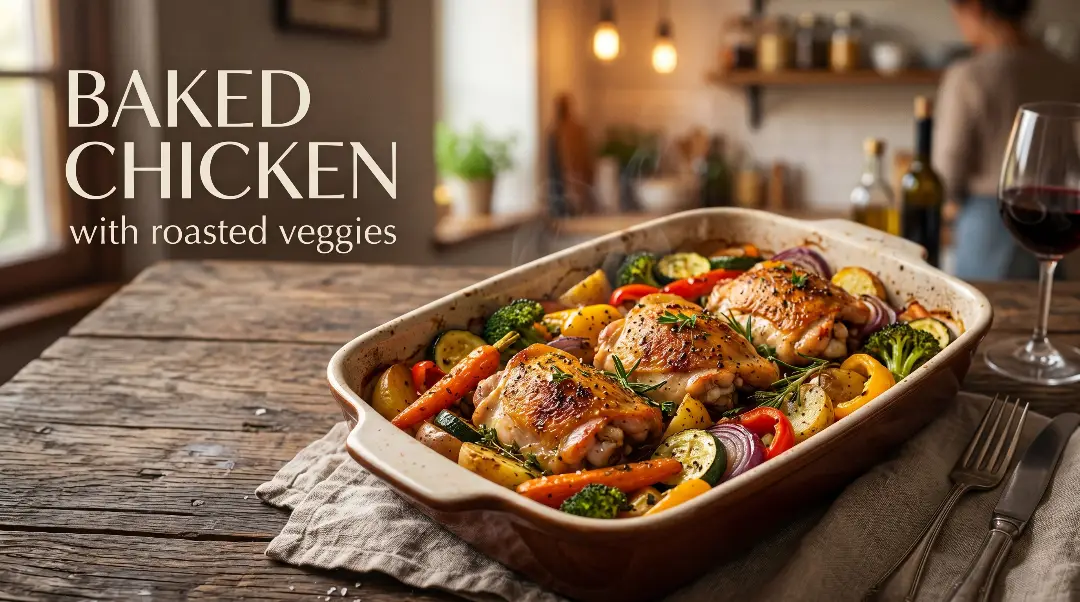
Baked Chicken with Roasted Veggies: The Ultimate One-Pan Dinner You Will Keep Making Every Week
Baked chicken with roasted veggies is one of those meals that never gets old. It is wholesome, satisfying, and surprisingly simple to put together, whether you are cooking for one or feeding a hungry family. If you have ever stood in front of your fridge at 5 p.m. wondering what to make that is both healthy and genuinely delicious, this is the answer you have been waiting for.
This is not just another dry baked chicken recipe. We are talking about juicy, golden brown chicken with perfectly caramelized vegetables, all roasted together on a single pan with bold seasoning and just the right amount of olive oil. The kind of meal that fills your kitchen with an aroma so good your neighbors might knock on the door.
In this guide, you will find everything you need to know, from choosing the right cut of chicken and the best vegetables to roast, to nailing the temperature, timing, and seasoning every single time. By the end, you will have a go-to recipe that fits into a busy weeknight, a relaxed Sunday meal prep session, or even a dinner party spread.
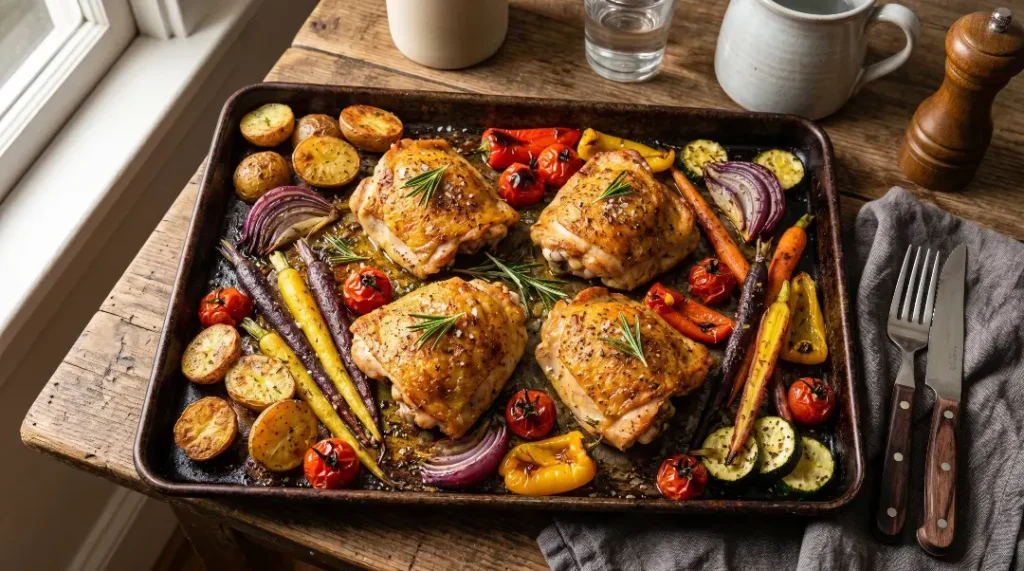
Why Baked Chicken with Roasted Veggies Is a Winner Every Time
There is a reason this dish has earned a permanent spot in so many home kitchens around the world. It checks every box that matters: great taste, good nutrition, minimal cleanup, and total flexibility. You can change up the vegetables, switch the spices, and even swap the protein, but the method stays the same and the results are always outstanding.
What makes this dish so practical is the one-pan approach. Everything goes onto a single sheet pan and into the oven together. There are no multiple pots to wash, no standing over a stove, and no complicated timing. The oven does the hard work for you.
From a nutrition standpoint, this meal is a powerhouse. Chicken is an excellent source of lean protein that supports muscle repair and keeps you full for hours. When you pair it with fiber rich roasted vegetables like broccoli, carrots, bell peppers, and zucchini, you get a balanced plate full of vitamins, minerals, and antioxidants. It is the kind of meal that fuels your body without making you feel heavy afterward.
And then there is the flavor. Roasting is a magical cooking technique. The dry heat of a hot oven pulls moisture out of vegetables and chicken skin, concentrating their natural sugars and creating those gorgeous caramelized edges that taste incredible. No steamed, soggy vegetables here. We are talking about crispy tips, tender insides, and deeply savory chicken that practically falls off the bone.
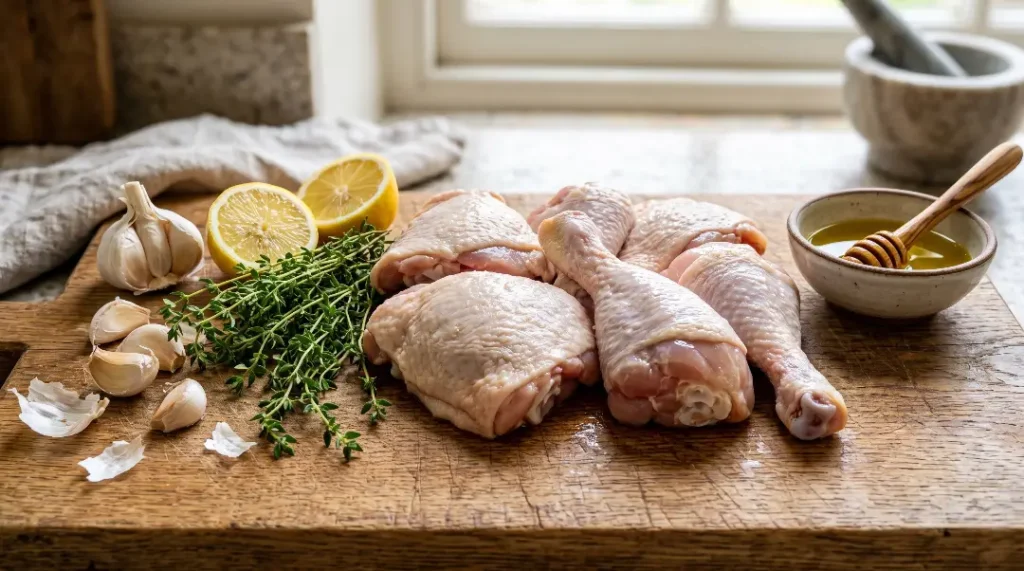
Choosing the Right Chicken Cut for Roasting
The cut of chicken you choose will have a significant impact on the final result. Here is a breakdown of your best options and what each brings to the dish.
Bone-In, Skin-On Thighs and Drumsticks
This is the gold standard for baked chicken with roasted veggies. The skin renders beautifully in the oven, turning golden and crispy while the fat bastes the meat underneath. The bones add flavor and help the meat stay moist even if you go a few minutes over the timer. These cuts are also more forgiving and affordable, making them ideal for beginners and experienced cooks alike.
Boneless, Skinless Chicken Breasts
Chicken breasts are leaner and cook faster, which makes them great for a quick dinner. However, they can dry out easily if overcooked. To keep them juicy, pound them to an even thickness before baking, coat them generously with oil and seasoning, and pull them from the oven the moment they reach an internal temperature of 165 degrees Fahrenheit.
Whole Chicken Pieces
A mix of whole chicken pieces, legs, thighs, wings, and breasts, gives you variety on one pan. This works brilliantly when you are cooking for a group with different preferences. Just keep in mind that different cuts have different cooking times, so place breasts on the outer edges of the pan where the heat is slightly lower.
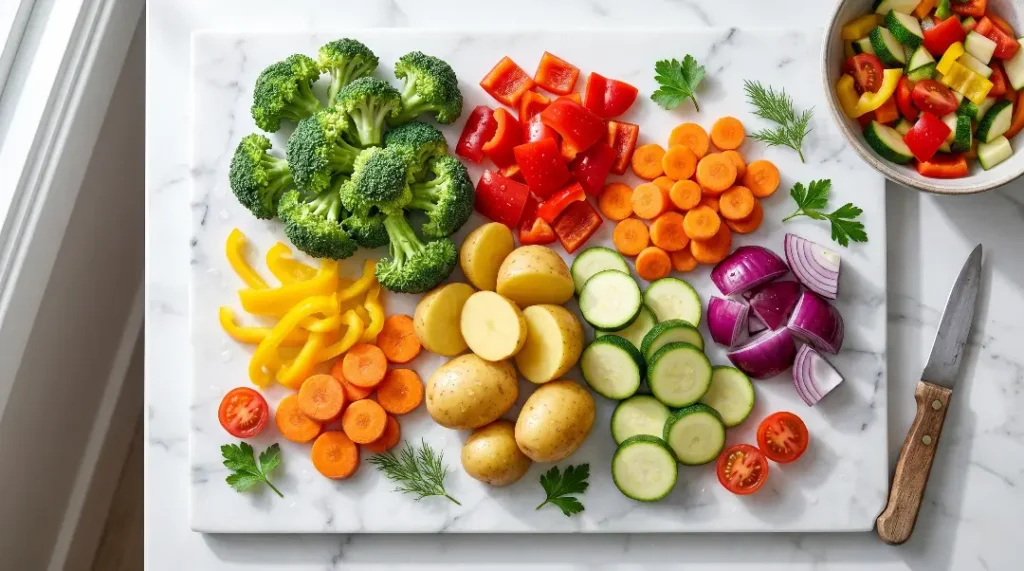
The Best Vegetables to Roast Alongside Chicken
Not all vegetables roast at the same speed, and knowing which ones work best will transform the quality of your pan. The goal is for the vegetables and chicken to finish cooking at the same time, with the vegetables perfectly tender and lightly charred, not mushy or raw.
Root vegetables and dense veggies are your best friends for one-pan chicken baking. Carrots, potatoes, sweet potatoes, parsnips, and beets are all outstanding choices. They can handle the full cooking time and even benefit from a little extra caramelization. Cut them into uniform pieces so they cook evenly.
Cruciferous vegetables like broccoli and cauliflower add a wonderful nutty, slightly smoky flavor when roasted at high heat. Their florets get crispy on the outside while staying tender inside. Add these partway through cooking so they do not burn before the chicken is done.
Soft vegetables such as zucchini, bell peppers, cherry tomatoes, and asparagus cook quickly and should be added during the last 15 to 20 minutes of roasting. They add color, sweetness, and freshness to the finished dish without turning to mush.
Alliums like onions, shallots, and whole garlic cloves are absolutely essential. When roasted, onions become sweet and jammy. Garlic cloves turn mellow and buttery, losing all of their sharpness and developing an almost nutty sweetness. Tuck whole garlic cloves under the chicken or scatter them across the pan.
The Perfect Seasoning Blend for Baked Chicken with Roasted Veggies
Seasoning is where a good dish becomes a great one. The beautiful thing about this recipe is that you probably already have everything you need in your spice cabinet. Here is a classic, crowd-pleasing blend that works on both the chicken and the vegetables:
- 2 teaspoons garlic powder
- 1.5 teaspoons smoked paprika
- 1 teaspoon onion powder
- 1 teaspoon dried oregano or Italian seasoning
- 0.5 teaspoon ground cumin
- 0.5 teaspoon black pepper
- 1 teaspoon sea salt (or to taste)
- 3 tablespoons extra virgin olive oil
- Juice of half a lemon
Mix all of these together in a small bowl and use it as a marinade for both the chicken and the vegetables. For best results, let the chicken sit in the seasoning mixture for at least 30 minutes before baking, or overnight in the refrigerator if you are planning ahead. The longer it marinates, the deeper the flavor.
Want to try a variation? A lemon herb version uses fresh thyme, rosemary, lemon zest, and Dijon mustard for a bright, aromatic result. A Mediterranean twist adds za’atar, sumac, and a handful of Kalamata olives scattered across the pan. A spicy version incorporates cayenne pepper, red chili flakes, and a drizzle of hot sauce into the marinade. Each variation feels like a completely new meal even though the method is identical.

Step-by-Step Instructions for Making Baked Chicken with Roasted Veggies
Now that you have your ingredients ready, here is exactly how to bring this meal together from start to finish.
Step 1: Preheat Your Oven and Prepare Your Pan
Set your oven to 425 degrees Fahrenheit (220 degrees Celsius). A hot oven is the key to achieving that beautiful golden color and crispy texture on both the chicken and vegetables. Line a large rimmed sheet pan with foil or parchment paper for easy cleanup, or leave it bare if you prefer maximum browning on the pan surface. Make sure your pan is large enough that nothing is crowded. Overcrowding is the number one mistake people make when roasting, and it leads to steaming instead of roasting, which means soggy vegetables and pale chicken.
Step 2: Season the Chicken
Pat the chicken pieces completely dry with paper towels. This step is non-negotiable if you want crispy skin. Moisture on the surface of the chicken creates steam in the oven, which prevents browning. Once dry, coat the chicken all over with half of your seasoning and olive oil mixture. Get under the skin if possible and press the seasoning directly onto the meat for maximum flavor penetration.
Step 3: Prep the Vegetables
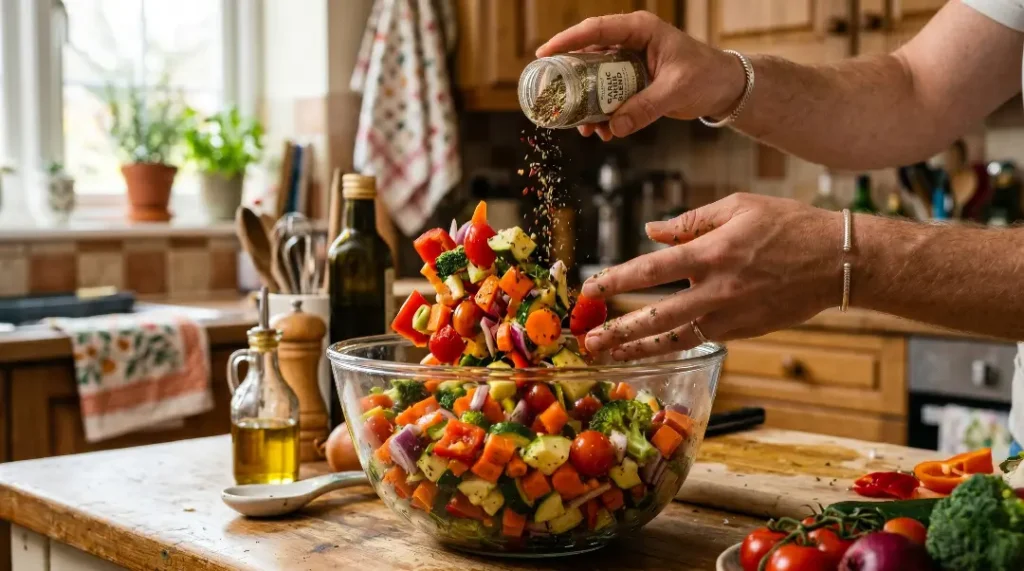
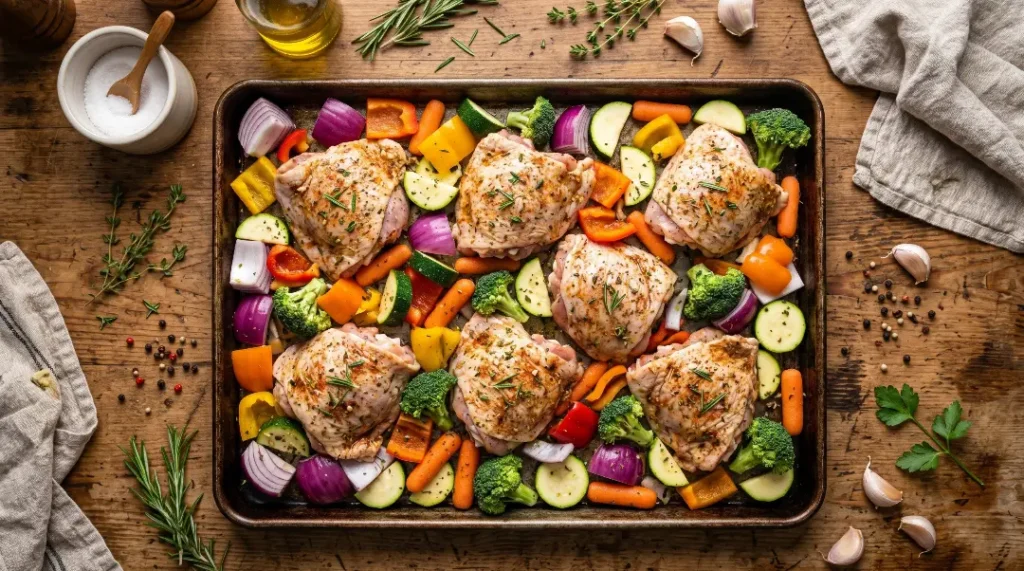
Cut all dense vegetables into similarly sized pieces, roughly one inch in diameter, so they cook at the same rate. Toss them in the remaining seasoning and olive oil mixture until every piece is well coated. Spread them out on the sheet pan, leaving some space between each piece. Place the chicken pieces on top of or nestled among the vegetables.
Step 4: Roast to Perfection
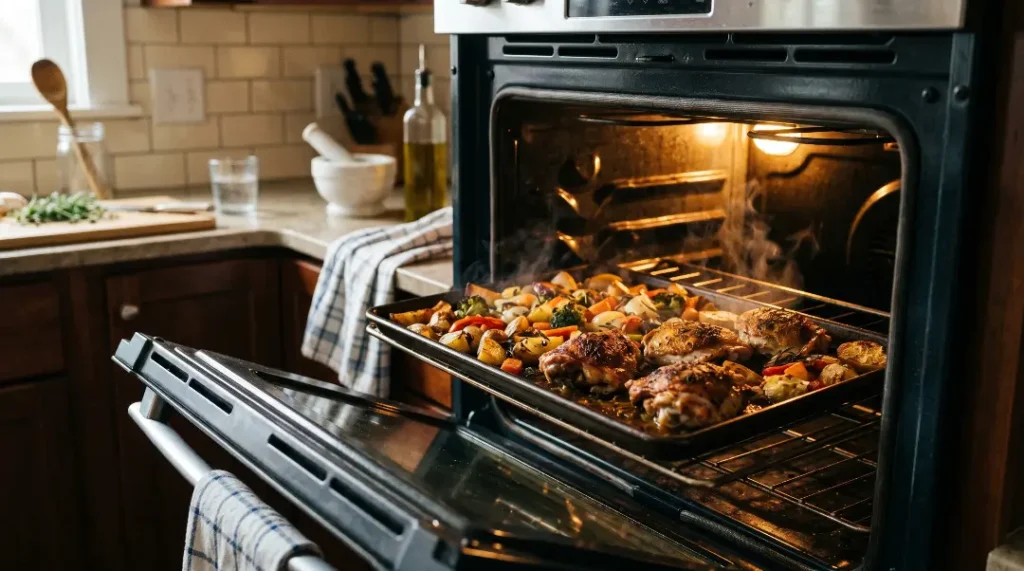
Place the pan in the preheated oven on the middle rack. Roast bone-in chicken pieces for 35 to 45 minutes, and boneless chicken breasts for 22 to 28 minutes, depending on their thickness. Halfway through cooking, use tongs to flip the chicken and stir the vegetables so everything browns evenly. If you are using softer vegetables like zucchini or cherry tomatoes, add them at this halfway point.
Always use a meat thermometer to check doneness. The thickest part of the chicken should read 165 degrees Fahrenheit. Do not rely on color alone, as oven performance varies and a golden top does not always mean the inside is fully cooked.
Step 5: Rest, Garnish, and Serve
Once the chicken is out of the oven, let it rest on the pan for 5 minutes before serving. Resting allows the juices to redistribute throughout the meat, making every bite more tender and juicy. Finish with a squeeze of fresh lemon juice, a handful of chopped fresh herbs like parsley or cilantro, and a light drizzle of good quality olive oil. These finishing touches bring a brightness to the dish that makes it feel restaurant-worthy.
Oven Temperature and Timing Guide
Getting the temperature right is critical. Too low and your chicken skin will not crisp up and your vegetables will steam rather than roast. Too high and the outside will burn before the inside is cooked through. Here is a reliable timing and temperature guide based on cut:
- Bone-in thighs and drumsticks: 425 F for 38 to 45 minutes
- Bone-in breasts: 425 F for 40 to 50 minutes
- Boneless skinless breasts (pounded thin): 425 F for 20 to 25 minutes
- Boneless skinless thighs: 425 F for 25 to 30 minutes
- Whole leg quarters: 425 F for 40 to 50 minutes
A note on convection ovens: if your oven has a convection or fan setting, reduce the temperature by 25 degrees and check the chicken about 5 minutes earlier than the standard timing. Convection circulates hot air and cooks food faster and more evenly, which is actually ideal for this recipe if you have the option.
Common Mistakes and How to Avoid Them
Even a straightforward recipe like baked chicken with roasted veggies can go sideways if a few key things are overlooked. Here are the most common mistakes and exactly how to fix them.
Not drying the chicken before seasoning. As mentioned, moisture is the enemy of crispy skin. Always pat the chicken completely dry before adding any oil or spice.
Crowding the pan. When too many pieces are on one pan, the moisture released during cooking cannot evaporate quickly enough. This creates steam and results in pale, soft chicken and limp vegetables. Use two pans if necessary.
Cutting vegetables unevenly. If some pieces are twice the size of others, half the pan will be overcooked while the other half is still hard. Take a moment to cut everything roughly the same size.
Skipping the flip. Flipping the chicken and stirring the vegetables halfway through ensures even browning on all sides. It takes 30 seconds and makes a noticeable difference.
Not using a thermometer. Guessing doneness by time or color alone is unreliable. A cheap instant-read thermometer will save you from both undercooked and overcooked chicken.
How to Make This Dish a Complete Meal
Baked chicken with roasted veggies is already a very complete plate on its own, but there are some simple additions that turn it into something even more satisfying.
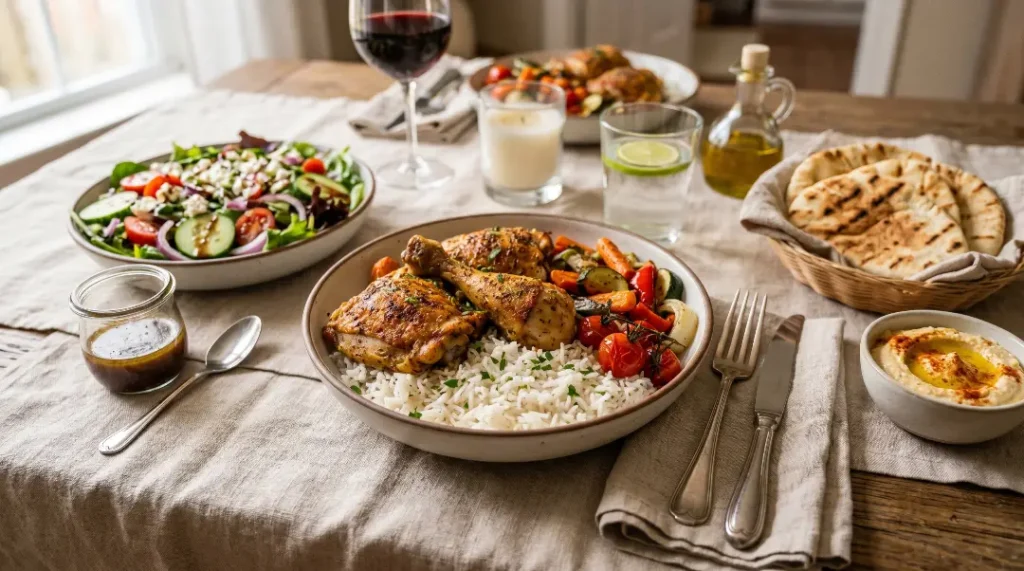
Grains: Serve the chicken and vegetables over a bed of fluffy white rice, brown rice, quinoa, or couscous. The pan juices act as a natural sauce that soaks beautifully into grains.
Flatbreads: Warm pita or naan on the side makes it easy to scoop up juicy bites of chicken and vegetables. It is a crowd-pleasing option for casual dinners.
Salads: A simple green salad with lemon vinaigrette or a cucumber and tomato salad on the side adds freshness and contrast to the warm roasted flavors.
Dips and sauces: Tzatziki, hummus, harissa, or a simple garlic yogurt sauce are all brilliant accompaniments. They add creaminess and a cooling element that balances the warmth of the spiced chicken.
Meal Prep Tips for Baked Chicken with Roasted Veggies
One of the best things about this dish is how beautifully it works for meal prep. A single batch can power several days of easy, healthy lunches and dinners with very little extra effort.
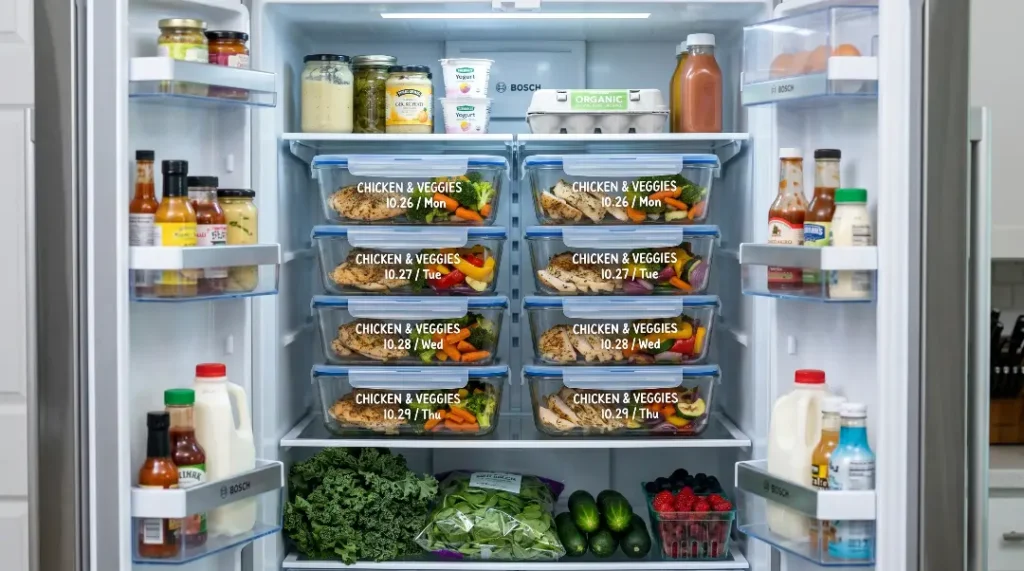
On the weekend, roast a double batch of chicken and a mix of your favorite vegetables. Divide everything into airtight containers and refrigerate for up to 4 days. Throughout the week, you can reheat and serve it over different bases, rice one day, pasta the next, stuffed into a wrap the day after, so it never feels repetitive.
For reheating, use the oven at 375 F for about 10 to 12 minutes rather than the microwave. This preserves the texture of the chicken skin and keeps the vegetables from turning watery. Alternatively, a quick 3 minute heat in an air fryer works perfectly and brings back most of the original crispiness.
Storage tip: Store the chicken and vegetables separately from any grains or sauces. This keeps everything at its best quality and gives you more flexibility when putting together different meals from the same batch.
Fun Variations to Try Throughout the Year
Once you have the basic technique down, the real fun begins with variations. This recipe is endlessly adaptable to different seasons, cuisines, and dietary preferences.
Spring and Summer Version
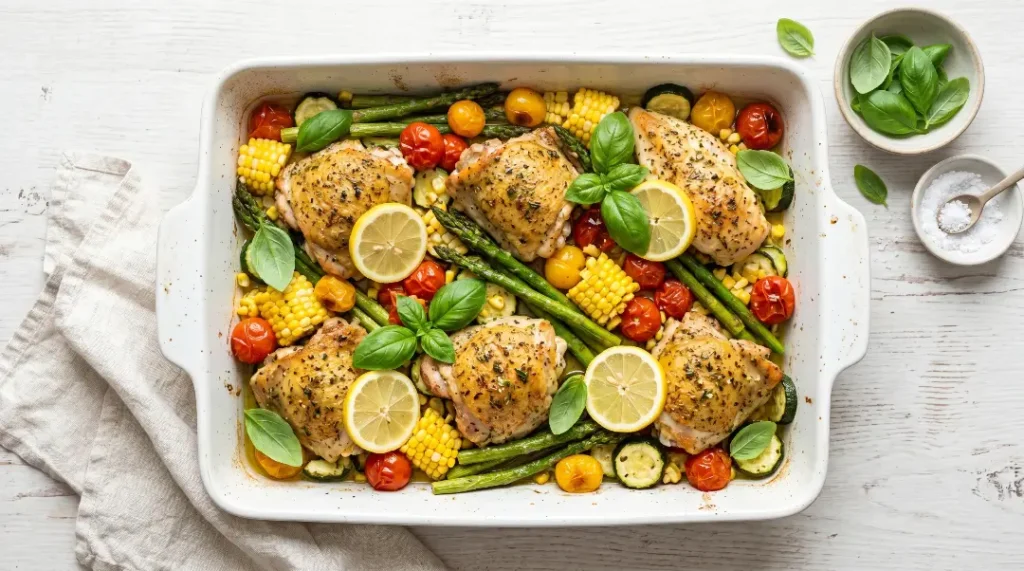
In warmer months, go lighter with asparagus, cherry tomatoes, zucchini, corn cut from the cob, and fresh basil. Season with lemon, garlic, and a touch of white wine. The result is bright, herbaceous, and fresh feeling.
Fall and Winter Version
Cooler weather calls for heartier vegetables. Try butternut squash, Brussels sprouts, parsnips, beets, and red onion. Season with warm spices like cinnamon, cumin, coriander, and a drizzle of pomegranate molasses for a deeply aromatic and comforting result.
Mediterranean Version
Add Kalamata olives, cherry tomatoes, artichoke hearts, and red onion to the pan. Season the chicken with oregano, lemon, and olive oil. Scatter crumbled feta cheese over everything in the last 5 minutes of baking. This version is salty, tangy, and incredibly satisfying.
Honey Garlic Version
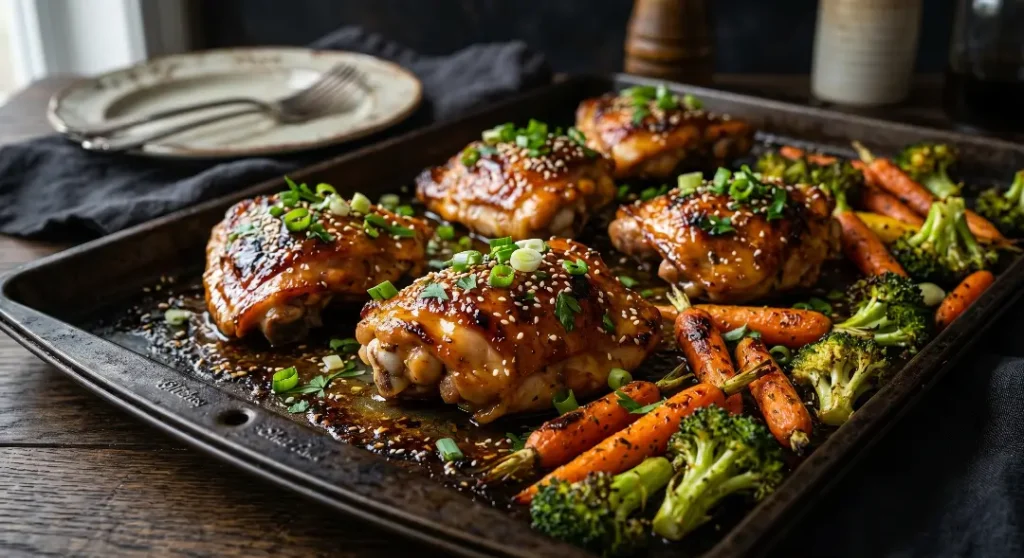
Whisk together two tablespoons of honey, three minced garlic cloves, one tablespoon of soy sauce, and a teaspoon of apple cider vinegar. Use this as both a marinade and a basting sauce. The honey caramelizes in the oven and creates a sticky, sweet and savory glaze that is completely irresistible.
Nutritional Benefits of This Dish
Beyond how good it tastes, baked chicken with roasted veggies is genuinely good for you. Here is why this dish earns its place in a balanced, healthy diet.
High-quality protein: Chicken is one of the best dietary sources of complete protein. A single serving of chicken thigh provides around 26 grams of protein, which is essential for muscle maintenance, immune function, and satiety. Protein is also the most filling macronutrient, meaning this meal will keep you satisfied for hours after eating.
Vitamins and minerals: A colorful mix of roasted vegetables delivers vitamins A and C from bell peppers and carrots, vitamin K from broccoli, potassium from sweet potatoes, and a range of B vitamins and folate from leafy green additions. Eating a rainbow of vegetables is one of the simplest ways to cover your nutritional bases.
Healthy fats: The olive oil used in roasting provides heart-healthy monounsaturated fats that support cardiovascular health and help your body absorb fat-soluble vitamins from the vegetables. Using good quality extra virgin olive oil also adds a wonderful richness to the finished dish.
Naturally gluten-free and dairy-free: This dish is naturally free from gluten and dairy, making it accessible for people with common food sensitivities. It is also easily adaptable for paleo and Whole30 eating plans with just a few minor adjustments to the seasoning blend.
Equipment You Will Need
You do not need any fancy equipment to make this dish well. Here is what will make the process smooth and the results outstanding.
- A large rimmed sheet pan or roasting pan: The rim prevents juices from spilling in the oven. A heavy gauge pan distributes heat more evenly and is worth the investment if you bake often.
- An instant-read meat thermometer: This single tool will transform your cooking confidence and guarantee perfectly cooked chicken every time.
- A sharp chef’s knife and sturdy cutting board: Making clean, even cuts on vegetables is much easier with a sharp knife and a non-slip board.
- Tongs: Essential for flipping chicken and stirring vegetables without burning yourself or tearing the skin.
- Mixing bowls: For tossing the vegetables and marinating the chicken.

Frequently Asked Questions
Q) Can I use frozen chicken for this recipe?
Yes, but always thaw it fully in the refrigerator before baking. Never put frozen chicken directly in a hot oven as the outside will cook and dry out before the inside reaches a safe temperature. Thaw overnight in the fridge for the best result.
Q) What is the best way to reheat leftovers?
The oven at 375 F for 10 to 12 minutes or an air fryer at 360 F for 3 to 5 minutes are your two best options. Both methods restore some of the original crispiness. The microwave works in a pinch but tends to make the chicken skin soft and the vegetables a bit watery.
Q) Can I make this recipe without oil?
You can reduce the oil significantly, but removing it entirely will impact the browning and flavor. Oil helps conduct heat and promotes caramelization. If you are watching fat intake, use a light cooking spray instead of a full drizzle and the results will still be very good.
Q) Why are my vegetables soggy and not crispy?
This almost always comes down to two things: too much moisture or an overcrowded pan. Make sure your vegetables are dry before tossing them with oil, spread them in a single layer without overlapping, and use a hot oven of at least 425 F. Damp vegetables in a crowded pan will steam, not roast.
Q) Can I add potatoes to this recipe?
Absolutely, and they are one of the most popular additions. Baby potatoes or Yukon Gold potatoes cut into halves or quarters work beautifully. Since potatoes take longer to cook, give them a 10 minute head start in the oven before adding the chicken and other vegetables.
Storage and Freezing Guidelines
Proper storage keeps your leftovers tasting great and prevents food waste. Here is everything you need to know about storing and freezing this dish.
Refrigerator: Store cooked chicken and vegetables in airtight containers in the refrigerator for up to 4 days. Allow everything to cool completely before sealing the containers to prevent condensation from making the food soggy.
Freezer: Cooked chicken freezes well for up to 3 months. However, most roasted vegetables do not freeze as well because their cell structure breaks down and they become mushy upon thawing. If you want to freeze portions, store the chicken separately from the vegetables and cook fresh vegetables when you are ready to serve.
Food safety: Never leave cooked chicken at room temperature for more than two hours. Bacteria multiply rapidly in the temperature range between 40 F and 140 F, which is known as the danger zone. When in doubt, refrigerate promptly and consume within the recommended timeframe.
Serving Ideas for Different Occasions
This dish is versatile enough to fit almost any dining situation. Here is how to adapt it for different occasions without changing the core recipe at all.
Weeknight family dinner: Keep things simple. One pan, a pot of rice, and a quick salad. Dinner is on the table in under an hour with almost no hands-on time.
Dinner party: Use bone-in chicken pieces for an impressive presentation and opt for a colorful mix of seasonal vegetables. Add fresh herbs and a drizzle of flavored oil before bringing the pan to the table. Serving straight from the sheet pan has a relaxed, convivial feel that guests love.
Healthy work lunches: Pack individual portions into containers with a scoop of quinoa and a few cherry tomatoes. It reheats well and makes for a genuinely satisfying midday meal that will not leave you crashing by 3 p.m.
Final Thoughts
There is a reason that baked chicken with roasted veggies has become one of the most searched, pinned, and cooked recipes across home kitchens worldwide. It is not complicated, it does not require expensive ingredients, and it does not demand hours of your time. What it does deliver, consistently and reliably, is a nourishing, flavorful, and deeply satisfying meal that works for virtually any occasion.
The magic of this dish lies in the technique. A very hot oven, dry chicken, well-seasoned vegetables spread out on a generous pan, and a patient 40 minutes. That is all it takes. Once you have made it a few times, you will find yourself reaching for this recipe on autopilot, adjusting the vegetables with the seasons and the seasoning to match your mood.
Whether you are cooking for yourself on a Tuesday night or feeding a table full of hungry people on a Sunday, this dish will serve you well. Give it a try this week and you will see exactly why it has earned such a devoted following. And once you do, do not be surprised if it becomes the most-requested meal in your household.