The Best Chickpea Salad with Cucumber and Feta You Will Ever Make
The Best Chickpea Salad with Cucumber and Feta You Will Ever Make
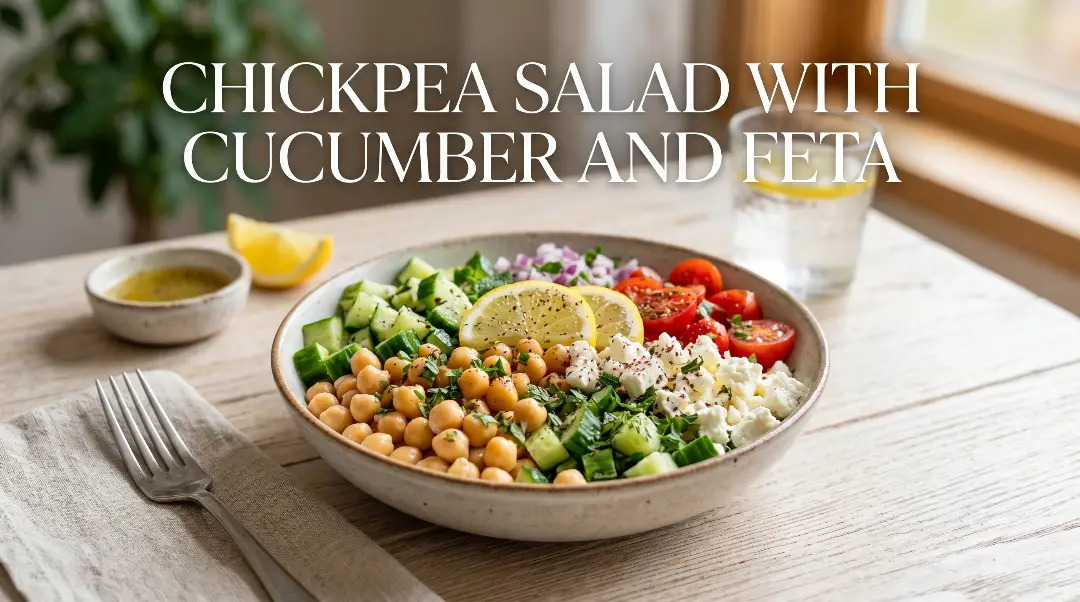
If you are looking for a salad that actually keeps you full, tastes incredible, and takes almost no time to put together, this Chickpea Salad with Cucumber and Feta is exactly what your kitchen needs right now. It is bright, creamy, crunchy, herby, and satisfying all at once. Whether you are packing lunch for the week, hosting a casual dinner, or just need something quick on a busy weeknight, this recipe delivers every single time.
This is not your sad, watery side salad. The combination of hearty chickpeas, cool cucumber, salty crumbled feta, fresh herbs, and a simple lemon olive oil dressing creates something genuinely special. It is the kind of dish that disappears fast at potlucks and leaves people asking for the recipe. Let us walk through everything you need to know about making it, why each ingredient matters, how to customize it, and how to store it so it stays fresh all week.
What Makes This Chickpea Salad So Good
Before we get into the actual recipe, it is worth talking about why this particular combination of ingredients works so well together. A great salad is not just about throwing things in a bowl. It is about balance. You want contrasting textures, complementary flavors, and a dressing that ties everything together without drowning it.
Chickpeas bring the bulk and protein. They are hearty enough to make this salad a complete meal rather than a side dish. Their mild, nutty flavor absorbs the dressing beautifully and pairs well with almost everything else in the bowl.
Cucumber adds crunch and freshness. It cools down the richness of the feta and keeps the salad from feeling too heavy. Using English cucumber or Persian cucumbers gives you thin skin and minimal seeds, which means better texture overall.
Feta cheese brings that salty, tangy creaminess that makes the whole dish pop. It adds depth without needing any complicated sauce or dressing. Block feta that you crumble yourself tends to be creamier and more flavorful than the pre-crumbled kind, though either works fine.
Fresh herbs like parsley, mint, or dill add a brightness that dried herbs simply cannot replicate. They lift the whole salad and make it taste alive.
The dressing is as simple as it gets: good quality olive oil, fresh lemon juice, a little garlic, salt, and pepper. Simple does not mean boring here. It means every ingredient gets to shine.
Ingredients You Will Need
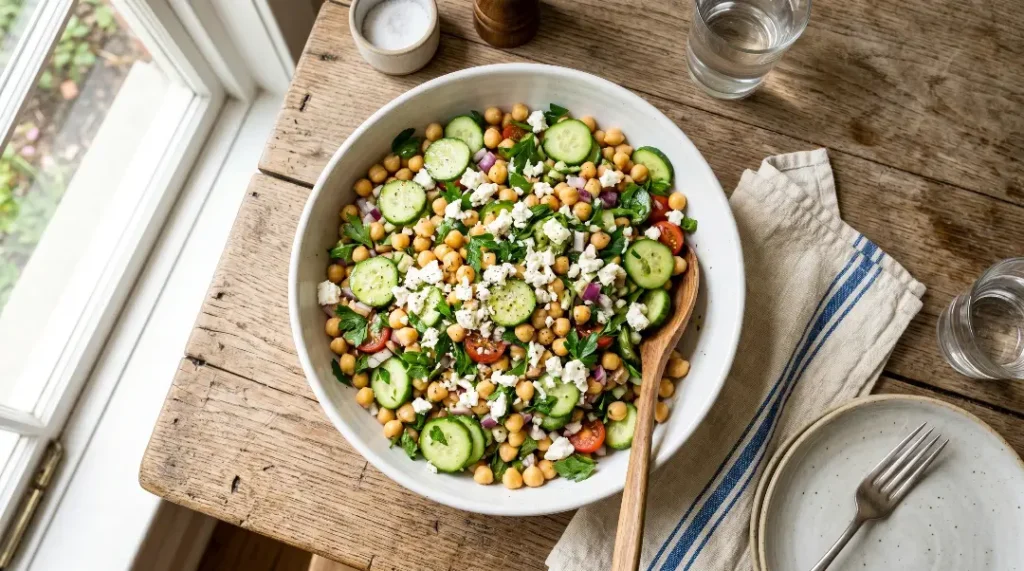
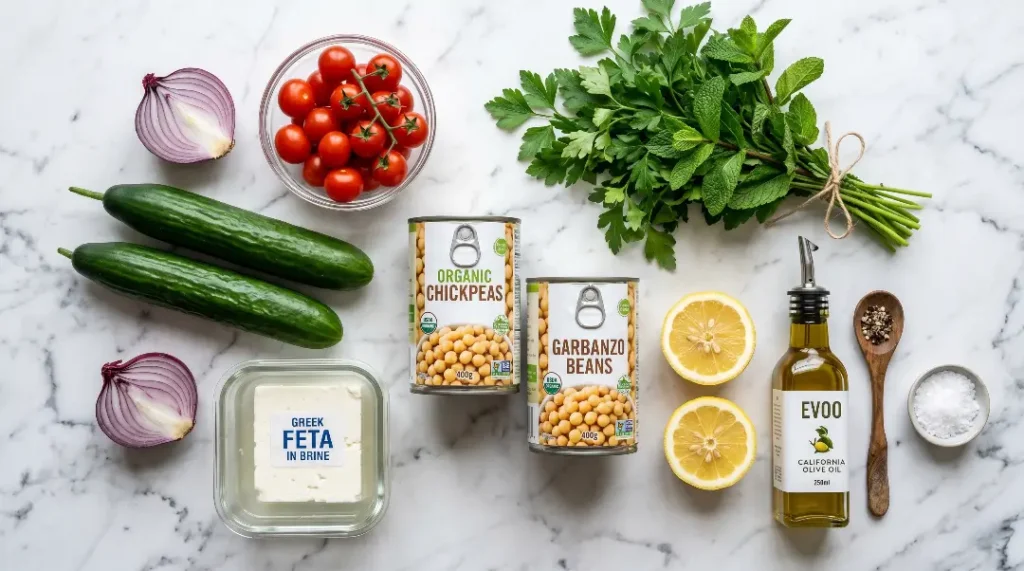
Here is everything that goes into this Chickpea Salad with Cucumber and Feta. The quantities below serve about four people as a main course or six as a side dish.
For the Salad
- 2 cans (15 oz each) of chickpeas, drained and rinsed (or 3 cups cooked from dry)
- 2 English cucumbers or 4 Persian cucumbers, diced into half-inch pieces
- 1 cup crumbled feta cheese (about 5 oz from a block)
- 1 cup cherry tomatoes, halved
- 1/2 red onion, finely diced
- 1/2 cup Kalamata olives, halved (optional but highly recommended)
- 1/3 cup fresh parsley, roughly chopped
- 2 tablespoons fresh mint, finely chopped
- 2 tablespoons fresh dill (optional, adds a lovely brightness)
For the Lemon Olive Oil Dressing
- 1/4 cup extra virgin olive oil
- 3 tablespoons fresh lemon juice (about 1.5 lemons)
- 1 teaspoon lemon zest
- 1 small garlic clove, minced or grated
- 1 teaspoon Dijon mustard (helps emulsify the dressing)
- 1/2 teaspoon dried oregano
- 1/2 teaspoon honey or maple syrup (optional, balances the acidity)
- Salt and freshly cracked black pepper to taste
Step by Step Instructions
Step 1: Prepare the Chickpeas
Drain your canned chickpeas into a colander and rinse them well under cold running water. Give them a gentle shake and pat them dry with a clean kitchen towel or paper towels. This step matters more than it might seem. Removing that excess starchy liquid means the dressing will coat each chickpea properly instead of sliding off. If any of the outer skins come loose while you are rinsing, feel free to remove them. The texture of the salad will be slightly smoother without them, though it is completely optional.
If you are cooking chickpeas from dry, soak them overnight and simmer for about 45 minutes to 1 hour until tender but not mushy. Let them cool completely before adding them to the salad.
Step 2: Prep the Vegetables
Dice your cucumbers into roughly half-inch pieces. You want them chunky enough to hold up next to the chickpeas rather than getting lost in the mix. No need to peel English or Persian cucumbers. The skin adds color and a slight bite that works well here.
Halve your cherry tomatoes. Finely dice the red onion. If raw red onion feels too sharp for your taste, soak the diced onion in cold water for about ten minutes, then drain and pat dry. This mellows the flavor significantly without removing all of that sharpness that makes it interesting.
If you are using Kalamata olives, halve them and remove pits if needed. Their briny, slightly bitter quality adds another layer to the salad that works really well with the feta.
Step 3: Make the Dressing
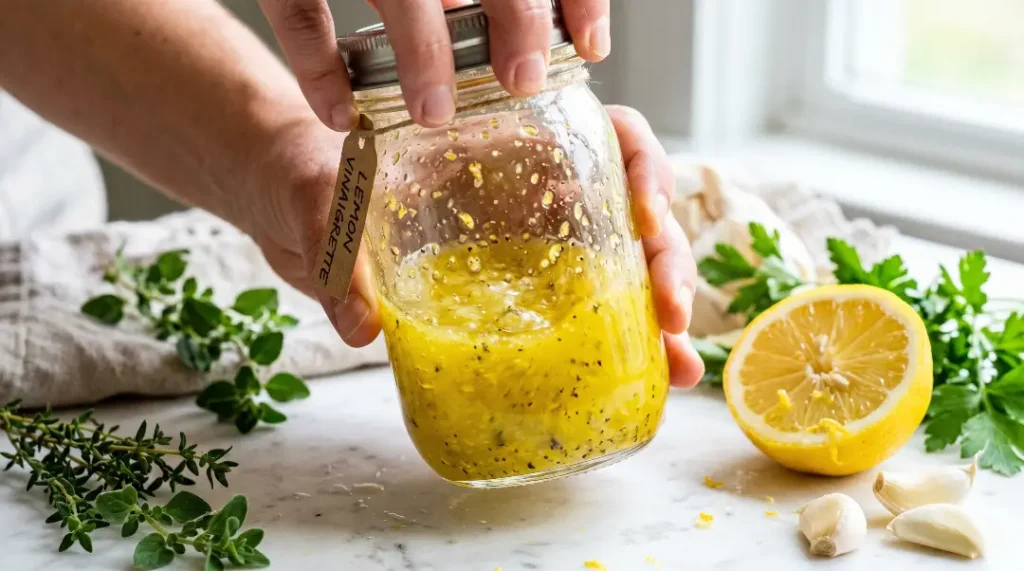
In a small bowl or jar, combine the olive oil, fresh lemon juice, lemon zest, minced garlic, Dijon mustard, dried oregano, and a pinch of salt and pepper. Whisk vigorously or shake the jar with the lid on until the dressing comes together and looks slightly emulsified. Taste it. It should be bright, slightly tangy, and well-seasoned. Adjust with more lemon if it needs acidity, more oil if it feels too sharp, or more salt if it tastes flat.
Step 4: Assemble the Salad
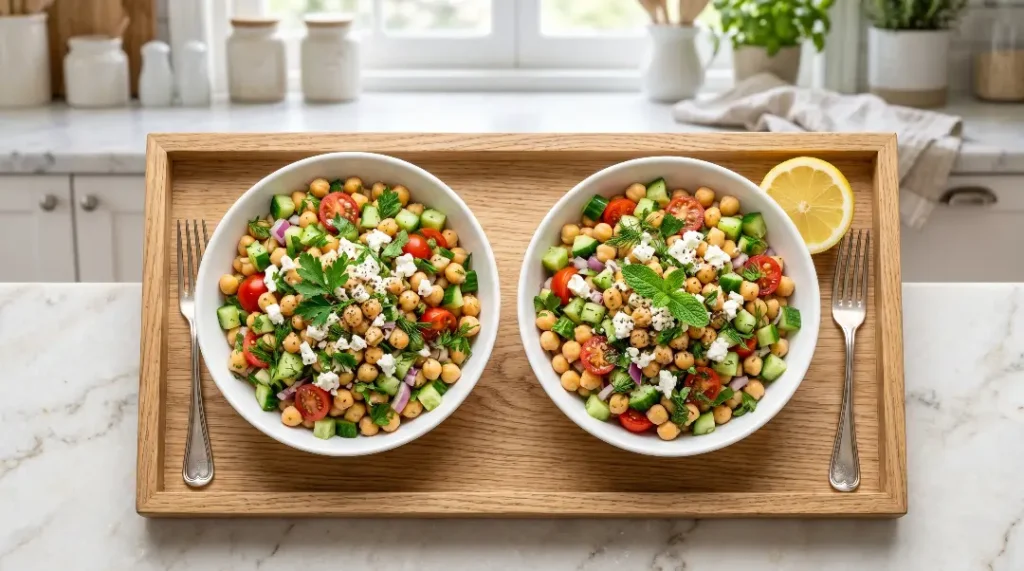
In a large mixing bowl, add the drained chickpeas, diced cucumber, halved cherry tomatoes, red onion, and olives. Pour about three quarters of the dressing over the salad and toss gently to combine everything. You want to coat everything without breaking down the chickpeas or making the cucumber soggy.
Add the crumbled feta on top. Do not mix feta too aggressively because it will dissolve into the dressing and you will lose those beautiful creamy pockets throughout the salad. Scatter the fresh parsley, mint, and dill over everything.
Drizzle the remaining dressing over the top and give the salad one final gentle toss. Taste and adjust seasoning. Does it need more salt? A little more lemon? Another pinch of black pepper? Trust your taste buds here.
Step 5: Rest and Serve
Here is a tip that most people skip: let the salad sit for at least 10 to 15 minutes before serving. This resting time allows the chickpeas to absorb the dressing, the flavors to meld together, and the whole salad to become greater than the sum of its parts. If you have the time, even 30 minutes in the refrigerator will make it taste noticeably better.
Serve it cold or at room temperature depending on your preference and the season.
Nutritional Benefits of This Salad
This Chickpea Salad with Cucumber and Feta is not just delicious. It is genuinely good for you in several meaningful ways.
Chickpeas Are a Nutritional Powerhouse
One cup of cooked chickpeas contains roughly 15 grams of protein and 12 grams of dietary fiber. That combination is what makes this salad so filling compared to leafy green salads. The fiber in chickpeas supports healthy digestion, helps regulate blood sugar levels, and contributes to sustained energy throughout the day. They are also a great source of folate, iron, phosphorus, and manganese.
Chickpeas are particularly valuable for people following plant-based or vegetarian diets because they provide a substantial protein hit without any meat. When paired with the protein in feta cheese, this salad becomes a surprisingly complete meal from a nutritional standpoint.
Cucumber Hydration and Micronutrients
Cucumber is about 96 percent water, which makes it an excellent ingredient for hydration, especially during warmer months. Beyond water content, cucumbers contain vitamin K, which plays an important role in bone health and blood clotting. They also contain small amounts of vitamin C, magnesium, and potassium. Because cucumbers are so low in calories while being high in volume and crunch, they help you feel full without adding significant caloric load to the dish.
Feta Cheese: Salty, Tangy, and Nutritious
Feta tends to get overlooked as just a flavoring agent, but it actually contributes real nutritional value. It is a good source of calcium, protein, phosphorus, and riboflavin. Compared to many other cheeses, feta is relatively lower in calories and fat while delivering a very bold, concentrated flavor. A little goes a long way, which is why this salad feels indulgent without being heavy.
Traditional Greek feta made from sheep or goat milk also contains beneficial probiotics that support gut health, though this varies depending on how it has been processed.
Olive Oil and Heart Health
The extra virgin olive oil in the dressing is rich in monounsaturated fats and polyphenols, both of which are associated with cardiovascular health benefits. Using it as the base of the dressing rather than something heavier like mayonnaise keeps the salad light while still delivering that luscious, satisfying mouthfeel that makes every bite enjoyable.
How to Customize This Recipe
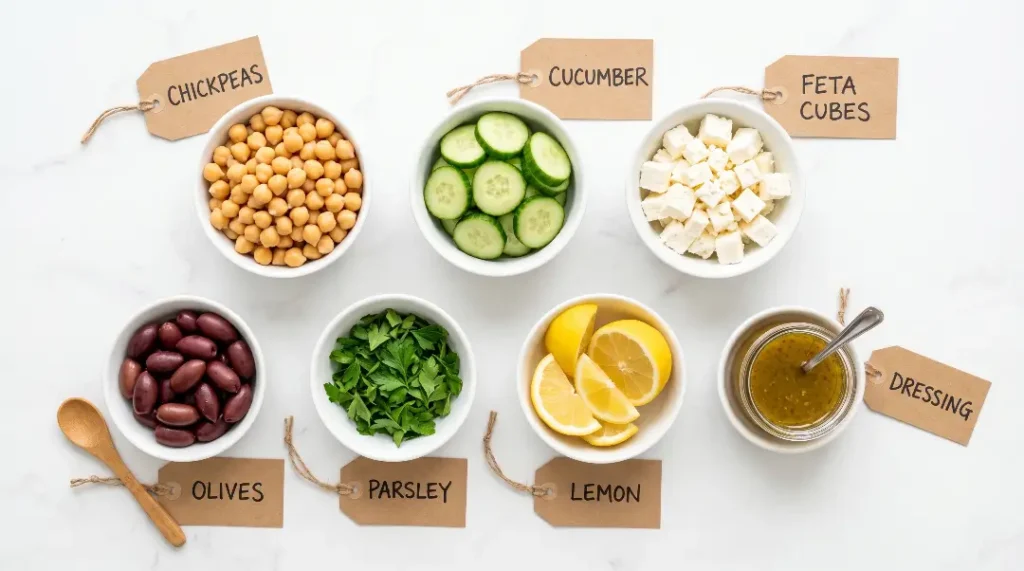
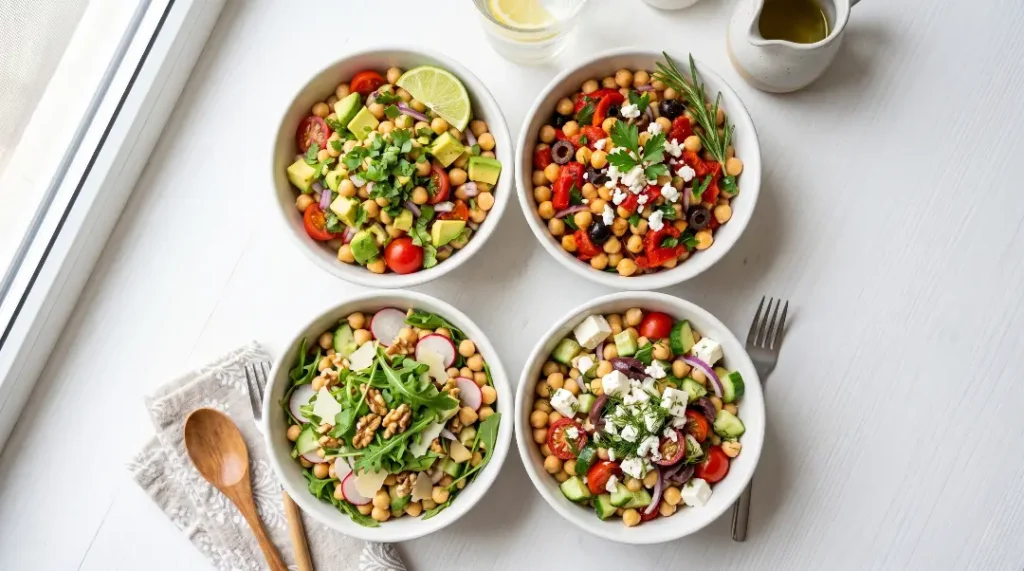
One of the best things about this salad is how flexible it is. Once you understand the base recipe, you can swap ingredients in and out depending on what you have on hand, what is in season, or what your personal preferences are.
Add More Vegetables
Roasted red peppers add a sweet, smoky depth that pairs beautifully with the salty feta. Simply chop them and add them straight from the jar. Sun-dried tomatoes work similarly and bring a more concentrated, slightly chewy texture.
Avocado is another excellent addition. Add it right before serving rather than mixing it in ahead of time so it does not brown or turn mushy. The creamy richness of avocado against the briny feta and crunchy cucumber is a really satisfying combination.
Arugula or baby spinach can be stirred in if you want to add more greens. The peppery bite of arugula in particular works wonderfully here. Just be aware that leafy greens will wilt if they sit in the dressing for too long, so add them closer to serving time.
Switch Up the Cheese
Not a fan of feta or dairy-free? You have options. Crumbled goat cheese brings a similar tangy creaminess with a slightly milder flavor. For a dairy-free version, marinated tofu cubes or a plant-based feta alternative works well. Alternatively, skip the cheese entirely and add a tablespoon of nutritional yeast to the dressing for a savory, umami-rich quality.
Change the Protein
While chickpeas are the star here, adding grilled chicken, shrimp, or canned tuna can make the salad even more protein-dense. These additions are especially useful if you are serving the salad as the sole main course for people who are not used to plant-based protein sources.
Try Different Herbs
The parsley and mint combination is classic and works beautifully, but fresh basil is a lovely alternative in summer when it is abundant and fragrant. Fresh dill gives the salad a more Eastern European feel. If you are completely out of fresh herbs, a good sprinkling of dried oregano or za’atar will still give you a pleasant flavor, though fresh is always preferable.
Meal Prep Tips: Making It Ahead of Time
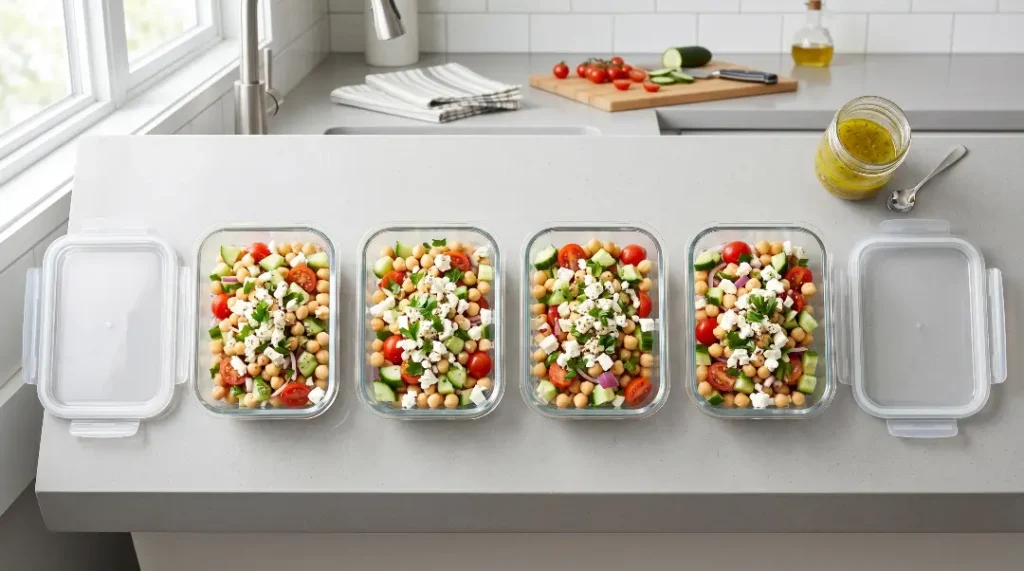
This salad is one of the best recipes for meal prepping because it genuinely holds up well in the refrigerator. Here is how to do it smartly so everything stays fresh and delicious for several days.
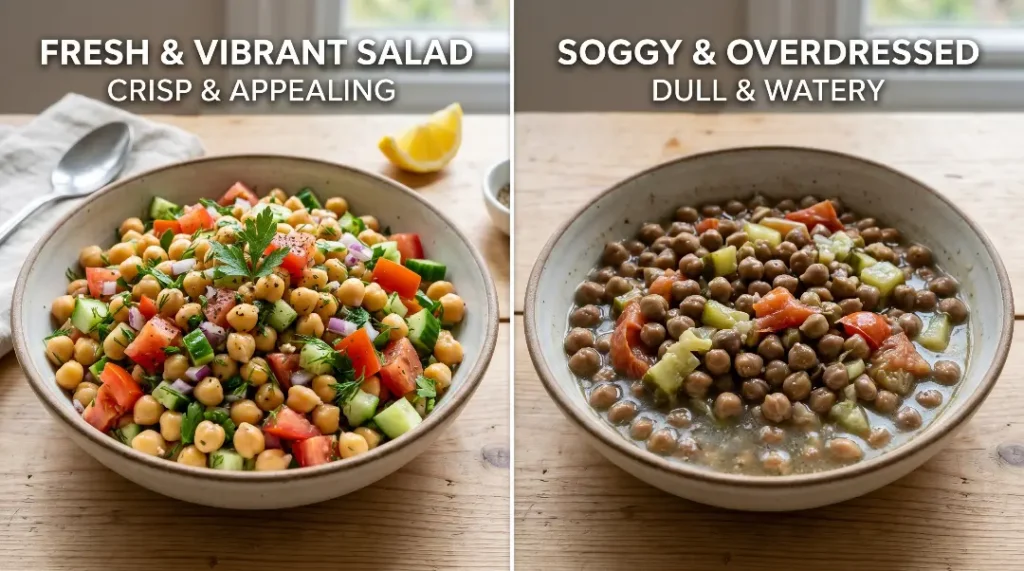
Store the dressing separately if you are prepping more than a day or two in advance. Dressed salad can get a little soggy over time, particularly the cucumbers, which release water as they sit. Keeping the dressing on the side and adding it 15 to 30 minutes before eating means every bowl tastes as fresh as the first.
Salt the cucumbers before adding. If you know your salad will be sitting in the fridge for a couple of days, toss the diced cucumber with a small pinch of salt in a separate colander and let them drain for 20 to 30 minutes before adding them to the salad. This draws out excess moisture so they do not water down the dressing over time.
Keep feta on top, not mixed in. When storing in individual meal prep containers, keep the crumbled feta sitting on top rather than tossed throughout the salad. This prevents it from getting too wet and keeps the texture better over several days.
Store in airtight containers in the refrigerator. Properly stored, this salad stays good for up to four days. The flavors actually improve on day two as everything marinates together, making it a genuinely rewarding meal prep option.
Serving Suggestions
This Chickpea Salad with Cucumber and Feta is versatile enough to work in many different contexts. Here are some ideas for how to serve it and what to pair it with.
As a Standalone Lunch
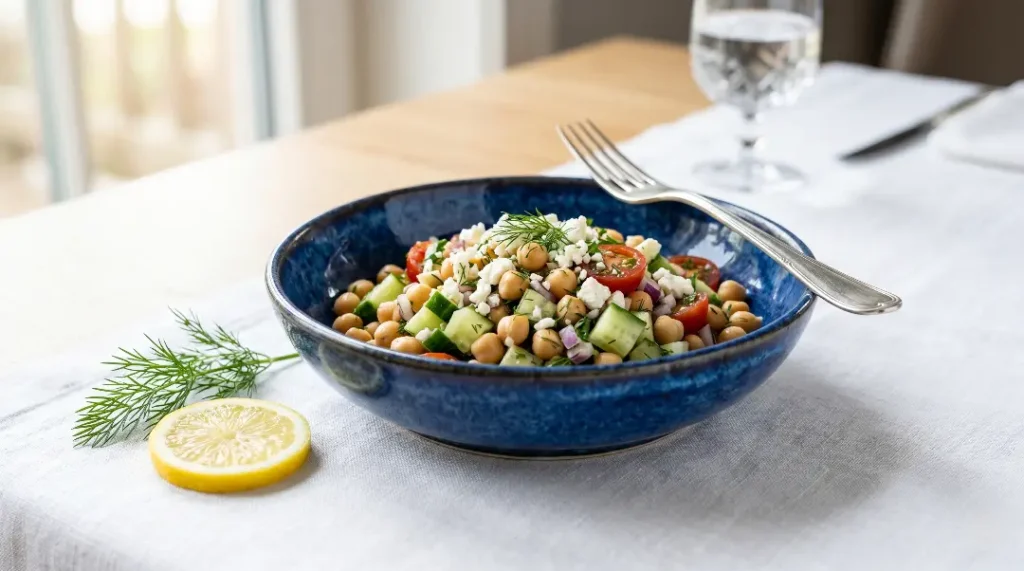
On its own, this salad makes a completely satisfying lunch. Serve it in a wide, shallow bowl with a thick slice of crusty sourdough or warm pita bread on the side to scoop up the chickpeas and absorb all of that good lemon dressing. A cold glass of sparkling water with lemon or a simple cucumber mint cooler makes the whole meal feel refreshing and light.
As a Side Dish
Alongside grilled proteins, this salad shines. It pairs exceptionally well with grilled lamb chops, a simple piece of pan-seared salmon, herb-marinated chicken thighs, or falafel. The freshness of the salad cuts through richness and heavier flavors beautifully.
It is also a great addition to any mezze spread. Put it out alongside hummus, baba ganoush, tzatziki, warm pita, and marinated olives for a casual, crowd-pleasing spread that feels fancy without requiring much effort.
At a Picnic or Outdoor Gathering
Because this salad does not wilt or warm badly like leafy green salads, it is perfect for bringing outdoors. Pack it in a sealed container and it will stay fresh and delicious for hours. It travels well, holds up in mild temperatures, and is easy to serve with a fork without needing any extra prep or assembly on site.

Common Mistakes to Avoid
Even simple recipes have their pitfalls. Here are the most common mistakes people make with this salad and how to sidestep all of them easily.
Not rinsing the chickpeas properly. That thick liquid in canned chickpeas, called aquafaba, is great for other culinary uses, but it makes your salad dressing starchy and dull. Always drain and rinse thoroughly.
Using bottled lemon juice instead of fresh. The flavor difference is significant. Fresh lemon juice has a brightness that bottled versions simply cannot match. Since lemon is one of the central flavors in this dish, it is worth using the real thing every time.
Overdressing the salad. It is tempting to pour on all of the dressing at once, but a light hand is better here. You can always add more, but you cannot take it away. Start with about three quarters of the dressing, toss, taste, and add more as needed.
Skipping the resting time. As mentioned earlier, this salad genuinely tastes better after at least 10 minutes of resting. The chickpeas absorb flavor and the whole thing comes together in a way that is noticeably better than eating it immediately.
Using low-quality olive oil or feta. Because the ingredient list is short and simple, quality really matters here. A good extra virgin olive oil and a decent block of feta make a meaningful difference in the final flavor. You do not need to spend a fortune, but this is not the place to use that dusty bottle of generic vegetable oil sitting at the back of your pantry.
The History and Origin of This Flavor Combination
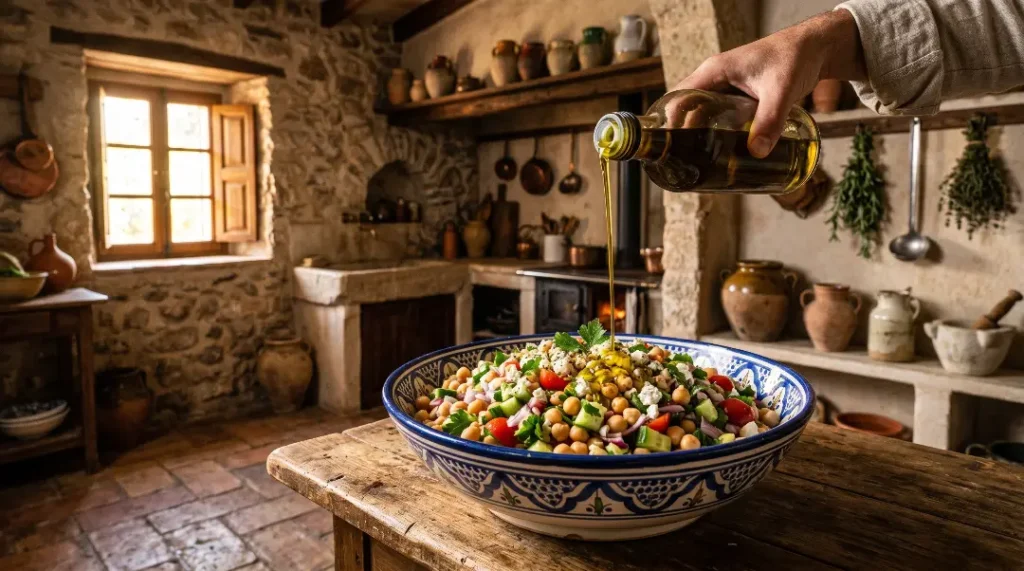
The flavors in this salad are deeply rooted in Mediterranean cuisine, particularly Greek and Middle Eastern culinary traditions. Chickpeas have been cultivated in the Middle East and the Mediterranean region for over 7,500 years, making them one of the oldest cultivated legumes in human history. They appear in ancient Egyptian records, in traditional Levantine dishes, and of course throughout modern Greek and Turkish cooking.
Feta cheese has been made in Greece for centuries, and its production in specific regions of Greece is now protected by a European Union geographical indication, meaning only cheese made in certain regions using traditional methods can legally be called feta. The combination of legumes, fresh vegetables, olive oil, and soft cheese is deeply characteristic of the diet that has come to be known in modern times as the Mediterranean diet, widely regarded as one of the healthiest eating patterns in the world.
Cucumber has been eaten alongside chickpeas and soft cheeses throughout the Mediterranean and Middle East for just as long. The pairing makes intuitive sense from a flavor and texture standpoint. The cool, high-water-content cucumber naturally balances the earthiness of legumes and the saltiness of aged cheese.
This salad, in other words, is not a trend. It is a variation on a flavor language that has been trusted and refined across generations and geographies.
How to Make This Salad Completely Vegan
If you want to enjoy all of the flavors of this Chickpea Salad with Cucumber and Feta without any dairy, the adaptation is very straightforward.
Replace the feta with a good-quality vegan feta. Several brands now produce almond milk or cashew-based feta alternatives that crumble similarly and deliver a similar tangy, salty quality. You can also make a quick homemade version by marinating firm tofu cubes overnight in a mixture of lemon juice, apple cider vinegar, olive oil, salt, nutritional yeast, and a little white miso paste. After an overnight soak, the tofu takes on a surprisingly feta-like quality.
The rest of the recipe requires no changes at all. All of the other ingredients are naturally vegan, and the dressing is completely plant-based as written. If you include the optional honey, simply swap that for maple syrup or agave for a fully vegan version.
Gluten-Free Notes
This salad is naturally gluten-free as written, which makes it an excellent option for anyone with celiac disease or a gluten sensitivity. All of the main ingredients, including chickpeas, cucumber, feta, tomatoes, olives, herbs, olive oil, and lemon, contain no gluten.
If you are serving this alongside bread or pita, simply choose gluten-free versions of those accompaniments and the entire meal remains safe for those with gluten concerns.
Always double-check labels on canned chickpeas and packaged feta to make sure there is no cross-contamination noted for your specific dietary requirements.
Frequently Asked Questions
Q) Can I use dried chickpeas instead of canned?
Absolutely. Dried chickpeas that have been soaked and cooked from scratch will give you a slightly firmer texture and arguably a better flavor than canned. The convenience of canned is hard to beat for weeknight cooking, but if you have the time, cooking from dry is worth it. Soak them overnight in plenty of cold water, drain, then simmer with a generous pinch of salt for 45 minutes to 1 hour until just tender.
Q) How long does this salad keep in the fridge?
Up to four days when stored properly in an airtight container. The flavor is often best on day two when everything has had time to meld. If you stored the dressing separately, the salad can technically keep even longer, though the cucumber will start to lose some of its crunch after day three.
Q) Can I freeze this salad?
No. Cucumber, fresh tomatoes, and feta do not freeze well. The cucumber becomes completely soft and watery, the tomatoes lose their structure, and the feta crumbles into the liquid. This is strictly a fresh or refrigerator meal.
Q) What can I substitute for feta if I cannot find it?
Goat cheese is the closest flavor substitute. It has that same tangy quality with a slightly different texture. Halloumi cut into small cubes and briefly pan-fried is another option that adds a nice chewy, golden element. In a pinch, ricotta salata or a mild blue cheese can also work, though they will change the flavor profile noticeably.
Q) Is this salad filling enough to eat as a main meal?
Yes, absolutely. Thanks to the protein and fiber in chickpeas along with the protein in feta, this salad keeps you full much longer than most other salads. If you want to boost it even further, add half an avocado, a soft-boiled egg, or a scoop of quinoa to increase the protein and healthy fat content.
Final Thoughts
A truly great recipe does not have to be complicated, expensive, or time-consuming. This Chickpea Salad with Cucumber and Feta is proof of that. With humble, widely available ingredients and about fifteen minutes of prep time, you get a meal that is nutritious, deeply flavorful, beautiful to look at, and adaptable to almost any dietary need or preference.
It works as a quick weekday lunch, a make-ahead meal prep option, a crowd-pleasing potluck contribution, a light summer dinner, or a side dish that holds its own next to grilled mains. The Mediterranean flavor profile feels familiar and comforting without being boring, and the simplicity of the lemon olive oil dressing means everything else gets a chance to shine.
Once you make this salad a few times, it will become one of those go-to recipes you stop needing to look up. You will start making it from memory, adjusting it instinctively, and sharing it with anyone who asks what you have been eating lately.
Make a big batch this week. You will not regret it.