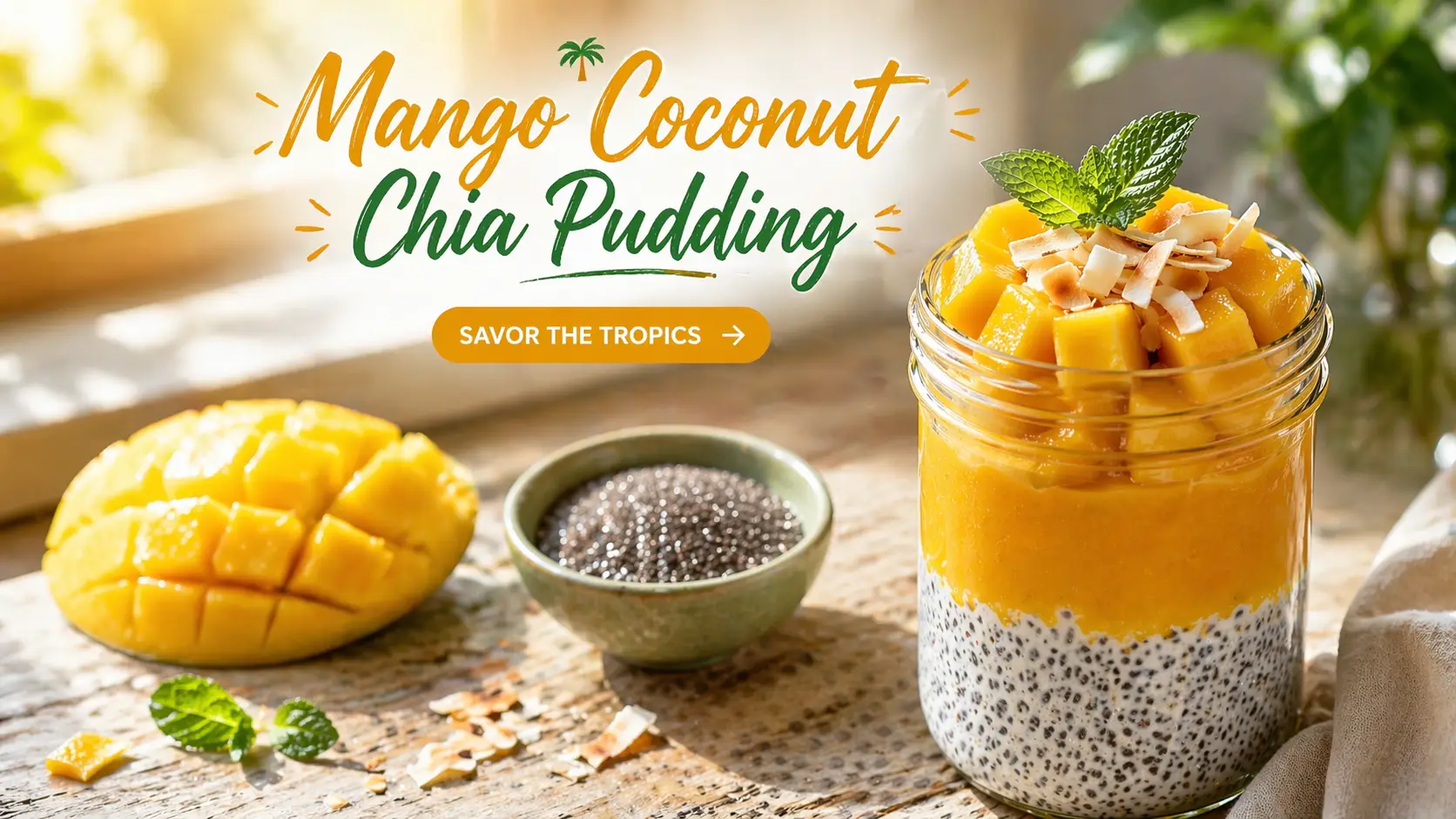
Mango Coconut Chia Pudding: The Tropical, Creamy Treat You Will Want Every Single Day
If you have been looking for a breakfast, snack, or dessert that feels indulgent but is actually good for you, Mango Coconut Chia Pudding is your answer. This vibrant, tropical treat has taken over food blogs, health communities, and kitchen tables for very good reason. It is simple to make, requires no cooking, and delivers a combination of flavors and textures that genuinely impresses people every single time.
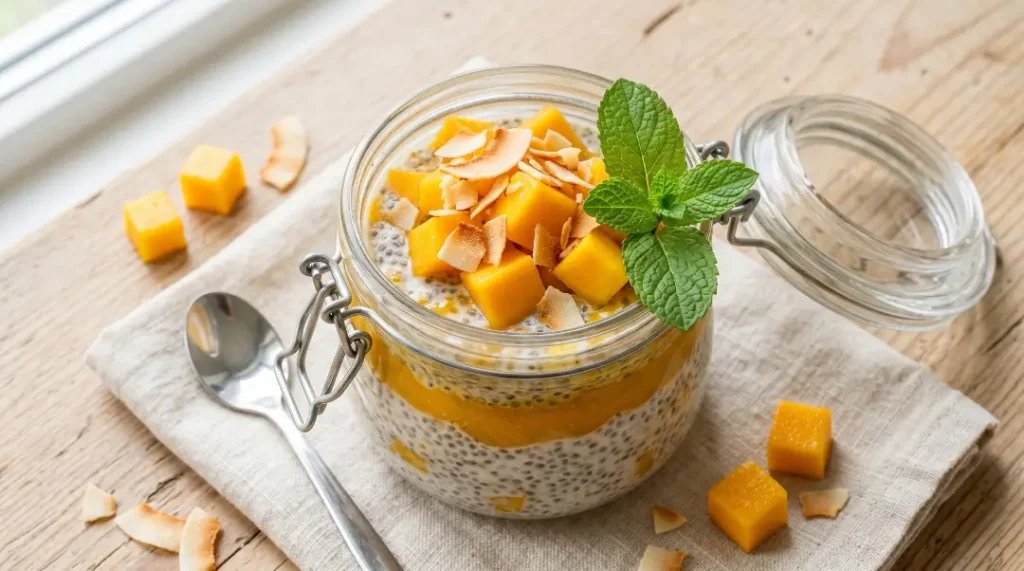
Mango Coconut Chia Pudding brings together the sweet, sunny taste of ripe mango with the rich creaminess of coconut milk, held together by the incredible thickening power of chia seeds. The result is a pudding that looks like it came from a fancy cafe but can be made in your own kitchen in about ten minutes of active prep time.
In this post, we are going to walk through everything you need to know: what makes this pudding so nutritious, how to make it perfectly every time, fun variations to try, tips for meal prepping it for the week, and answers to the most common questions people have about making it at home.
What Is Mango Coconut Chia Pudding and Why Is Everyone Talking About It?
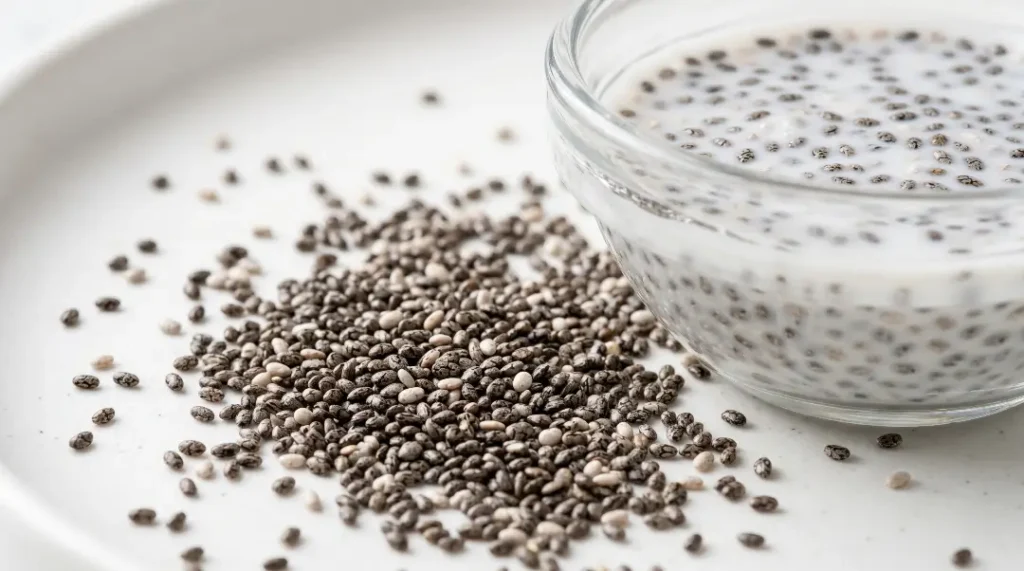
Chia pudding as a concept is simple: chia seeds are soaked in a liquid, and over several hours they absorb that liquid and swell into a thick, gel-like consistency. When that liquid is coconut milk and you layer the pudding with fresh mango, the result becomes something far more than the sum of its parts.
The reason Mango Coconut Chia Pudding has stayed popular is not just because of trends. It genuinely meets people where they are. It is suitable for vegans, gluten-free eaters, and people following whole foods diets. It is easy to scale for meal prep, holds well in the fridge for several days, and can be customized endlessly depending on what you have on hand.
What really seals the deal is the flavor combination. Mango and coconut are a classic tropical pairing, the kind of combination that transports you to somewhere warm and breezy with every spoonful. Adding chia seeds does not compete with those flavors at all. Instead, the seeds fade into the background texturally, creating that pudding-like consistency while the mango and coconut take center stage.
The Nutritional Power Behind Mango Coconut Chia Pudding
One of the biggest reasons people fall in love with this pudding is how genuinely nutritious it is. This is not a health food that sacrifices taste. It is a food that happens to be incredibly good for you while also tasting wonderful.
Chia Seeds: A Nutritional Powerhouse
Chia seeds are small but they pack an extraordinary nutritional punch. Just two tablespoons of chia seeds contain around 10 grams of fiber, 5 grams of protein, and a solid dose of omega-3 fatty acids. They are also rich in calcium, magnesium, and phosphorus.
The fiber in chia seeds is particularly important. It slows down digestion, which helps keep you feeling full for longer and prevents the kind of blood sugar spikes that leave you hungry again an hour after eating. This makes chia pudding one of the most satisfying breakfast options you can put together.
Coconut Milk: Creamy, Nutritious, and Dairy-Free
Full-fat coconut milk is what gives this pudding its luxurious, creamy texture. While coconut milk does contain saturated fat, the type of saturated fat it contains, predominantly medium-chain triglycerides (MCTs), is metabolized differently from the saturated fat in animal products. MCTs are processed quickly by the liver and are often used as an immediate energy source rather than being stored as fat.
Coconut milk also provides a range of minerals including iron, magnesium, and potassium. For anyone who is lactose intolerant or following a plant-based diet, coconut milk is a wonderful alternative to dairy that adds both nutrition and richness to recipes.
Fresh Mango: Sunshine in a Fruit
Mango is often called the king of fruits, and for good reason. It is loaded with vitamin C, which supports immune function and skin health. It also contains significant amounts of vitamin A in the form of beta-carotene, which is essential for eye health. Beyond vitamins, mango provides folate, potassium, and a range of antioxidants including quercetin and astragalin.
The natural sugars in mango are balanced by its fiber content, making it a fruit that provides sweetness without overwhelming your blood sugar when eaten as part of a balanced meal.
How to Make the Perfect Mango Coconut Chia Pudding
Making this pudding is genuinely simple, but there are a few key steps that make the difference between a good pudding and a great one. Here is everything you need to know.
Ingredients You Will Need
For the chia pudding base:
- 1.5 cups full-fat coconut milk (canned gives the best creaminess)
- 4 tablespoons chia seeds
- 1 to 2 tablespoons maple syrup or honey depending on sweetness preference
- Half a teaspoon of vanilla extract
- A small pinch of salt
For the mango layer:
- 2 ripe mangoes (Alphonso or Ataulfo varieties work beautifully)
- 1 tablespoon fresh lime juice
- Optional: a tiny pinch of chili powder or tajin for a sweet and spicy version
For topping:
- Toasted coconut flakes
- Extra mango cubes
- Fresh mint leaves
- A drizzle of honey or coconut nectar
Step by Step Instructions
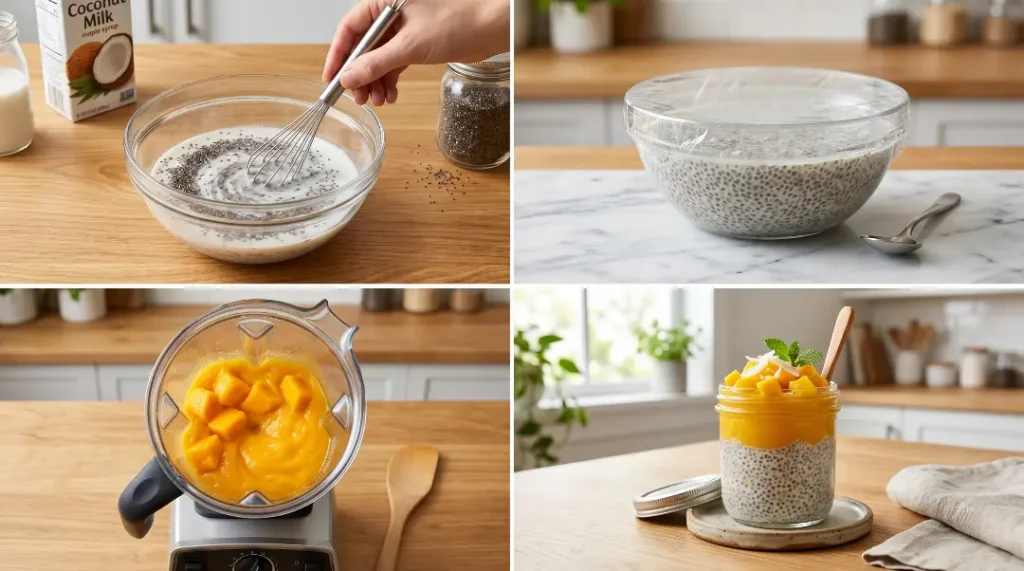
Step 1: Prepare the chia base. In a mixing bowl or large jar, whisk together the coconut milk, chia seeds, sweetener, vanilla extract, and pinch of salt. Whisk well to make sure the chia seeds are evenly distributed and not clumping.
Step 2: Let it rest briefly, then whisk again. After about five minutes, give the mixture another good stir or whisk. This second stir is important because chia seeds tend to settle and clump together in the first few minutes of soaking. Breaking those clumps up now ensures a smooth, even pudding texture.
Step 3: Refrigerate. Cover the bowl or jar and place it in the refrigerator for a minimum of four hours. For the best texture and most fully set pudding, overnight refrigeration is ideal.
Step 4: Make the mango puree. Peel and dice your mangoes. Place about two thirds of the mango into a blender or food processor with the lime juice and blend until smooth. Keep the remaining mango cubed for topping.
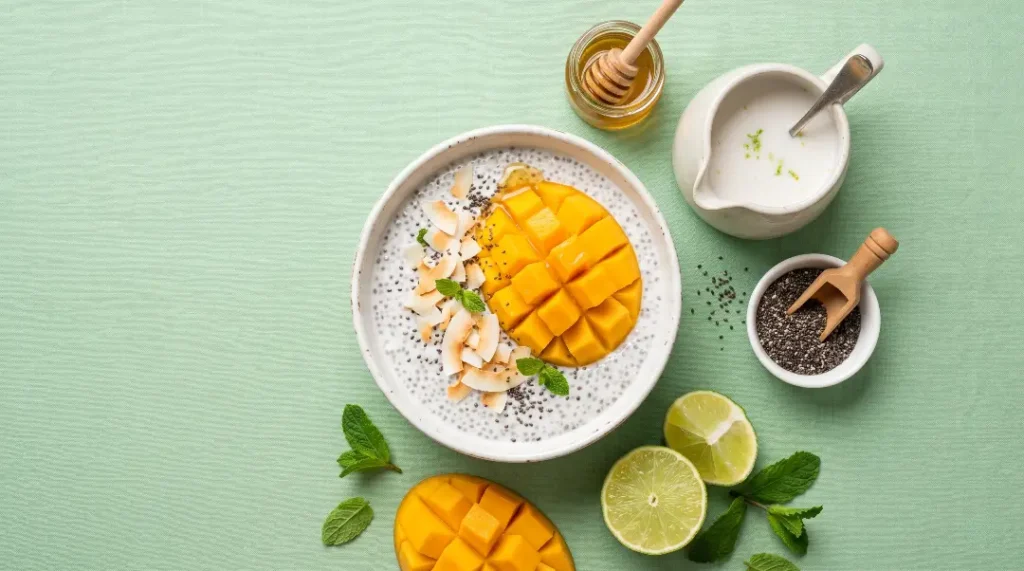
Step 5: Assemble. Spoon the set chia pudding into glasses or bowls. Pour or spoon the mango puree over the top, or create layers by alternating pudding and mango puree. Top with the cubed mango, toasted coconut flakes, and fresh mint.
Tips for Getting the Texture Just Right
Chia pudding texture is something that trips up a lot of first-time makers. Here are the most important things to keep in mind.
The ratio matters a great deal. The standard ratio for a thick, spoonable pudding is three tablespoons of chia seeds per one cup of liquid. If you want a slightly thinner, more drinkable consistency, you can go with two and a half tablespoons per cup. If you prefer it very thick and dense, go up to four tablespoons per cup.
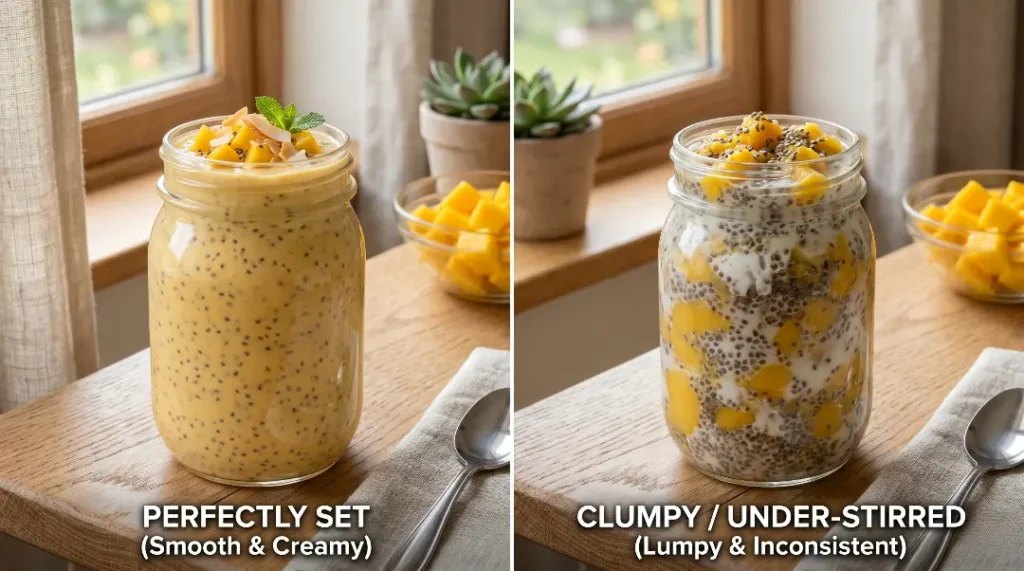
The second stir is not optional. This is the step most people skip, and it is the reason they end up with a pudding that has hard clumps of chia seeds in it. Set a timer for five minutes after the first mixing and stir again before putting it in the fridge.
Full-fat coconut milk beats light coconut milk every time. Light coconut milk has been diluted with water, which makes the pudding thinner and less creamy. If you want that signature rich, velvety texture, reach for the full-fat canned version. The difference is significant.
Do not rush the chilling time. Chia seeds need time to fully absorb the liquid and swell to their full size. Four hours is the minimum, but overnight soaking gives you a noticeably better texture.
Taste and adjust sweetness before layering. The sweetness of mango varies quite a bit depending on the variety and ripeness. Taste your base before assembling and adjust the sweetener accordingly.
Mango Coconut Chia Pudding Variations Worth Trying
Once you have the base recipe down, there is a whole world of delicious variations to play with. Here are some of the most popular and most loved adaptations.
Layered Parfait Style
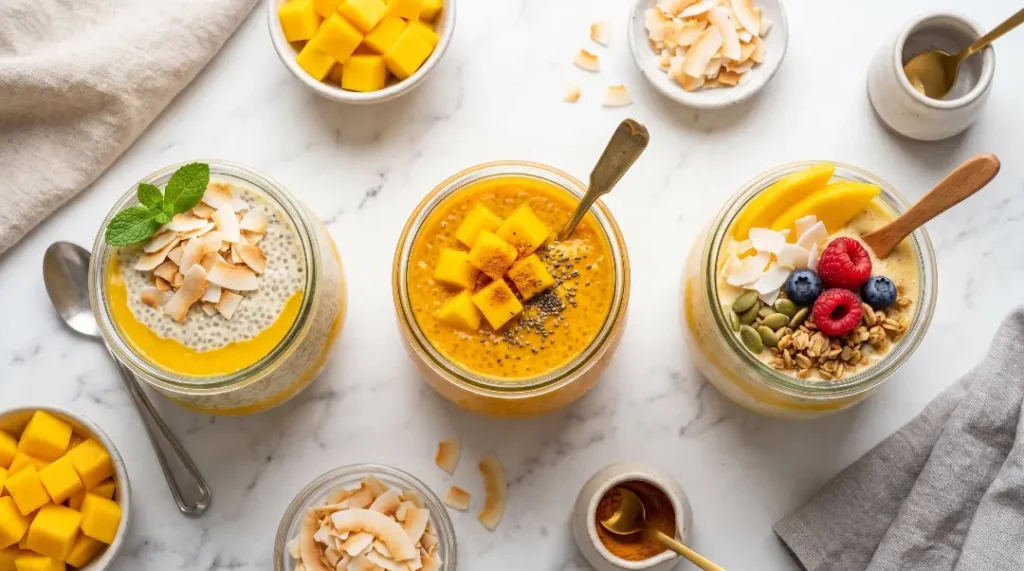
Instead of just topping the pudding with mango, create dramatic layers in a tall glass. Start with a layer of chia pudding, then a layer of mango puree, then more chia pudding, then mango cubes. Finish with coconut flakes and mint. This looks absolutely stunning and is perfect for serving to guests.
Mango Coconut Chia Smoothie Bowl
Blend your set chia pudding with the mango puree until completely smooth, then pour into a wide bowl. Top with granola, fresh fruit, chia seeds, and coconut flakes for a smoothie bowl that has extra protein and fiber from the chia seeds.
Turmeric Mango Coconut Chia Pudding
Add half a teaspoon of ground turmeric and a small pinch of black pepper to your chia base. The turmeric gives the pudding a golden hue and adds significant anti-inflammatory properties without changing the flavor in any noticeable way. It also makes the color look incredibly vibrant and sunny.
Spiced Version with Cardamom
A quarter teaspoon of ground cardamom in the chia base pairs beautifully with both mango and coconut. This variation has a slightly Indian-inspired flavor profile that is wonderfully aromatic and warming.
Mango Coconut Chia Pudding Popsicles
Pour your assembled pudding into popsicle molds and freeze overnight for a healthy frozen treat. These are an absolute hit with kids and adults alike during warmer months.
Meal Prepping Mango Coconut Chia Pudding for the Week
One of the greatest things about this recipe is how perfectly it lends itself to meal prepping. If you are someone who likes to have healthy breakfasts and snacks ready to grab from the fridge without any effort in the morning, this pudding is practically designed for you.
How to Meal Prep This Recipe
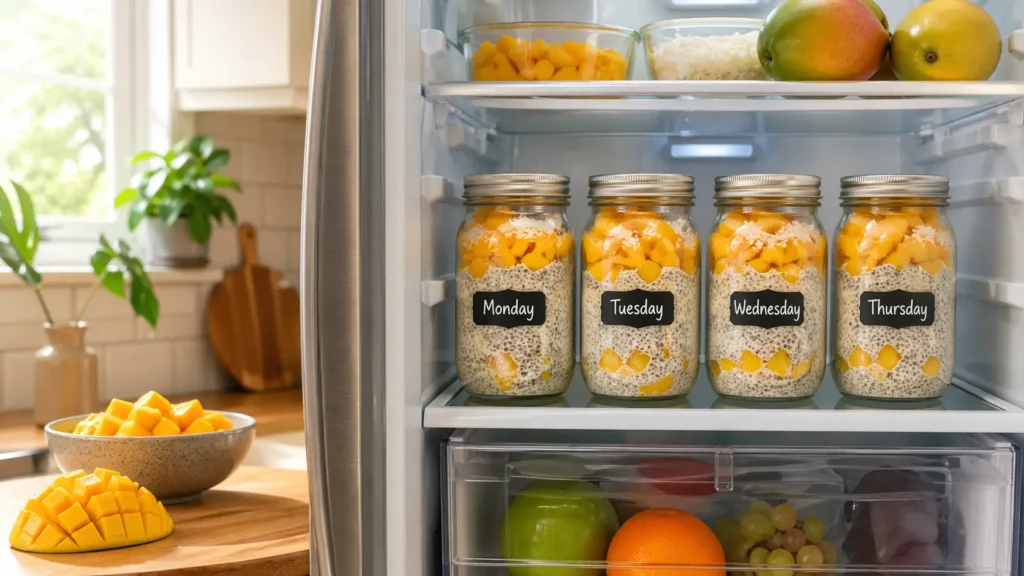
Make a large batch of the chia pudding base on Sunday evening. A batch using four cups of coconut milk and twelve tablespoons of chia seeds will give you roughly six to eight servings depending on portion size. Store the base in a large airtight container or divide it directly into individual jars or containers.
Store the mango puree separately in a small jar or container. This keeps the flavors fresh and prevents the pudding from becoming too watery over time as the mango releases its juices.
When you are ready to eat, simply spoon out your portion, add the mango puree, and add your toppings. The whole assembly process takes under two minutes.
How Long Does It Last?
The chia pudding base will keep well in the refrigerator for up to five days. The mango puree is best used within three days for the freshest flavor. If you are working with frozen mango, the puree can keep a bit longer. Keep toppings like coconut flakes separate until just before serving so they stay crispy.
Choosing the Best Mango for This Recipe
Not all mangoes are created equal, and the variety you choose will have a noticeable impact on the final flavor of your pudding.
Alphonso mango is widely considered the gold standard for mango flavor. It has an intensely sweet, almost honey-like taste with very little fiber, which makes it ideal for pureeing. If you can find these, use them.
Ataulfo (or Honey) mango is another excellent choice. It is smaller and more oval-shaped than the common Tommy Atkins, with a creamy texture and sweet flavor that works beautifully in this recipe.
Tommy Atkins mango is the most widely available variety in many grocery stores. It works fine in this recipe, though the flavor is not quite as intensely sweet or complex as Alphonso or Ataulfo. If you are using Tommy Atkins, you may want to add a touch more sweetener to compensate.
Frozen mango is a perfectly good option and is often more convenient and cost effective than fresh. It is typically picked and frozen at peak ripeness, which means the flavor can actually be quite good. Thaw it in the fridge overnight before pureeing.
Coconut Milk Options: What Works and What Does Not
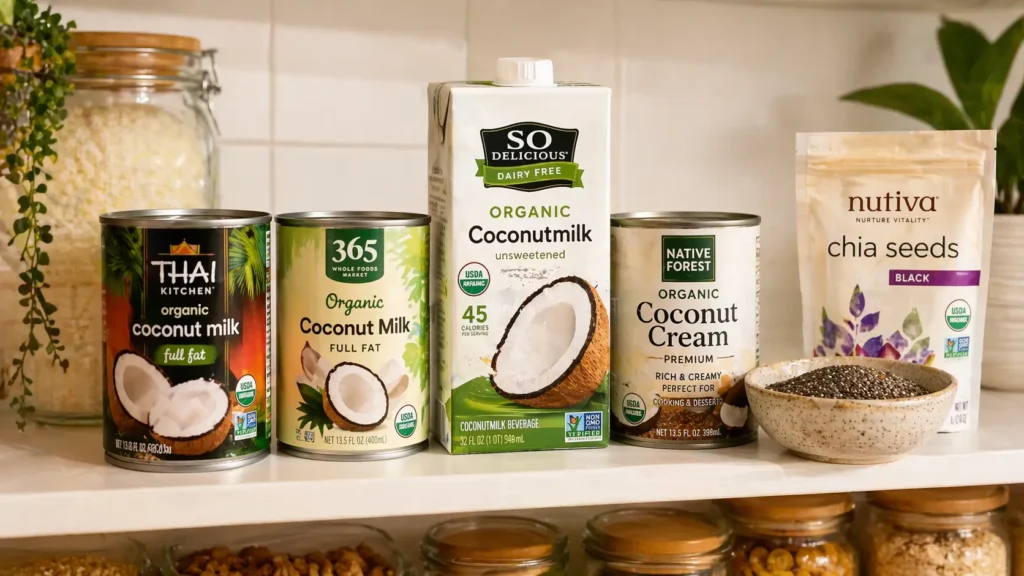
The choice of coconut milk you make will significantly affect the final texture and creaminess of your chia pudding. Here is a quick breakdown of your options.
Full-fat canned coconut milk is the top recommendation for this recipe. It is rich, thick, and provides that signature creaminess that makes the pudding feel indulgent. Shake the can well before opening, or stir it to recombine the cream and liquid.
Light canned coconut milk is canned coconut milk that has been diluted with water. It works in this recipe if you are watching fat intake, but the texture will be noticeably thinner and less creamy.
Carton coconut milk (the kind sold in the refrigerated section) is also a diluted product and is quite similar to light canned coconut milk in terms of fat content. It will give you a thinner pudding.
Coconut cream is the opposite of light coconut milk. It is extremely thick and rich. If you use full coconut cream, you may want to thin it slightly with a little water or use a smaller amount to avoid a pudding that is too dense.
How to Serve Mango Coconut Chia Pudding
The way you present this pudding can make a real difference in how it is received, especially if you are making it for guests or for a special occasion.
For a Casual Everyday Breakfast
Keep it simple: a jar or bowl with chia pudding, a generous spoonful of mango puree stirred through, a few cubes of fresh mango on top, and a light sprinkle of coconut flakes. Simple, quick, and satisfying.
For a Brunch or Gathering
Use tall clear glasses and create beautiful layers that are visible from the outside. Layer from the bottom: mango puree, chia pudding, mango puree again, chia pudding, then top with a generous pile of mango cubes, coconut flakes, and a mint leaf. This looks genuinely impressive with very little extra effort.
As a Dessert
Serve in small ramekins or dessert cups. Drizzle with a little honey or coconut nectar, add a few curls of toasted coconut, and finish with a wedge of fresh lime on the side for people to squeeze over if they like. This feels elegant enough to serve at a dinner party.
Common Mistakes and How to Avoid Them
Even though this recipe is simple, there are a handful of things that regularly trip people up. Here is what to watch out for.
- Skipping the second stir: As mentioned earlier, this is the most common mistake. Chia seeds clump together quickly. Always stir again five to ten minutes after the initial mixing.
- Using too little chia seeds: If your pudding is not setting properly, this is usually the culprit. Stick to the three tablespoon per cup ratio for reliable results.
- Not chilling long enough: Four hours is the minimum. If you try to eat it at the two-hour mark it will likely still be too liquid.
- Using unripe mango: Unripe mango is sour and starchy. It simply does not work in this recipe. Make sure your mango is fully ripe and fragrant before using it.
- Over-sweetening the base: Remember that the mango layer adds sweetness. Taste both components before assembling and err on the side of less sweetener in the base.
Mango Coconut Chia Pudding for Special Diets
One of the nicest things about this recipe is how naturally inclusive it is for people following different dietary patterns.
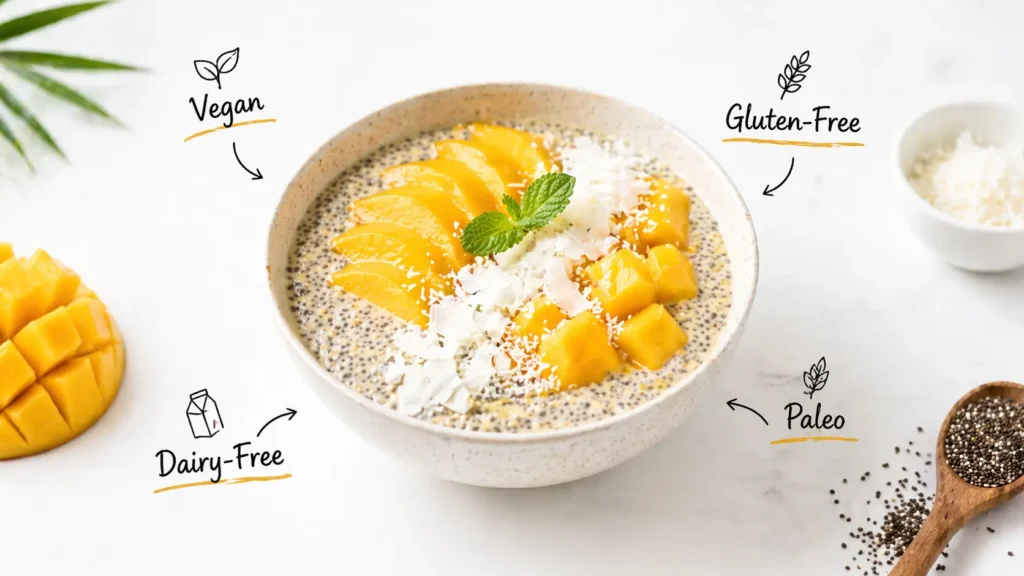
Vegan and plant-based: This recipe is completely plant-based with no modifications needed. Use maple syrup or agave instead of honey if you follow a strict vegan diet.
Gluten-free: Every ingredient in this recipe is naturally gluten-free. It is a safe choice for people with celiac disease or gluten sensitivity.
Dairy-free: Coconut milk replaces dairy entirely, making this an ideal option for people who are lactose intolerant or avoiding dairy for any reason.
Paleo: This pudding is generally considered paleo friendly. Use honey or a small amount of pure maple syrup as the sweetener and make sure your coconut milk has no additives.
Low-FODMAP considerations: Coconut milk in moderate amounts is generally low-FODMAP. Mango in large amounts can be higher in fructose, but a standard serving of this pudding is typically fine for most people following a low-FODMAP approach. If you are sensitive, start with a smaller portion.
Frequently Asked Questions About Mango Coconut Chia Pudding
Q Can I use frozen mango instead of fresh?
Absolutely. Frozen mango is often a more economical and convenient choice, and it is typically frozen at peak ripeness. Thaw it overnight in the refrigerator before blending into a puree.
Q How long does the pudding stay good in the fridge?
The chia pudding base keeps well for up to five days in a sealed container. The mango puree is best within three days. Store them separately and combine just before eating for the best results.
Q My pudding did not set properly. What went wrong?
The most likely causes are not enough chia seeds, not enough chilling time, or skipping the second stir. Check your ratio (three tablespoons per one cup of liquid), make sure you gave it at least four hours to set, and remember to stir again about five minutes after initial mixing.
Q Can I make this without any sweetener?
Yes. If your mango is very ripe and sweet, the natural sugars from the mango puree may be all the sweetness you need. Taste the base before chilling and decide whether it needs anything added.
Q Is this recipe suitable for children?
It is a genuinely kid-friendly recipe. The creamy texture, tropical flavor, and naturally sweet taste make it appealing to most children. You can even blend the whole thing into a smoother consistency if younger children prefer it that way.
Q Can I use a different plant milk instead of coconut milk?
You can, though the flavor profile will change significantly. Oat milk and cashew milk both work well texture-wise. Almond milk tends to produce a thinner pudding. None of them will give you that rich coconut flavor, which is central to what makes this particular pudding so good. If coconut flavor is important to you, stick with coconut milk.
The Environmental and Ethical Case for This Recipe
Beyond the personal health benefits, there is something to appreciate about a recipe that is entirely plant-based and relies on ingredients that are relatively sustainable to produce.
Chia seeds are grown predominantly in South and Central America and require relatively little water compared to many other crops. Mangoes grow abundantly in tropical regions and are a staple crop for millions of farming families. Coconut milk comes from one of the world’s most versatile and sustainable trees, one that provides food, fiber, and income for communities across Southeast Asia and the Pacific.
Choosing plant-based foods like this pudding as a regular part of your diet is a small but meaningful step toward a more sustainable way of eating. And it does not hurt that it tastes extraordinary.
Pairing Ideas: What to Eat Alongside Mango Coconut Chia Pudding
While this pudding is absolutely satisfying on its own, here are a few things that pair beautifully with it for a more complete meal or snack spread.
- Whole grain toast with almond butter: The extra protein and healthy fat from almond butter rounds out the breakfast beautifully if you find the pudding alone is not enough to keep you full.
- A green smoothie: A smoothie made with spinach, banana, and coconut water pairs wonderfully with the tropical flavors and adds even more micronutrients to your morning.
- Fresh fruit salad: A simple mix of kiwi, pineapple, and papaya alongside this pudding creates a gorgeous, colorful tropical spread that is perfect for a weekend brunch.
- Coconut granola: Use granola as a topping rather than a side dish for added crunch. Coconut-flavored granola is a natural match for the flavor profile.
- A cup of green tea or matcha latte: Both of these pair well with the clean, fresh flavors of this pudding without overpowering them.
Final Thoughts on Mango Coconut Chia Pudding
Mango Coconut Chia Pudding is one of those rare recipes that genuinely delivers on every promise. It is easy to make, genuinely good for you, flexible enough to fit into almost any dietary lifestyle, and most importantly, it tastes absolutely wonderful.
Whether you are making it as a quick weekday breakfast, a meal prep staple for the whole week, a healthy dessert for a dinner party, or just a midday snack that feels a little special, this pudding rises to the occasion every time.
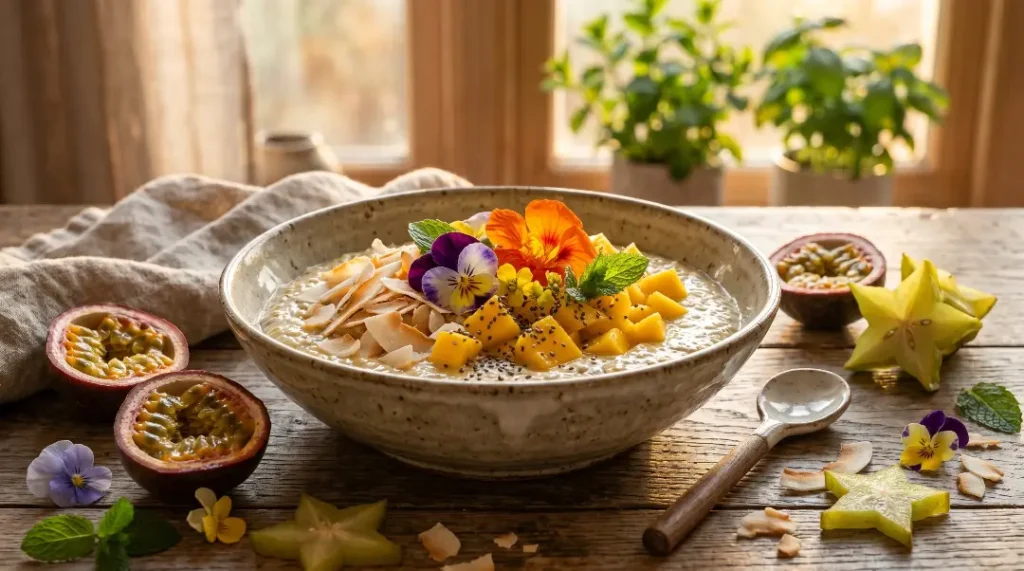
The combination of creamy coconut milk, nutty chia seeds, and sweet, sunny mango is one that never gets old. Once you make it the first time, it tends to become a permanent part of your recipe rotation. It is that good.
Give it a try this week. Make a big batch on Sunday evening, let it set overnight, and wake up to a breakfast that feels genuinely luxurious but required almost no effort. We think you are going to love it.