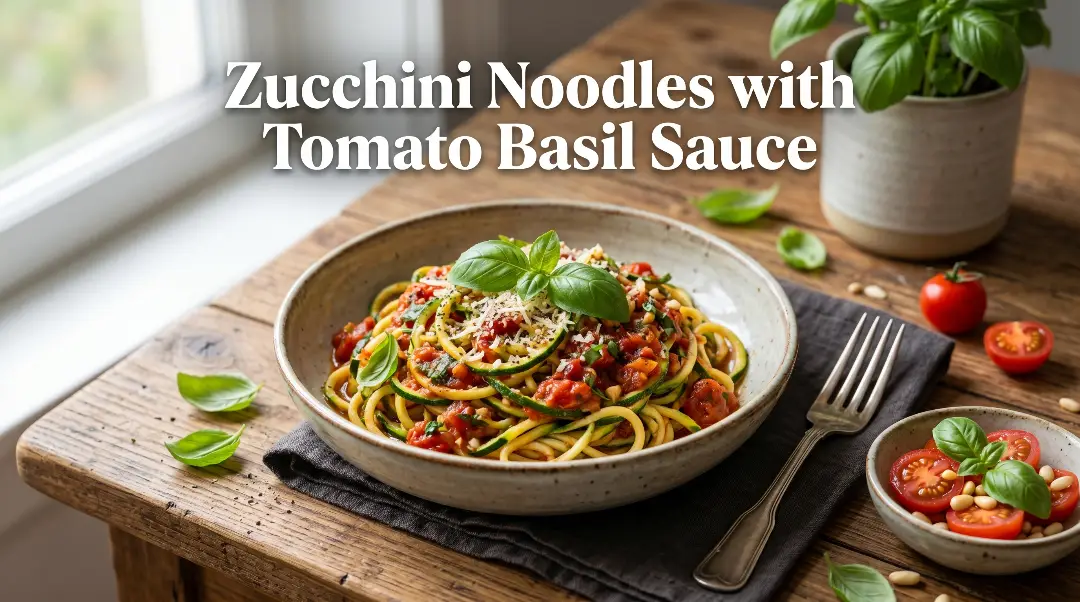
Zucchini Noodles with Tomato Basil Sauce: The Ultimate Guide to a Fresh, Light, and Flavor Packed Meal
Zucchini Noodles with Tomato Basil Sauce is one of those recipes that feels like you are treating yourself without any of the heaviness that comes with traditional pasta. The moment you twirl those tender green noodles into a bowl of bright, garlicky tomato sauce and catch a whiff of fresh basil, you already know dinner is going to be a good one. Whether you are cutting back on carbs, eating more vegetables, or just want something that comes together in under 30 minutes on a weeknight, this dish consistently delivers.
In this complete guide, you will get everything you need: the background on why zucchini noodles have taken over kitchens everywhere, how to make them perfectly without ending up with a watery mess, a detailed and reliable tomato basil sauce recipe, tips for customizing the dish, nutritional information, storage advice, and answers to the questions most people ask when they first try this recipe.
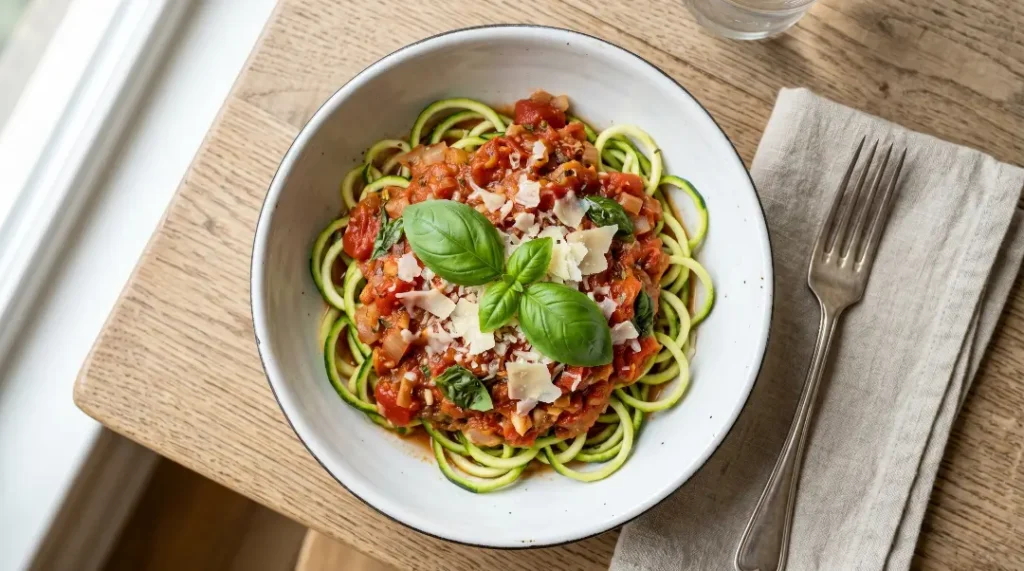
What Are Zucchini Noodles and Why Are People So Into Them
Zucchini noodles, commonly called zoodles, are simply raw or lightly cooked zucchini that has been cut into long, thin, noodle shaped strands. They mimic the shape and mouthfeel of pasta without containing any wheat, gluten, or heavy carbohydrates. The texture when done right is tender but still has a slight bite, similar to al dente pasta.
The popularity of zucchini noodles really picked up when spiralizer tools became widely available and affordable around a decade ago. Before that, people were making them with vegetable peelers or box graters, which worked but was much more tedious. Once the spiralizer hit mainstream kitchens, zoodles became a staple in everything from low carb meal plans to gluten free cooking to general clean eating routines.
The reason they work so well is not just health benefits. Zucchini has a very mild, slightly sweet flavor that absorbs whatever sauce you pair it with beautifully. It does not fight the sauce. It lets the tomato, garlic, and basil be the stars of the dish, which is exactly what you want.
The Nutritional Case for Swapping Pasta with Zucchini Noodles
Let us talk numbers for a second, because the difference between traditional pasta and zucchini noodles is pretty significant.
A standard serving of cooked spaghetti, about 200 grams, contains roughly 265 calories and 52 grams of carbohydrates. The same weight of zucchini noodles comes in at around 33 calories and just 6 grams of carbohydrates. That is a dramatic reduction, especially for anyone managing blood sugar, following a ketogenic or low carb diet, or simply trying to eat lighter meals without feeling deprived.
Beyond the calorie math, zucchini brings real nutritional value to the table:
Vitamin C: Zucchini is a solid source of vitamin C, which supports immune function and skin health.
Potassium: One medium zucchini provides a meaningful amount of potassium, a mineral essential for heart health and muscle function.
Vitamin B6: Important for brain health and energy metabolism, B6 is present in good amounts in zucchini.
Fiber: While not as fiber dense as whole wheat pasta, zucchini does contribute to your daily fiber intake, which supports digestion and helps you feel full.
Antioxidants: Zucchini contains lutein and zeaxanthin, two antioxidants associated with eye health.
When you pair zucchini noodles with a homemade tomato basil sauce, you are also getting the benefits of lycopene from tomatoes, a powerful antioxidant linked to heart health and cancer prevention. Fresh basil adds antimicrobial properties and a dose of vitamin K. This dish is legitimately good for you from multiple angles, not just from a calorie counting perspective.
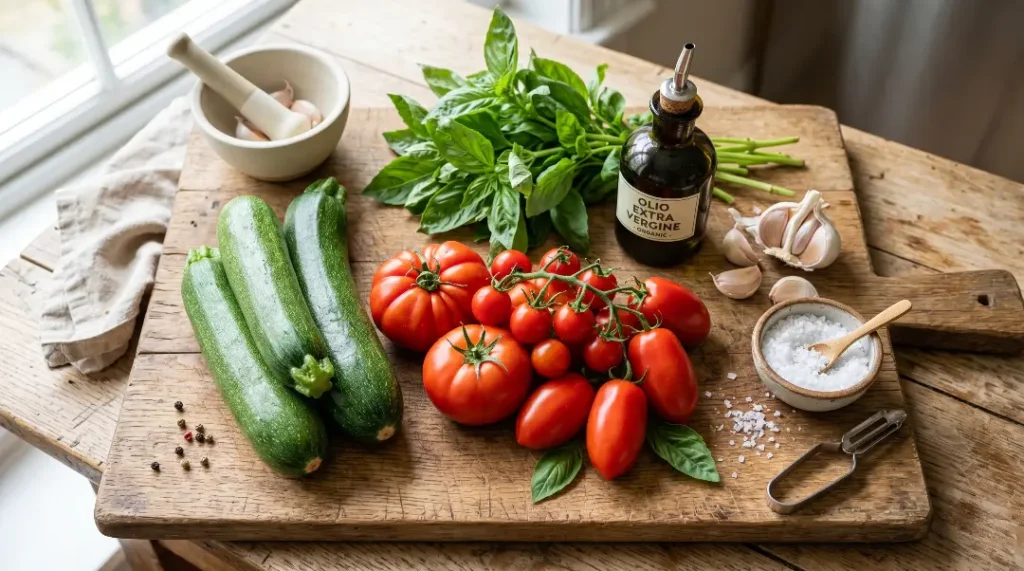
What You Need: Ingredients Breakdown
Before getting into the recipe itself, it is worth understanding each ingredient and what role it plays. This way, if you need to substitute something or scale the recipe, you know exactly what you are working with.
For the Zucchini Noodles
Zucchini: Use medium to large zucchinis for the best noodle length and thickness. Smaller ones tend to have more seeds and a thinner flesh that spiralizes unevenly. Look for firm zucchini with smooth, unblemished skin. The darker green varieties are slightly more flavorful than the pale yellow or striped kinds, though any variety works.
Salt: You will use salt to draw out excess moisture before cooking. This step is not optional if you want noodles that are not watery and diluted in flavor.
Olive oil: A light coating of olive oil helps the noodles cook evenly in the pan without sticking.
For the Tomato Basil Sauce
Ripe fresh tomatoes: Nothing beats fresh ripe tomatoes for this sauce. Roma tomatoes are ideal because they have less water content and more flesh, which means a thicker, more concentrated sauce. San Marzano tomatoes are another excellent choice. If tomatoes are not in season, a good quality canned whole peeled tomato is a perfectly acceptable alternative.
Garlic: Do not hold back on garlic here. Three to four cloves, finely minced, give the sauce a depth of savory flavor that makes everything taste richer.
Fresh basil: This is non negotiable. Dried basil is not a substitute in this recipe because the fresh herb adds a bright, slightly peppery, fragrant quality that dried simply cannot replicate. Add it at the very end of cooking to preserve its color and flavor.
Olive oil: Use a good quality extra virgin olive oil. Since this recipe has so few ingredients, the quality of each one matters. The olive oil forms the flavor base of the sauce.
Onion: A small white or yellow onion, finely diced, adds sweetness and body to the sauce.
Red pepper flakes: Optional, but even just a pinch adds a background warmth that balances the acidity of the tomatoes.
Sugar: A tiny amount, about half a teaspoon, helps balance the acidity of the tomatoes. You may not need it if your tomatoes are very ripe and sweet.
Salt and black pepper: Season generously. Taste as you go.
Parmesan cheese: For finishing. Freshly grated parmesan melted over the top ties everything together with a salty, nutty note.
Equipment You Will Need
You do not need a fully stocked professional kitchen for this recipe, but a few tools make the process much smoother.
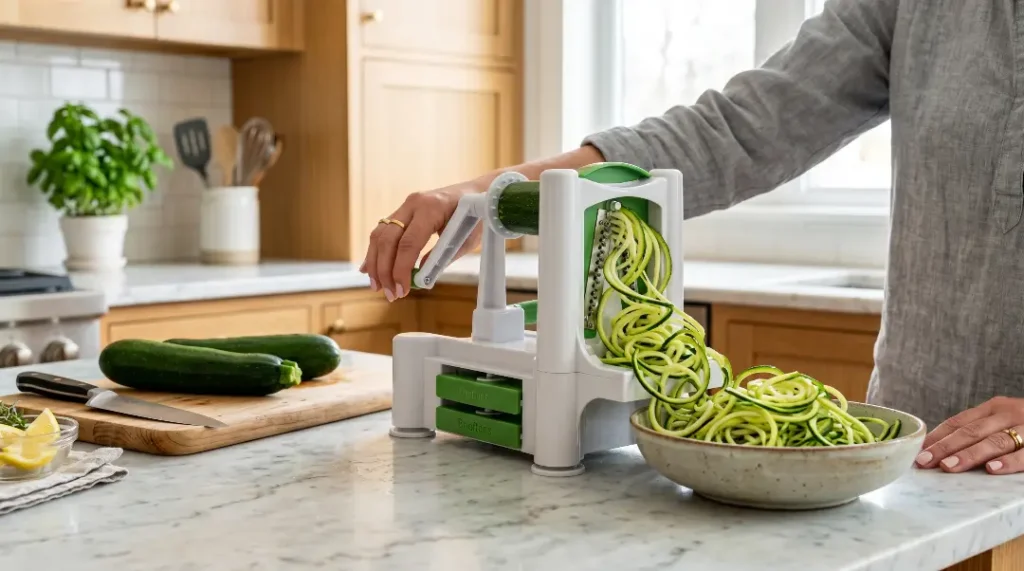
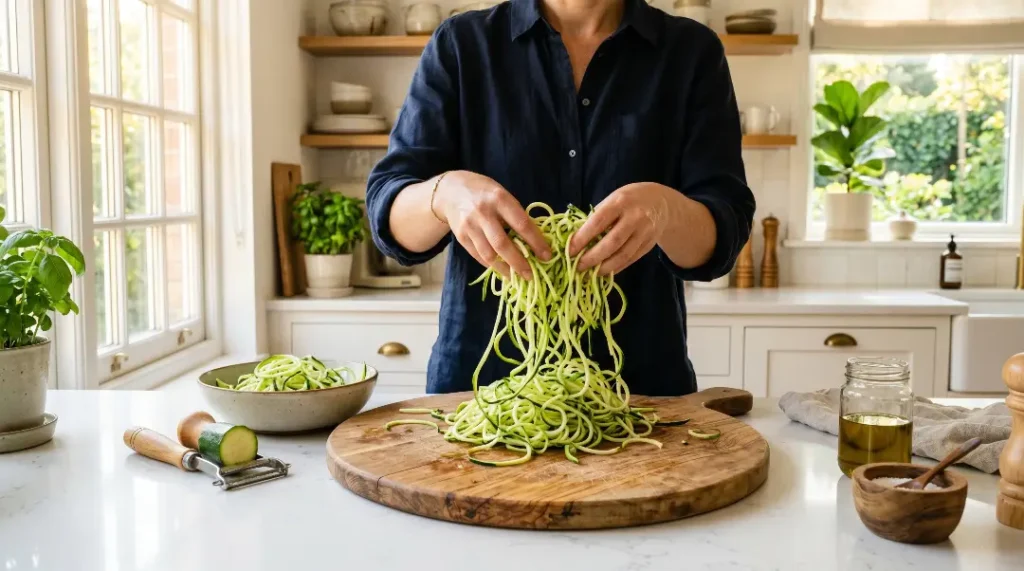
Spiralizer: This is the key tool for making proper zucchini noodles. A countertop spiralizer with a blade attachment works best for long, consistent strands. Handheld spiralizers are more affordable and still do a good job, though the noodles tend to be shorter. If you do not have a spiralizer at all, a julienne peeler or even a regular vegetable peeler will work, though the noodles will be wider and flatter.
Large skillet or saute pan: You want enough surface area so that the zucchini noodles can be spread out and cooked evenly rather than steaming in a pile.
Separate saucepan for the sauce: Making the sauce separately gives you better control over the consistency and flavor.
Colander or kitchen towels: For salting and draining the zucchini noodles.
Step by Step Recipe: Zucchini Noodles with Tomato Basil Sauce
Step 1: Prepare and Salt the Zucchini Noodles
Wash the zucchinis thoroughly. Trim off both ends. Run each zucchini through your spiralizer to create noodles. Place them in a colander set over a bowl or in the sink.
Sprinkle the noodles generously with salt, toss to coat, and let them sit for at least 15 to 20 minutes. You will see liquid begin to collect at the bottom of the bowl. This is the excess water being drawn out of the zucchini. This step is critical because it prevents your finished dish from being watery.
After resting, gather the noodles in a clean kitchen towel or several layers of paper towels and gently squeeze out as much remaining moisture as you can. Set aside.
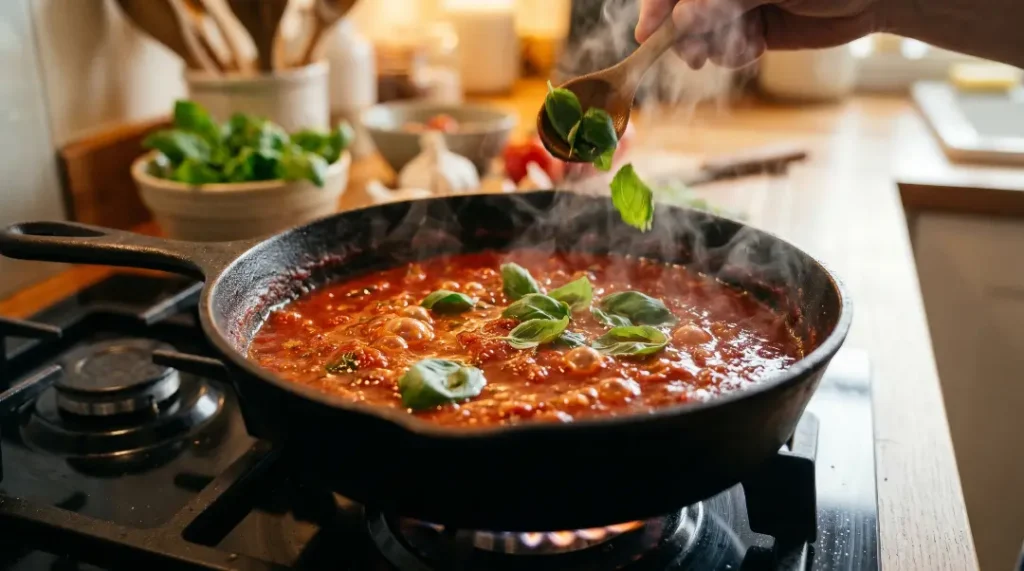
Step 2: Make the Tomato Basil Sauce
Heat two tablespoons of olive oil in a saucepan over medium heat. Add the finely diced onion and cook, stirring occasionally, for about 5 minutes until softened and translucent. Add the minced garlic and red pepper flakes and cook for another minute, stirring constantly so the garlic does not burn.
If using fresh tomatoes, score the bottoms with an X, blanch briefly in boiling water, peel, remove the seeds, and roughly chop. If using canned tomatoes, crush them by hand as you add them to the pan.
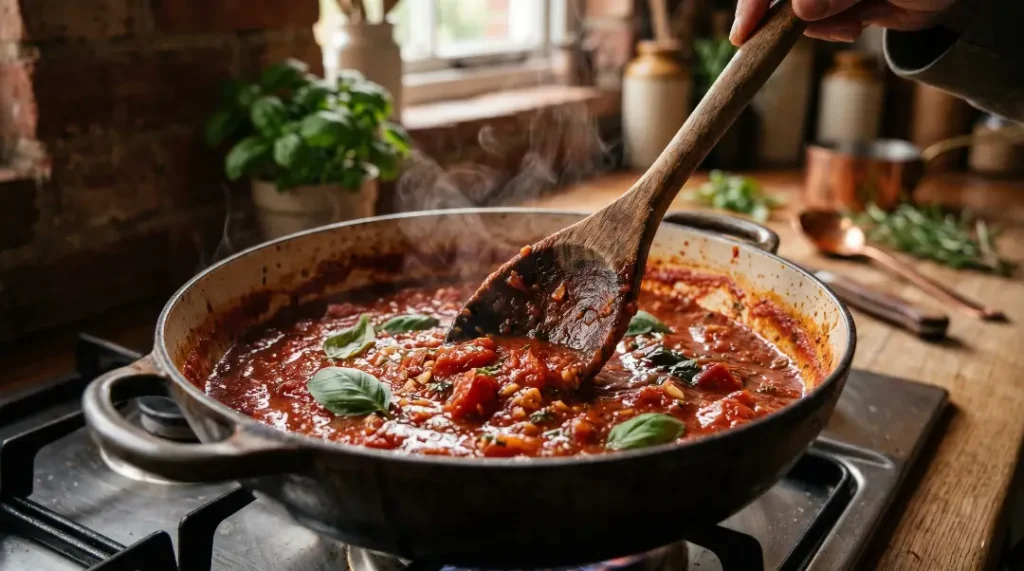
Add the tomatoes to the pan along with a pinch of salt. Stir well and bring to a gentle simmer. Let the sauce cook uncovered for 15 to 20 minutes, stirring occasionally, until it thickens and the flavors come together. Taste and adjust salt, pepper, and a small amount of sugar if needed.
Remove from heat. Stir in the torn fresh basil leaves. The residual heat will gently wilt them without destroying their color or flavor.
Step 3: Cook the Zucchini Noodles
Heat one tablespoon of olive oil in a large skillet over medium high heat. Add the dried zucchini noodles to the pan in a single layer as much as possible. Do not overcrowd them.
Cook for just 2 to 3 minutes, tossing gently with tongs. You want them warmed through and slightly tender but still with a bit of firmness. Overcooking is the most common mistake with zucchini noodles. Once they go past that 3 minute mark, they rapidly release more water, become limp and mushy, and the whole dish turns soupy.
Season lightly with salt and pepper.
Step 4: Assemble and Serve
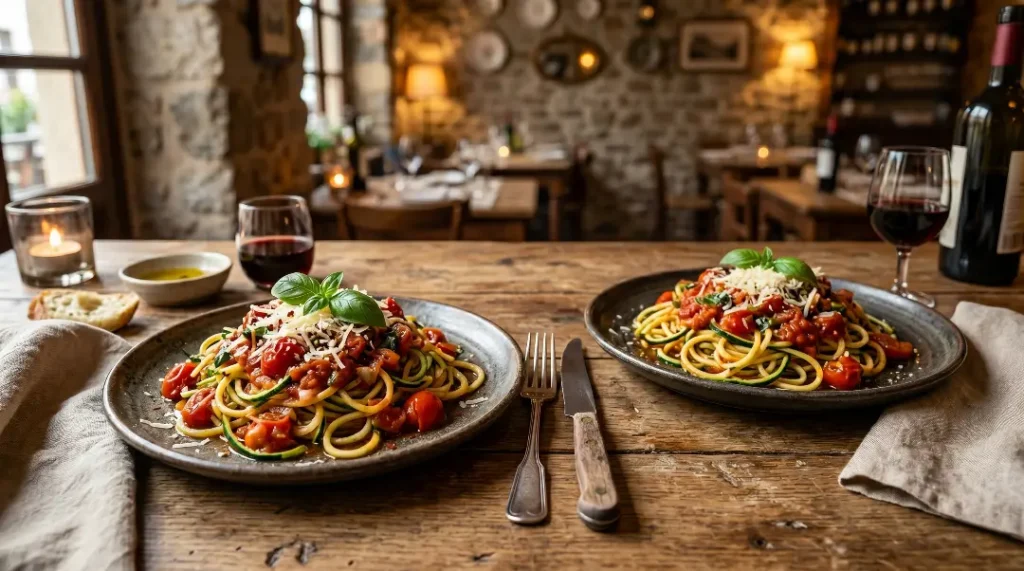
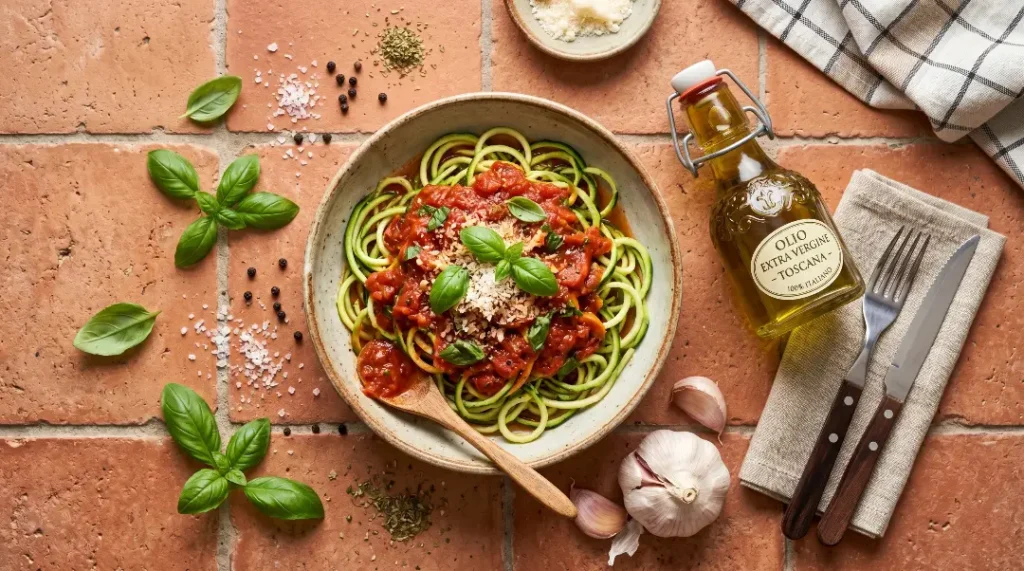
Transfer the cooked zucchini noodles to serving bowls or plates. Spoon the tomato basil sauce generously over the top. Finish with freshly grated parmesan cheese, an extra drizzle of olive oil, a few whole basil leaves, and a crack of black pepper.
Serve immediately.
The Most Common Mistakes (And How to Avoid Them)
Even with a simple recipe like this, there are a few things that can go sideways. Here is what to watch out for.
Skipping the salting step: This is the number one reason people end up with watery zoodles. The moisture inside zucchini will come out no matter what. The question is whether it comes out before cooking, when you can control it, or during cooking, when it floods your pan and dilutes everything.
Overcooking the noodles: Zucchini cooks fast. Very fast. Two to three minutes is genuinely all you need. If you walk away and come back five minutes later, the noodles will have released most of their remaining water into the pan and turned to mush. Stay at the stove and keep an eye on them.
Adding the sauce too early: Combine the sauce and noodles at the last possible second, right before serving. If they sit together for too long, the sauce draws more moisture out of the zucchini and everything becomes watery and loose.
Using underripe tomatoes: The sauce is only as good as the tomatoes you use. Pale, flavorless winter tomatoes will make a pale, flavorless sauce. If your fresh tomatoes are not at peak ripeness, use canned San Marzano tomatoes instead. They will give you a better result.
Not tasting and adjusting: Homemade sauces require tasting. The acidity of tomatoes varies depending on the variety and ripeness. You may need more salt, a tiny pinch of sugar, or an extra splash of olive oil to bring everything into balance.
Variations and Customizations
One of the best things about Zucchini Noodles with Tomato Basil Sauce is how flexible it is. Once you have the base recipe down, there are so many ways to take it in different directions based on what you are in the mood for or what you have in the fridge.
Add Protein
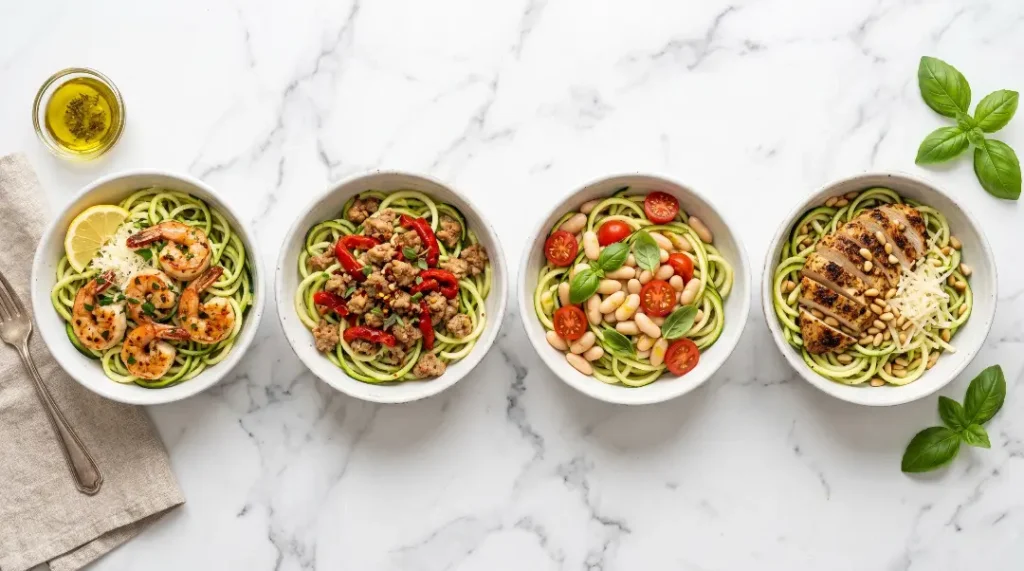
Grilled chicken: Slice grilled or pan seared chicken breast thinly and layer it over the noodles. The mild flavor of chicken works perfectly with the bright tomato sauce.
Shrimp: Quickly sauteed shrimp with a bit of garlic and lemon is a classic pairing with tomato based sauces and adds a satisfying seafood element.
Italian sausage: Crumbled mild or spicy Italian sausage cooked directly into the sauce adds richness, depth of flavor, and heartiness.
White beans: For a plant based protein option, stir a can of drained cannellini beans into the sauce during the last few minutes of cooking. They add creaminess and make the dish much more filling.
Lentils: Red lentils cooked directly into a slightly thinned sauce create a bolognese style variation that is deeply satisfying and entirely vegan.
Change the Sauce Profile
Arrabbiata: Double the red pepper flakes and add a splash of red wine for a spicy, more intense version of the sauce.
Puttanesca: Add olives, capers, and anchovy paste to the tomato sauce for a briny, deeply savory Mediterranean flavor.
Roasted tomato: Instead of cooking the tomatoes on the stovetop, halve them, drizzle with olive oil and roast at 200 degrees Celsius for 30 minutes until caramelized and sweet. Blend roughly and use as your sauce base.
Sun dried tomato: Stir chopped sun dried tomatoes packed in oil into the sauce for a concentrated, sweet tomato punch.
Make It Vegan or Dairy Free
Simply skip the parmesan or replace it with nutritional yeast, which gives a similar savory, cheesy quality without any dairy. A sprinkle of toasted pine nuts or crushed walnuts over the top adds texture and a pleasant nuttiness.
Mix Zucchini with Other Vegetable Noodles
Combining zucchini noodles with spiralized carrots, yellow squash, or beets adds visual interest and flavor variety. Just be aware that different vegetables have different water contents and cook at slightly different rates. Carrots in particular take a minute or two longer than zucchini.
How to Store and Reheat Leftovers
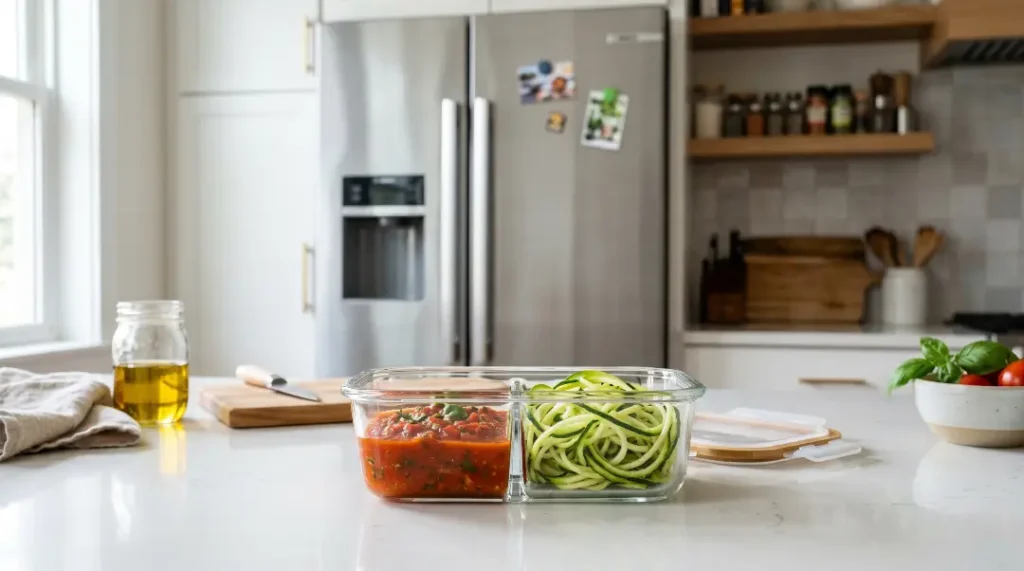
Zucchini noodles and tomato sauce are best stored separately. If you mix them together before storing, the sauce will continue to pull moisture from the zucchini and you will end up with a watery, unappetizing texture the next day.
Storing the sauce: The tomato basil sauce stores very well. Transfer it to an airtight container and refrigerate for up to 5 days. It also freezes beautifully. Pour into a freezer safe container or ice cube tray for portioned servings and freeze for up to 3 months.
Storing the zucchini noodles: Raw spiralized zucchini can be kept in an airtight container lined with paper towels in the refrigerator for 2 to 3 days. The paper towels absorb any excess moisture. Do not freeze raw zucchini noodles as they become mushy upon thawing.
Reheating: Warm the sauce separately in a saucepan over medium heat. For the noodles, a quick 1 to 2 minute toss in a hot skillet is all they need. Combine just before eating.
Making This Dish Kid Friendly
If you have children who are skeptical of vegetables masquerading as pasta, a few small tweaks can make a big difference.
First, the noodle to sauce ratio matters a lot for kids. Use more sauce than you might for adults. A generous coating of familiar tomato sauce makes the zucchini much more approachable.
Second, if your kids are really resistant to the spiral shape, try using a vegetable peeler to make wide, flat noodles instead. They look more like regular flat pasta and are less visually unfamiliar.
Third, hiding a small amount of regular pasta mixed in is a completely valid approach during a transition period. Half zucchini noodles and half real spaghetti still cuts the carb and calorie content significantly and lets kids gradually get used to the new texture.
Fourth, parmesan cheese is your best friend. Children who love cheese will often eat just about any vegetable under a good blanket of melted parmesan.
Serving Suggestions: What to Pair with Zucchini Noodles
While Zucchini Noodles with Tomato Basil Sauce works perfectly well as a standalone meal, pairing it with the right sides can turn it into a complete, satisfying dinner spread.
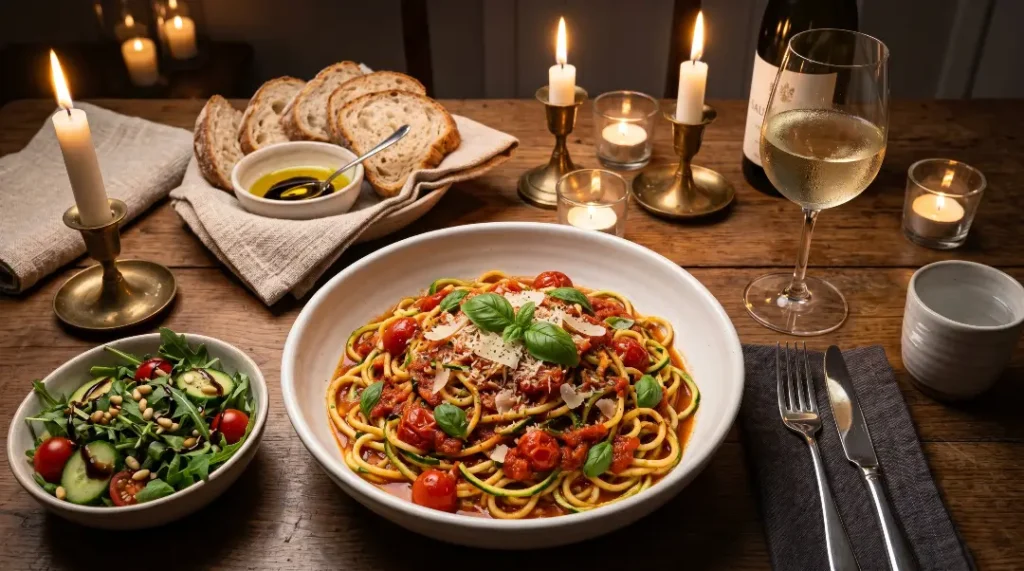
Crusty garlic bread: Yes, this technically adds the carbs back, but one slice of good garlic bread alongside a bowl of zoodles is a perfectly reasonable life decision. The bread is great for scooping up extra sauce.
Simple green salad: A light arugula salad with lemon vinaigrette, shaved parmesan, and a handful of cherry tomatoes complements the dish without competing with its flavors.
Roasted vegetables: A tray of oven roasted bell peppers, eggplant, and cherry tomatoes drizzled with olive oil makes a lovely side that doubles down on the Mediterranean theme.
Soup: A light broth based soup like a simple minestrone or chicken broth with herbs makes for a satisfying starter that does not overwhelm the main course.
Wine pairing: If you enjoy wine with dinner, a crisp Italian white like Pinot Grigio or Vermentino works beautifully with this dish. For red wine drinkers, a light bodied Barbera or Chianti does not overpower the delicate tomato and basil flavors.
Scaling the Recipe for Meal Prep or Larger Groups
This recipe scales up easily and is well suited for batch cooking.
For a solo serving, use one medium zucchini and about a cup of sauce. For a family of four, three to four large zucchinis and a full batch of sauce works perfectly. For a larger group or dinner party, the sauce can be made in bulk a day ahead and refrigerated, which actually improves the flavor as the ingredients have time to meld together.
When spiralizing large quantities of zucchini in advance, store the raw noodles layered with paper towels in an airtight container. Salting and squeezing them out just before cooking rather than hours ahead prevents them from becoming too limp.
The sauce can also be doubled or tripled with no change to technique. Simply use a larger pot and allow a bit of extra simmering time to achieve the right consistency.
Frequently Asked Questions
Q) Can I eat zucchini noodles raw?
Yes, absolutely. Raw zucchini noodles have a crunchier texture and slightly more neutral flavor. Some people prefer them raw in the summer when they do not want to turn on the stove at all. Simply salt, rest, and squeeze them as described, then dress with warm sauce. The heat from the sauce will slightly soften the noodles without fully cooking them.
Q) Do I need a spiralizer to make zucchini noodles?
Not necessarily. A julienne peeler creates thin matchstick like strips that work well as noodles, though they tend to be shorter and irregular. A regular vegetable peeler produces wide, flat ribbons more like pappardelle. A mandoline slicer can also be used to create thin planks that can then be cut into strips. A spiralizer is the most convenient and consistent tool, but it is not the only option.
Q) Why do my zucchini noodles always turn out watery?
This almost always comes down to two things: not salting and squeezing out enough moisture before cooking, and cooking the noodles too long. Follow the salting and squeezing step carefully, keep the cooking time to 2 to 3 minutes maximum, and always combine with the sauce just before eating rather than letting them sit.
Q) Is this recipe suitable for a keto diet?
Yes. Zucchini is one of the most keto friendly vegetables available. A full serving of zucchini noodles with tomato basil sauce typically comes in under 12 to 15 grams of net carbohydrates, well within the range that most ketogenic eating plans allow. Just be mindful of the sauce ingredients and avoid adding any sweeteners beyond the small amount used to balance acidity.
Q) Can I make the tomato basil sauce ahead of time?
Yes, and it is actually recommended. The sauce tastes even better the next day once the garlic and basil have had time to infuse into the tomatoes. Make it 1 to 2 days in advance, refrigerate in an airtight container, and reheat gently before serving.
A Brief History: The Zoodle Movement
The rise of zucchini noodles as a mainstream food trend is worth a moment of context. While people have been cooking vegetables in noodle forms for centuries in various cuisines, the specific western popularity of zoodles as a pasta substitute began picking up momentum in the early 2010s.
Much of this was driven by the rise of paleo and low carb eating philosophies, which discouraged grain based foods while encouraging vegetable rich meals. Food bloggers began sharing spiralized vegetable recipes widely, and the images of colorful vegetable noodles in bright sauces spread rapidly across social media.
The spiralizer itself moved from an obscure kitchen gadget to a bestseller on major retail platforms. Cooking shows, health magazines, and recipe websites embraced the trend, which helped push zucchini noodles into the mainstream. Today they appear on restaurant menus, in grocery store refrigerated sections as pre spiralized packages, and in countless home kitchens around the world.
What started as a dietary hack has become a genuinely beloved food in its own right, appreciated not just for its nutritional profile but for the way it showcases seasonal vegetables and lightens up classic comfort food dishes.
Seasonal Cooking: Making the Most of Summer Zucchini
If you grow your own vegetables or shop at farmers markets, late summer is the absolute prime time for this recipe. Zucchini is one of the most abundant warm season vegetables, often available in embarrassing quantities from backyard gardens.
Ripe summer zucchini picked before it gets overly large has the best texture for noodles. Very large zucchini, sometimes called marrows, tend to be more watery and have a spongier texture that does not hold up as well to spiralizing or cooking.
Summer also brings peak tomato season, which means the best possible raw material for your sauce. When both the zucchini and the tomatoes are at their seasonal best, this dish reaches its highest potential. There is a reason this kind of simple, fresh Italian style cooking has endured for generations. When the ingredients are good, you barely need to do anything to them.
In cooler months when neither fresh zucchini nor tomatoes are at their best, you can still make an excellent version of this dish using fresh zucchini from the grocery store combined with high quality canned tomatoes. San Marzano tomatoes imported from Italy are widely considered the gold standard for tomato sauce and are available year round.
The Cultural Roots of Tomato Basil Sauce
The tomato basil sauce in this recipe is rooted in Italian culinary tradition, specifically the simple, ingredient focused cooking philosophy of southern Italy. The idea that a great sauce requires nothing more than good tomatoes, garlic, olive oil, and fresh herbs is central to Italian home cooking.
This style of sauce is closest to what Italians call sugo di pomodoro fresco, meaning fresh tomato sauce. It is not the long simmered ragu of northern Italy or the complex layered sauces of restaurant cooking. It is fast, simple, and reliant on ingredient quality above all else.
Basil in Italian cooking is not just a garnish. It is a foundational flavor, especially in southern regions like Campania and Calabria where it grows abundantly. The pairing of tomato and basil is considered one of the great natural harmonies in cooking, and for good reason. The sweet acidity of tomatoes and the slightly peppery, floral quality of fresh basil genuinely bring out the best in each other.
By pairing this culturally rooted sauce with zucchini noodles, you get a dish that bridges traditional Italian flavor with modern nutritional awareness, which is a combination that has a lot of appeal for a wide range of eaters.
Tips for Buying the Best Zucchini
Not all zucchini at the grocery store is created equal. Here is what to look for:
Size: Medium zucchini, roughly 15 to 20 centimeters long, are ideal for spiralizing. They have a good flesh to seed ratio and are firm enough to hold up during spiralizing without crumbling.
Firmness: Squeeze gently. A good zucchini should feel solid and firm. If it gives under slight pressure, it is overripe and will have a soft, watery texture.
Skin: Look for smooth, shiny, blemish free skin. Soft spots, wrinkled skin, or cuts are signs of age or damage.
Color: Bright, deep green zucchini is typically fresher and more flavorful than pale or dull colored ones.
Stem end: A fresh cut stem end that looks moist rather than dried out indicates recent harvest.
Buying organic zucchini is worth considering since the skin is edible and left intact when spiralizing. If budget is a concern, regular zucchini washed thoroughly is perfectly fine.
Final Thoughts
Zucchini Noodles with Tomato Basil Sauce is genuinely one of the most rewarding simple recipes you can have in your regular rotation. It asks very little of you in terms of time and effort but gives back a great deal in flavor, nutrition, and satisfaction.
The beauty of it lies in its balance. The mild, tender zucchini noodles let the bold, garlicky tomato sauce and fragrant basil take center stage. The parmesan adds a salty, savory finish. The whole thing comes together in under 30 minutes and leaves you feeling good rather than heavy.
Whether you make it exactly as written, add grilled shrimp, load it with roasted vegetables, or turn it into a vegan meal, the foundation is solid. Once you have made it two or three times, it becomes the kind of recipe you can throw together from memory on a busy evening, and that is exactly the kind of recipe every kitchen needs more of.
Try this recipe and tag your results. There is always something new to notice about a dish as simple and satisfying as this one.