6 Ways To Make Chia Pudding
6 Ways to Make Chia Pudding That Will Actually Excite Your Taste Buds
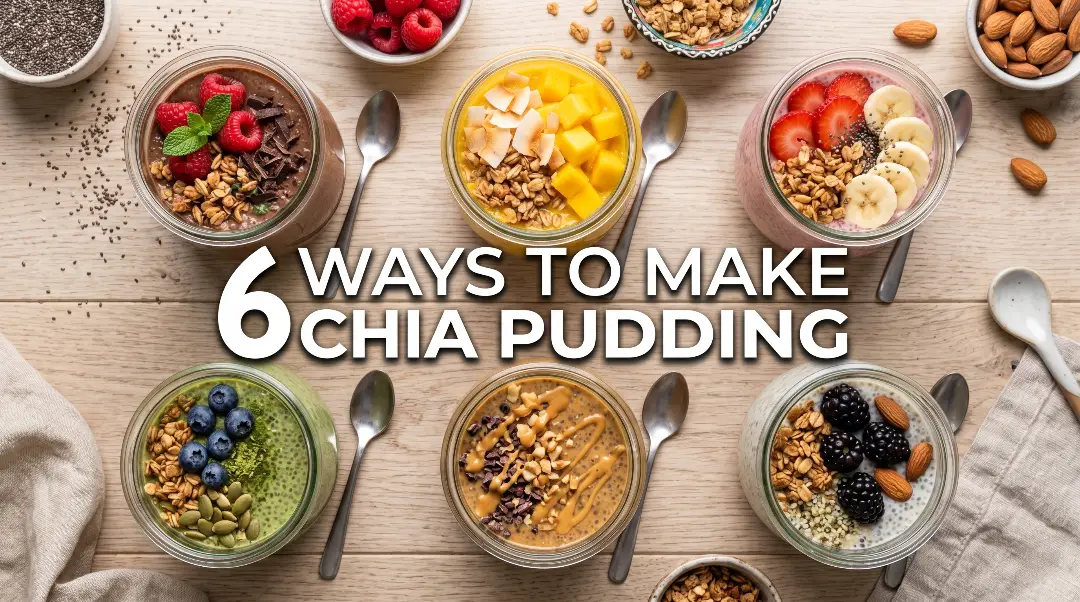
Chia pudding has quietly become one of the most talked about foods in the health and wellness world, and for good reason. It is incredibly simple to put together, packed with nutrients, and works for breakfast, snacks, or dessert. If you have been wondering about the 6 ways to make chia pudding that go beyond the basic recipe, you are in the right place. These six variations are practical, flavorful, and easy enough for anyone to try, whether you are a first timer in the kitchen or someone who has been meal prepping for years.
Before jumping into the variations, let us quickly cover what makes chia pudding so special. Chia seeds are tiny but powerful. They are loaded with omega 3 fatty acids, fiber, protein, and calcium. When soaked in liquid, they expand and form a thick, creamy gel that forms the base of every chia pudding recipe. The best part? You do not need to cook anything. A jar, some liquid, a few hours in the fridge, and you are done.
Now let us get into all six ways to make chia pudding with detailed instructions, tips, and ideas for every variation.
What You Need to Know Before Making Chia Pudding
Getting the ratio right is the foundation of a good chia pudding. The standard ratio is 3 tablespoons of chia seeds per 1 cup of liquid. This gives you a thick, spoonable texture that holds up well. If you prefer a thinner consistency, you can go with 2 tablespoons per cup.
Stirring is important. After combining the seeds and liquid, stir well, wait about 10 minutes, then stir again. This second stir breaks up any clumps and ensures the seeds are evenly distributed. After that, cover and refrigerate for at least 4 hours, though overnight is always better.
The liquid you choose matters a lot too. Dairy milk, almond milk, oat milk, coconut milk, and soy milk all work beautifully. Each one brings a slightly different flavor and texture to the final pudding. Coconut milk, for example, creates a richer, creamier pudding, while almond milk gives a lighter result.
You can sweeten your pudding with honey, maple syrup, agave, dates, or even a ripe banana blended into the liquid. Always taste and adjust before refrigerating.
Way 1: Classic Vanilla Chia Pudding
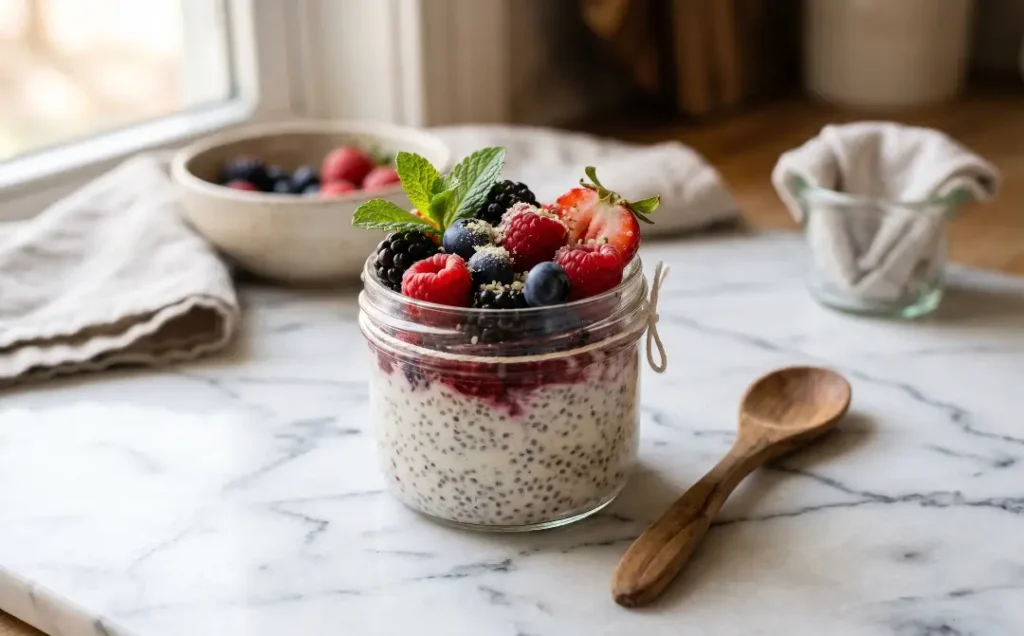
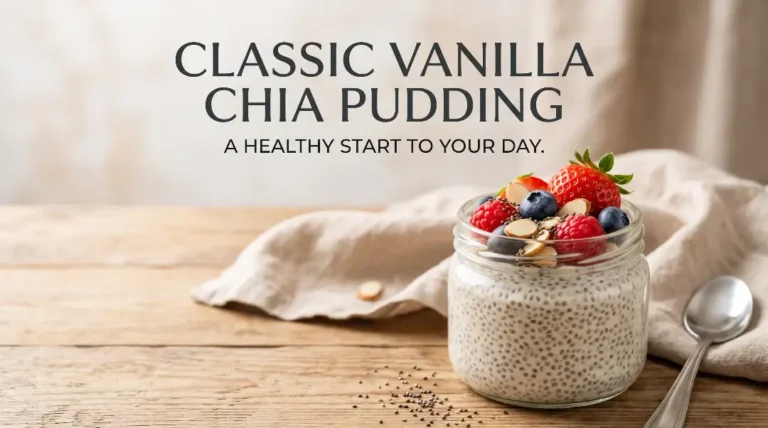
This is where everyone should begin. Classic vanilla chia pudding is the most straightforward version and serves as the perfect base for every other variation on this list. It is mild, creamy, naturally sweet, and incredibly satisfying. The simplicity of this version is what makes it so reliable and so popular in households around the world.
To make classic vanilla chia pudding, you will need 3 tablespoons of chia seeds, 1 cup of milk of your choice, 1 teaspoon of pure vanilla extract, and 1 to 2 teaspoons of maple syrup or honey. Combine all the ingredients in a jar or bowl and stir well. Let it sit for 5 to 10 minutes, give it another thorough stir, then cover it and refrigerate overnight or for at least 4 hours.
The result is a smooth, pudding like texture with a gentle vanilla aroma. When you are ready to serve, you can top it with sliced bananas, fresh strawberries, blueberries, or a small drizzle of nut butter. Granola sprinkled on top adds a satisfying crunch.
Why this version works so well is because it is a blank canvas. The vanilla flavor is neutral enough to pair with almost any topping or mix in. If your first attempt turns out slightly too thick, just add a splash of milk and stir until it reaches your preferred consistency.
This version is also great for kids because the flavor is familiar and comforting without being overwhelming. Prep a batch of four to five jars on a Sunday evening and you have breakfasts covered for the entire week. It stores well in the fridge for up to five days, which makes it one of the most efficient meal prep options available.
For a dairy free take, oat milk or cashew milk works particularly well here. Both are naturally sweet and give the pudding a creamy, velvety finish that rivals the dairy version without any compromise on texture or flavor.
Way 2: Chocolate Chia Pudding
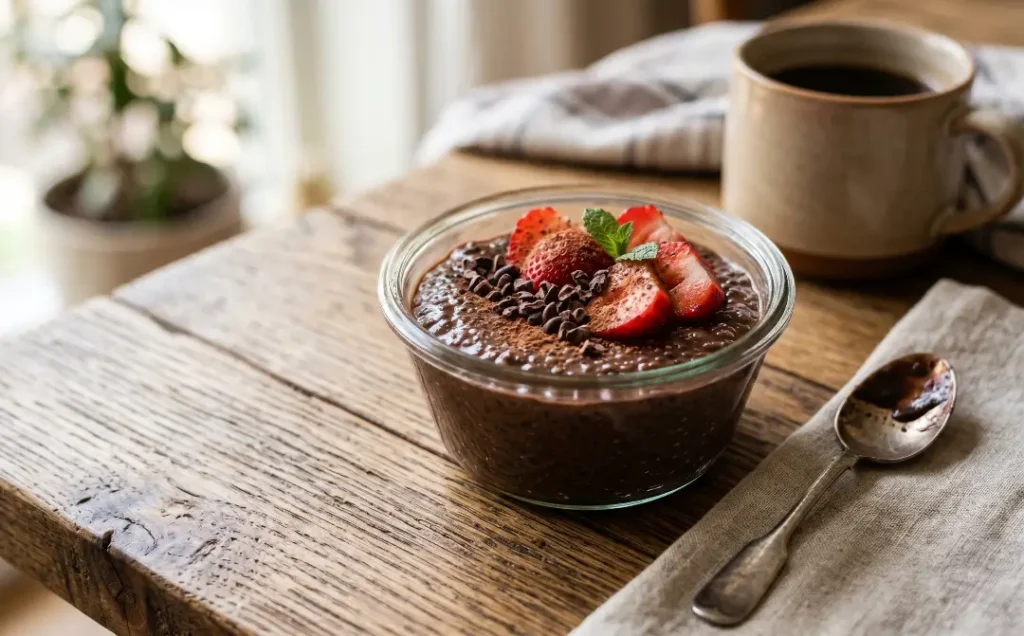
Chocolate chia pudding is the variation that tends to win over skeptics. It tastes like dessert but functions like a nutritious meal, which makes it genuinely exciting to eat. Whether you serve it as breakfast or a post dinner treat, this version hits every note it promises.
To make chocolate chia pudding, combine 3 tablespoons of chia seeds, 1 cup of milk, 2 tablespoons of unsweetened cocoa powder or raw cacao powder, 2 tablespoons of maple syrup, and a pinch of sea salt. The salt might seem optional but it actually sharpens the chocolate flavor significantly. Mix everything together well. The cocoa powder can be stubborn about dissolving, so whisk it thoroughly or blend the liquid base before adding the chia seeds.
Let the mixture sit for 10 minutes, stir once more to prevent clumps, then refrigerate for at least 4 hours.
The result is a rich, thick pudding that tastes deeply chocolatey without being overly sweet. You can enhance it further by adding half a teaspoon of espresso powder, which deepens the chocolate flavor without making the pudding taste like coffee. A splash of vanilla extract also rounds out the flavor beautifully.
Topping ideas for chocolate chia pudding include fresh raspberries, sliced banana, toasted coconut flakes, cacao nibs, or a dollop of almond butter. If you want to go fully indulgent, a small spoonful of dark chocolate chips on top makes it feel like a proper dessert.
For a mocha version, swap regular milk for cold brew coffee combined with a small amount of oat milk. The combination is bold and energizing, making it a favorite for people who want their breakfast and morning coffee rolled into one.
The nutritional profile of this version is impressive. You are getting fiber, antioxidants from the cacao, plant based protein from the chia seeds, and healthy fats, all in one small jar. It is a dessert that genuinely nourishes you.
Way 3: Mango Coconut Chia Pudding
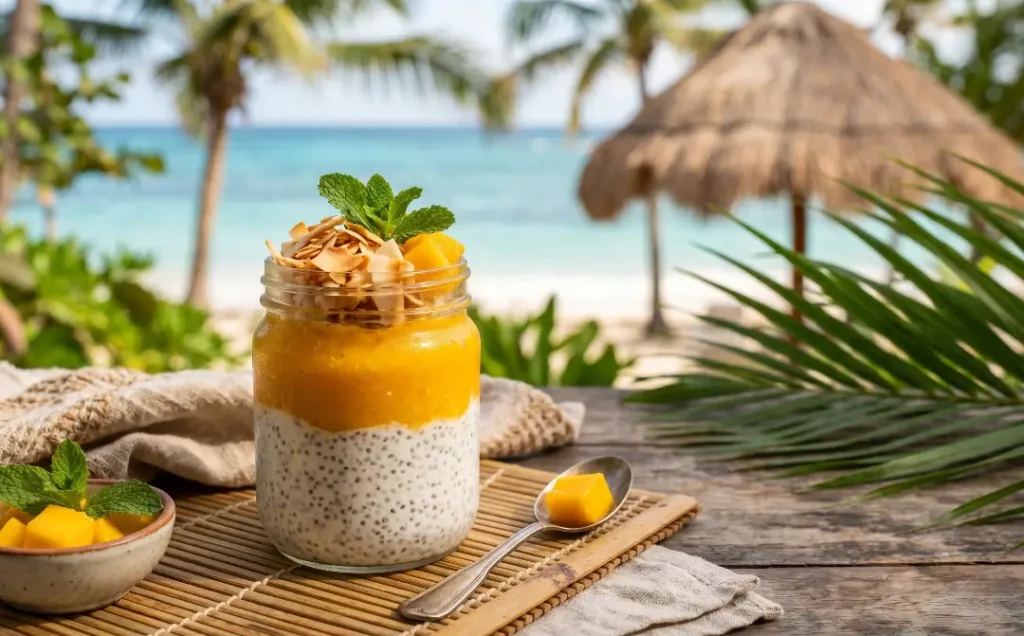
If you want something that feels like a vacation in a jar, this is it. Mango coconut chia pudding brings together tropical flavors in a combination that is refreshing, creamy, and visually stunning. The contrast between the pale coconut pudding and the vivid orange mango layer makes it one of the most photogenic versions on this list too.
To make the base, use 3 tablespoons of chia seeds combined with 1 cup of full fat coconut milk. Full fat coconut milk makes a notable difference here. It creates a much richer, creamier pudding compared to the light version. Add 1 tablespoon of maple syrup and a pinch of vanilla. Stir, wait, stir again, and refrigerate overnight.
For the mango layer, blend 1 cup of fresh or frozen mango chunks until completely smooth. You can sweeten it slightly with a teaspoon of honey or lime juice for brightness. Once your chia pudding has set, spoon the mango puree on top.
The layering technique is what makes this version feel special. You can either keep the layers separate for a stunning visual effect or swirl them gently together for a marbled look. Both approaches taste equally delicious.
Toppings that work brilliantly here include toasted coconut flakes, a squeeze of lime juice, fresh mango slices, or a few crushed macadamia nuts for crunch. The acidity of the lime cuts through the richness of the coconut milk and makes every bite feel lighter.
This version is naturally dairy free and can easily be made vegan, which makes it suitable for a wide range of dietary preferences. It is also a wonderful option to serve at brunches or gatherings because it looks impressive with minimal effort.
If fresh mango is out of season, frozen mango works just as well. Simply thaw it before blending. You can also use this same method with papaya, passion fruit, or pineapple to create other tropical variations throughout the year.
Way 4: Strawberry Banana Chia Pudding
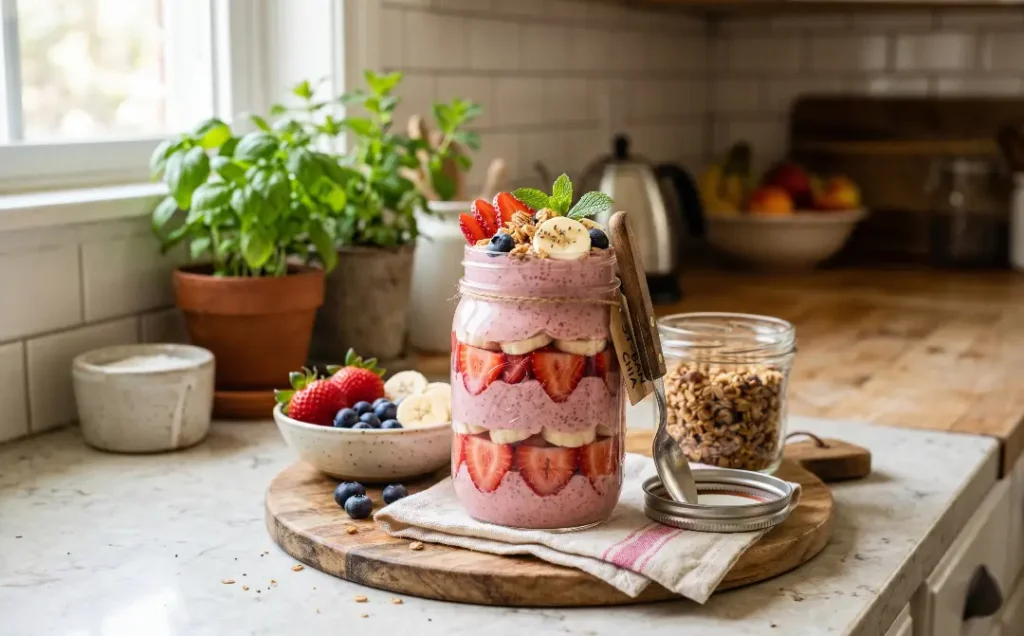
Strawberry and banana is a flavor pairing that almost never goes wrong, and when it comes to chia pudding, the two fruits together create something wonderfully creamy and naturally sweet. This version requires almost no added sweetener because the fruits themselves handle all the sweetness.
Start by blending 1 ripe banana with 1 cup of milk until completely smooth. This blended banana milk becomes your liquid base and it adds natural creaminess along with a subtle banana flavor that runs throughout the pudding. Add 3 tablespoons of chia seeds to this mixture, stir well, wait 10 minutes, stir again, and refrigerate for at least 4 hours.
Once set, you can either top the pudding with sliced fresh strawberries and banana rounds, or you can blend half a cup of strawberries into a smooth sauce and pour it over the top as a vibrant pink layer.
The banana in the base means you may not need any maple syrup or honey at all. However, if your banana is not very ripe, a small drizzle of honey helps balance the flavor. The riper the banana, the sweeter and more intense the flavor will be.
This version is particularly popular with children and anyone who prefers naturally sweetened foods over those with added sugar. It is also a great way to use bananas that are past their prime for direct eating but perfect for blending.
Topping ideas beyond the classic strawberry and banana include a sprinkle of hemp seeds for extra protein, a small handful of granola for crunch, or a drizzle of peanut butter or almond butter, which pairs surprisingly well with the banana base.
For meal prep, prepare the base and keep it in jars in the fridge. Slice the fresh fruits right before serving so they stay bright and fresh. This way your pudding stays good for up to four days without the toppings getting soft or oxidized.
Way 5: Matcha Green Tea Chia Pudding
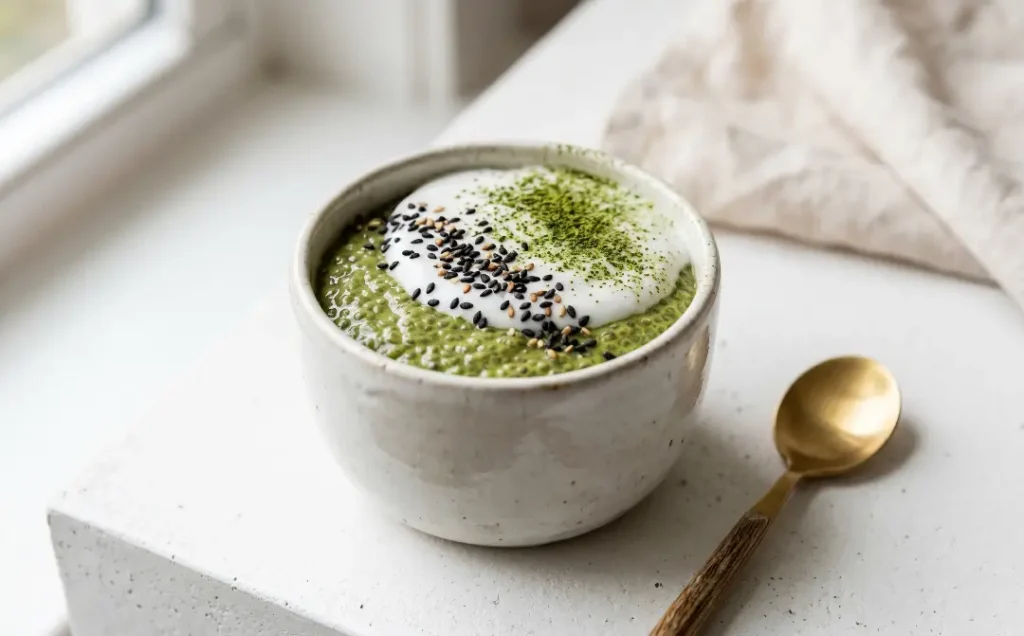
Matcha chia pudding is for the person who wants their breakfast to feel a little more refined. The earthy, slightly bitter flavor of matcha balances beautifully with the creaminess of the milk base, and the soft green color makes this version visually distinct from every other variation on this list.
To make matcha chia pudding, start by whisking 1 teaspoon of culinary grade matcha powder into 2 tablespoons of hot water until it forms a smooth, lump free paste. This step is important because adding dry matcha directly to cold milk often results in clumps. Once dissolved, let the matcha paste cool for a minute, then combine it with 1 cup of milk, 3 tablespoons of chia seeds, 1 tablespoon of maple syrup, and a small pinch of vanilla. Stir thoroughly, rest for 10 minutes, stir again, and refrigerate overnight.
The flavor is distinct and a little bold, which is why the maple syrup is important to balance the natural bitterness of the matcha. You can increase the sweetener slightly if you prefer a milder taste.
Matcha also contains caffeine, though in a gentler, more sustained form than coffee. This makes matcha chia pudding an excellent morning meal for people who want energy without the sharpness of a strong espresso.
Toppings that complement this version well include a spoonful of coconut cream, a sprinkle of black sesame seeds, white chocolate chips, or sliced kiwi. The kiwi in particular is a pairing that feels fresh and vibrant against the earthiness of the matcha.
If you can find ceremonial grade matcha, it will produce a noticeably smoother and less bitter flavor than culinary grade. However, culinary grade works perfectly well for everyday use and is much more budget friendly.
This version is also wonderful served cold in a glass during warmer months, almost like a thick iced matcha drink with substance. The chia seeds give it body and keeping power that keeps you satisfied for hours.
Way 6: Peanut Butter and Honey Chia Pudding
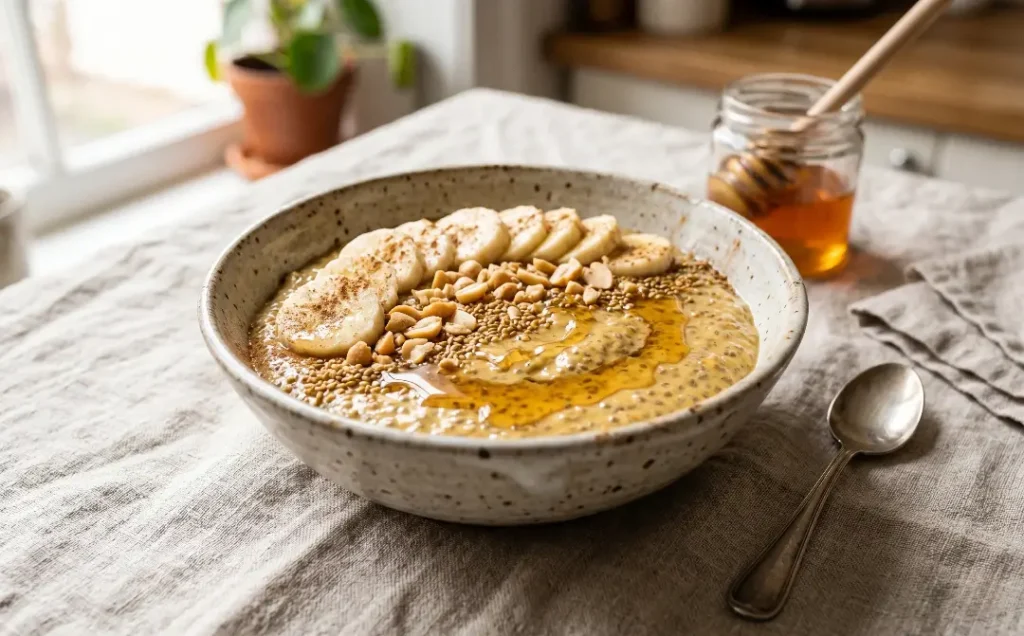
This is the variation for people who want something hearty, filling, and full of protein. Peanut butter chia pudding is rich, nutty, and deeply satisfying in a way that keeps hunger at bay for a long time. It is also one of the most popular variations for athletes and active people who need sustained energy throughout the morning.
To make it, combine 3 tablespoons of chia seeds, 1 cup of milk, 2 tablespoons of natural peanut butter, 1 tablespoon of honey or maple syrup, and a quarter teaspoon of cinnamon. Whisk everything together well. Peanut butter can be thick and resistant to mixing, so using a small blender or immersion blender to combine the liquid base before adding the chia seeds works very well. Once blended smooth, add the chia seeds, stir, rest for 10 minutes, stir again, and refrigerate.
The result is a thick, creamy pudding with a prominent peanut flavor and a gentle warmth from the cinnamon. The honey adds a natural floral sweetness that complements the nuttiness without overpowering it.
For a higher protein version, add a scoop of vanilla or unflavored protein powder to the liquid base before mixing. This takes the protein content significantly higher and makes the pudding genuinely filling enough to power through a full morning of work or exercise.
Topping ideas include sliced banana, a drizzle of extra honey, crushed peanuts or peanut butter cups, dark chocolate chips, or a light dusting of cinnamon. If you enjoy the combination of sweet and salty, a small pinch of flaky sea salt on top right before eating makes this version exceptionally good.
You can also use almond butter, cashew butter, sunflower seed butter, or any nut or seed butter as a substitute for peanut butter. Each one changes the flavor profile slightly while maintaining the same rich, creamy character that makes this variation so popular.
This version stores well for up to five days in the fridge, and because the peanut butter keeps the pudding thick and stable, it holds its texture consistently over time without becoming watery the way some thinner versions can.
Tips for Making the Best Chia Pudding Every Time
Getting consistently good results with chia pudding comes down to a few key habits.
Always stir twice. The first stir combines everything. The second stir, done about 10 minutes later, breaks up clumps that form as the chia seeds begin absorbing liquid. Skipping the second stir is the most common reason people end up with lumpy pudding.
Use fresh chia seeds. Old chia seeds that have been sitting in your pantry for over a year may not absorb liquid as efficiently, leading to a pudding that never quite sets properly. Store your chia seeds in a cool, dark place in an airtight container and they will stay fresh for up to two years.
Refrigerate long enough. Four hours is the minimum but overnight is always the better choice. The extended soak gives the seeds more time to fully absorb the liquid, resulting in a smoother, creamier texture.
Taste before refrigerating. Once the pudding sets, adjusting the sweetness or flavor is harder because you would need to stir in additional ingredients. Taste the mixture before refrigerating and adjust accordingly.
Do not be afraid to thin it out. If your pudding turns out thicker than you like, simply stir in a splash of milk until it reaches your preferred consistency. This is completely normal and easy to fix.
How to Store Chia Pudding
Chia pudding stores well in the refrigerator for up to 5 days. Use sealed jars or airtight containers. Mason jars are ideal because they seal tightly, stack easily, and make for convenient grab and go breakfasts throughout the week.
Keep your toppings separate until right before serving. Fresh fruits, granola, and nuts will stay at their best texture when added fresh rather than being stored with the pudding.
Chia pudding does not freeze well because the texture changes significantly after thawing, becoming watery and grainy. It is best made in batches for the week and enjoyed fresh from the refrigerator.
Why Chia Pudding Is Worth Making Regularly
Beyond its convenience and versatility, chia pudding genuinely earns its place as a regular part of a balanced diet. Two tablespoons of chia seeds contain about 5 grams of fiber, 3 grams of protein, and are one of the best plant based sources of omega 3 fatty acids available. They support digestive health, help maintain steady blood sugar levels, and keep you full for longer compared to many other breakfast options.
The recipes on this list are all adaptable to different dietary needs. They work for vegan, dairy free, gluten free, and low sugar diets with minimal adjustments. This flexibility is part of what makes chia pudding genuinely useful rather than just trendy.
Making chia pudding also encourages the habit of meal prepping, which saves time, reduces food waste, and makes it easier to eat well consistently throughout the week. Spending 10 minutes on a Sunday evening to prepare five jars can mean having a healthy, satisfying breakfast ready every single morning without any additional effort.
Final Thoughts
The 6 ways to make chia pudding covered in this post give you a solid foundation to work from and enough variety to keep things interesting throughout the week. From the simplicity of classic vanilla to the boldness of matcha, the richness of chocolate, the tropical brightness of mango coconut, the natural sweetness of strawberry banana, and the heartiness of peanut butter and honey, there is a version here for every mood, preference, and occasion.
Start with the version that sounds most appealing to you, get comfortable with the basic technique, and then begin mixing things up. Once you understand how chia pudding works, the combinations you can create are practically endless. Swap liquids, change your toppings, blend in new fruits, try different spices. The recipe is forgiving, flexible, and always rewarding.
Chia pudding is one of those rare foods that manages to be genuinely nutritious, incredibly convenient, and actually delicious all at the same time. Give it a week of consistent mornings and it might just become one of your most trusted kitchen staples.